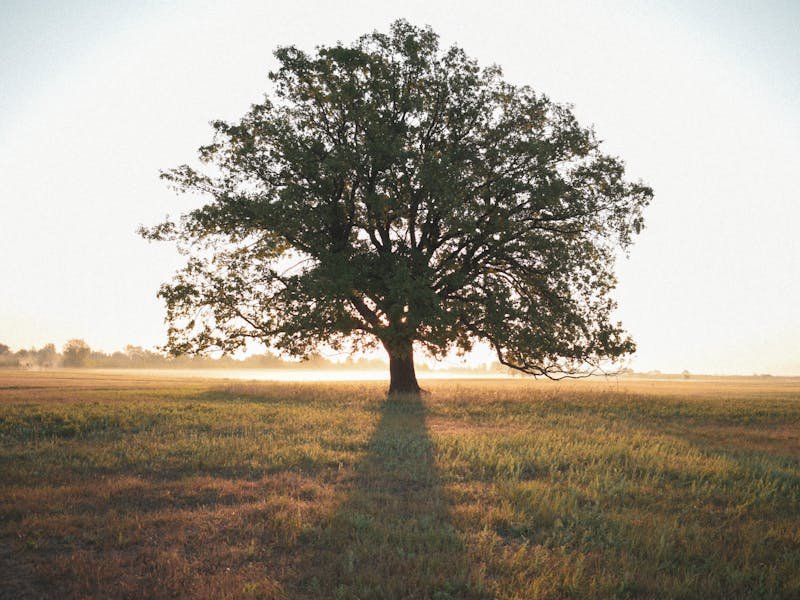
This is probably the most common conversation we have with homeowners across the Huntsville area, and it is rarely an easy one. You have a tree on your property that you love, one that has been there for decades, maybe since before the house was built, and something is clearly wrong with it. Dead branches in the canopy, a crack in the trunk, mushrooms at the base, leaves that are not looking right. You know the tree needs attention, but you are torn between two very different paths: can it be saved, or does it need to come down?
We understand why this decision feels so heavy. A mature tree is not something you can just replace. That 60-foot Southern Red Oak in your front yard in Blossomwood, the pair of White Oaks anchoring the backyard in your Twickenham property, the towering Tulip Poplar that has shaded three generations of a family in Old Town, these are not interchangeable landscape features. They are part of the character of the property and the neighborhood, and losing one changes things in a permanent way.
But we also understand the other side. We have been called to properties after storms where a tree that should have been removed a year ago came through someone's roof. We have seen near-misses where a massive limb dropped right where kids had been playing an hour earlier. Safety is not negotiable, and sometimes, no matter how much you love a tree, removing it is the right thing to do.
So how do you make this decision? How do you weigh the emotional value of a tree against the practical reality of its condition? That is what this guide is for. We are going to walk you through the same evaluation framework our arborists use when they assess trees across Huntsville, Madison, Decatur, and the rest of the Tennessee Valley. By the time you finish reading this, you should have a much better understanding of when a tree can be saved, when it cannot, and how to make the call with confidence.
The Factors That Determine Whether a Tree Can Be Saved
Every tree evaluation comes down to a set of specific, assessable factors. Some of these you can evaluate yourself by walking around the tree and looking carefully. Others require professional tools and training. Here is what goes into the assessment:
Structural Integrity: The Foundation of the Decision
The single most important factor in the save-versus-remove decision is the tree's structural integrity. Can the tree physically support itself under normal conditions and, crucially, under the stress of the severe weather that rolls through the Tennessee Valley every spring?
Structural integrity is determined by the condition of the trunk, the major scaffold branches, and the root system. A tree with a solid trunk, well-attached branches, and a stable root system can survive a remarkable amount of cosmetic damage. Conversely, a tree that looks green and leafy can be a structural time bomb if the trunk is hollow, the branch attachments are weak, or the roots are failing.
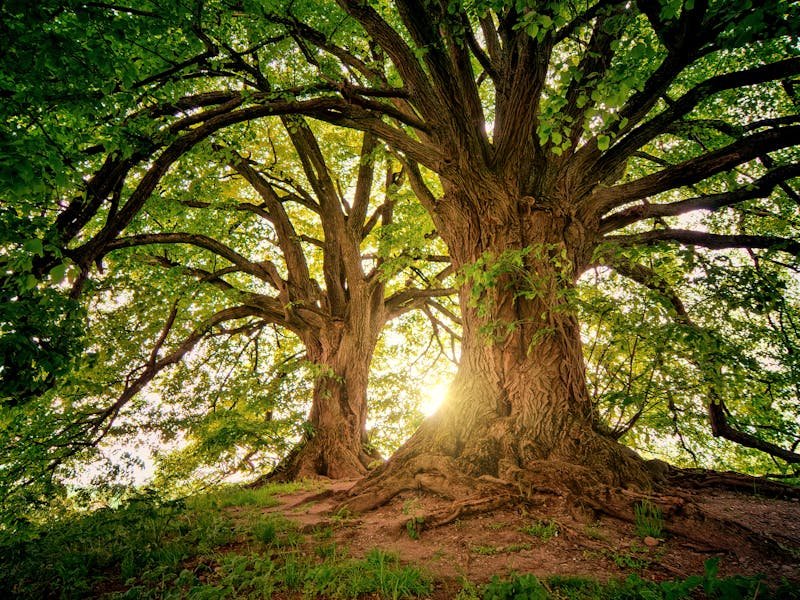
Signs of good structural integrity include a single dominant trunk without major cracks or splits, branch attachments with visible "branch collars" (the swelling where branch meets trunk, indicating a strong joint), bark that is intact and firmly attached, and no visible root heaving or lean changes. Signs of poor structural integrity include deep cracks or splits in the trunk, co-dominant stems with included bark (bark trapped in the V-crotch, creating a weak joint), large cavities in the trunk or major branches, and evidence of root failure such as soil heaving or a new lean.
Canopy Health: Reading the Leaves
The canopy tells you how the tree's vascular system is functioning. A healthy canopy with full, normally-colored foliage means the roots are absorbing water and nutrients, the trunk is transporting them upward, and the branches are distributing them to the leaves. When parts of the canopy start dying, it means something in that supply chain has broken down.
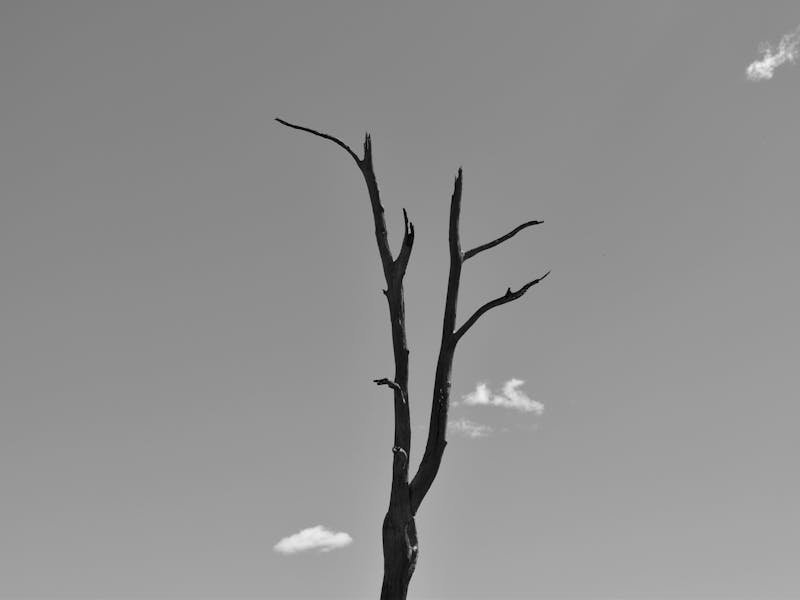
The percentage of dead or declining canopy is a useful rough metric. Less than 25 percent dead canopy usually means the tree still has enough vitality to recover, especially if the cause of the die-back can be identified and addressed. Between 25 and 50 percent, the tree is in a gray zone, recovery is possible but it depends heavily on the underlying cause and whether it can be treated. Above 50 percent dead canopy, the tree's energy reserves are typically too depleted for meaningful recovery, and removal is usually the recommendation.
Disease Diagnosis: Treatable vs. Terminal
Not all tree diseases are created equal. Some can be managed or even cured with appropriate treatment. Others are death sentences for the tree, and spending money trying to save a tree with a terminal disease is wasting resources you could put toward a healthy replacement.
Here is a quick breakdown of common diseases we see in the Huntsville area and their treatability:
Treatable or manageable: Many fungal leaf diseases like anthracnose and powdery mildew are cosmetic and the tree typically recovers on its own. Scale insects, borers, and other pest infestations can often be treated with targeted applications. Minor cankers can sometimes be pruned out before they spread. Iron chlorosis and other nutrient deficiencies respond well to soil amendments or trunk injections.
Manageable but not curable: Bacterial leaf scorch can be suppressed with antibiotic treatments but requires ongoing annual applications and the tree will eventually succumb. Chronic root diseases in slow-moving forms can sometimes be managed to extend a tree's useful life by several years.
Terminal: Oak wilt in red oaks (Southern Red Oak, Water Oak) is essentially a death sentence, killing the tree within weeks to months. Advanced hypoxylon canker, where the crusty black fungal mat is visible on the trunk, indicates the tree is too far gone. Severe root rot with widespread mushroom fruiting means the structural roots are compromised beyond recovery. These are the situations where treatment money is wasted, and the budget is better spent on removal and replacement.
Location and Risk Assessment
A tree's location dramatically changes the calculus of the save-versus-remove decision. The same tree in two different spots on your property might get two completely different recommendations.
A moderately declining tree in the far back corner of a large lot, away from any structures, play areas, or walkways, poses relatively low risk. It might be a candidate for monitoring and conservative management, allowing it to live out its remaining years as wildlife habitat while keeping an eye on it for further deterioration.
That same tree growing next to your house, over your driveway, or near a swing set? The risk tolerance is much lower. When a tree fails near a target, whether that is a structure, a vehicle, or a place where people spend time, the consequences are severe. In high-risk locations, we recommend being more conservative, which in tree care means being more willing to remove a tree that is in decline, even if it might have a few more years left.
We think about this a lot in neighborhoods like Monte Sano, The Ledges, and McMullen Cove, where homes are built among dense mature forest. The trees are beautiful and they are a huge part of why people buy in those areas. But they are also right on top of the houses, and our severe weather makes every compromised tree a potential threat during storm season.
When a Tree Can Be Saved: The Options
If the evaluation shows that a tree has sufficient structural integrity, manageable health issues, and the potential for recovery, here are the interventions that can keep it standing:
Professional Pruning
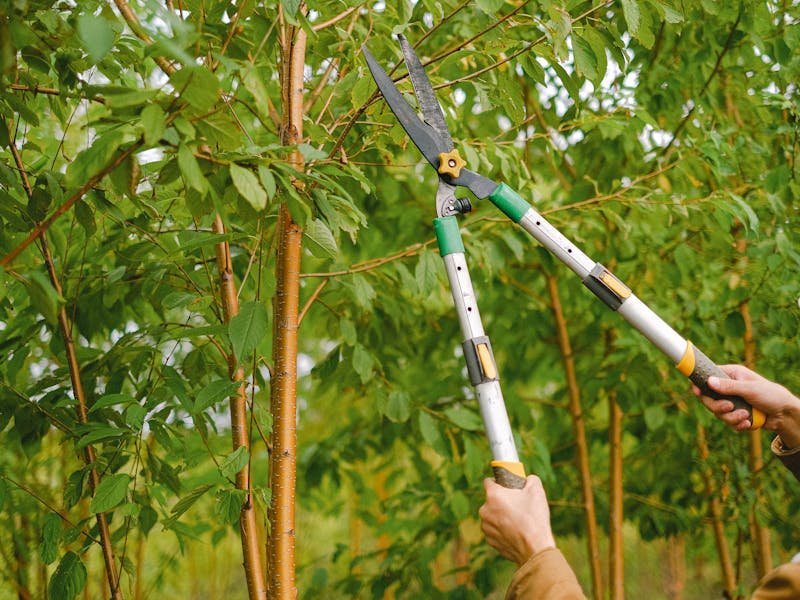
This is the most common intervention and it addresses a wide range of issues. Professional pruning can remove dead, dying, and diseased branches (reducing the canopy die-back percentage), eliminate crossing or rubbing limbs, reduce weight on overextended branches, improve air circulation within the canopy (which reduces disease pressure), and raise the canopy to provide clearance over structures and walkways.
For a tree with moderate die-back, say 20 to 30 percent dead canopy, a thorough pruning to remove the dead wood and improve the tree's form can be transformative. We have done this on countless trees across the Huntsville area and seen them bounce back impressively over the following growing season.
The cost of professional pruning for a large tree in Huntsville typically ranges from $300 to $1,200, depending on the tree's size and the amount of work needed. That is significantly less than removal, which can run $1,000 to $3,500 or more for a large tree.
Cabling and Bracing
Cabling and bracing are structural support systems that can extend the safe life of a tree with specific physical defects. Cables are flexible steel or high-strength synthetic ropes installed between two co-dominant stems or between a heavy limb and the trunk, limiting the range of movement and reducing the chance of splitting or breakage. Braces are rigid steel rods installed through a weak union to prevent it from opening up.
These systems are most effective for trees with co-dominant stems (two trunks that form a V-shape), heavy lateral limbs that have an increasing lean, or branch unions with included bark that are at risk of splitting. A properly installed cable system can buy a tree 10 to 20 more years of safe life, sometimes longer.
We have installed cable systems on some gorgeous old oaks in Five Points, Twickenham, and Blossomwood where the trees had significant structural defects but were otherwise healthy and too valuable to remove. In those cases, the homeowners chose preservation over removal, and the cabling gave them the safety margin they needed.
Cabling and bracing typically costs $400 to $1,200 per tree, and the hardware should be inspected every two to three years.
Disease and Pest Treatment
For trees with diagnosed diseases or pest problems that are treatable, intervention can stop or slow the decline. Treatment options include trunk injections of fungicides or antibiotics, soil drenches with systemic insecticides, targeted spray applications for specific pests, and soil amendments to correct nutrient deficiencies or improve root health.
The key consideration with treatment is whether you are truly saving the tree or just buying time. Some treatments provide a genuine cure, after which the tree can thrive indefinitely. Others, like the antibiotic treatments for bacterial leaf scorch, merely suppress symptoms and need to be repeated year after year with diminishing returns. Understand what you are buying before you invest.
Root Zone Rehabilitation
For trees suffering from compacted soil, root zone damage (often from construction or utility work), or drought stress, improving conditions around the roots can spark a significant recovery. Techniques include vertical mulching (drilling holes in the root zone and filling them with organic matter to improve aeration and drainage), radial trenching to break up compaction, deep watering during drought, and proper mulching over the root zone.
We see a lot of trees in the newer Madison subdivisions and in areas where homes were recently built that are struggling because the soil in the root zone was heavily compacted by construction equipment. The trees were there before the houses, and during construction, heavy machinery rolled over their root zones, bulldozed soil up against their trunks, and generally made a mess of conditions. Root zone rehabilitation can help these trees recover, but it takes time, often two to five years to see meaningful improvement.
When Removal Is the Only Responsible Option
As much as we prefer to save trees when we can, there are situations where removal is not just recommended, it is the only responsible course of action. Here is where we draw the line:
Catastrophic Structural Failure Is Imminent
When a tree has severe trunk cracks, massive cavities, or significant root failure, and it is located near a target (your house, a neighbor's house, a road, power lines, or any area where people spend time), waiting is not an option. These trees can fail at any moment, storm or no storm. We have seen trees with these conditions go over on perfectly calm days because the remaining sound wood simply could not support the weight any longer.
A tree in this condition is an emergency, and we treat it as one. Our emergency tree service team can assess and address these situations quickly.
Terminal Disease Has Taken Hold
When a tree is confirmed to have a terminal disease, particularly one that can spread to other trees on the property or in the neighborhood, removal becomes necessary not just for the individual tree but for the surrounding trees. Oak wilt in red oaks is the clearest example. Once a Southern Red Oak or Water Oak is infected with oak wilt, it will die, and the fungus can spread to neighboring oaks through root grafts. Removing the infected tree promptly and, in some cases, severing root connections to nearby oaks can prevent the loss of multiple trees.
The Tree Cannot Be Made Safe at a Reasonable Cost
Sometimes a tree theoretically could be saved, but the cost of doing so does not make financial sense. If a tree needs $3,000 in cabling, $500 in pruning, and $400 per year in ongoing disease treatment, you are looking at $3,500 upfront and hundreds per year in maintenance for a tree that may still fail within 5 to 10 years. Compare that to $2,000 for removal and $500 for a replacement tree that will be healthy and vigorous for decades. The math often favors removal and replacement, especially for shorter-lived species like Water Oaks and Bradford Pears.
The Species Is Wrong for the Location
Some trees are perfectly healthy but are simply the wrong tree in the wrong place. A loblolly pine growing 10 feet from your foundation, a Water Oak with roots buckling your driveway, a Bradford Pear hanging over your roof. No amount of pruning or treatment changes the fundamental problem: the tree's mature size and growth characteristics are incompatible with its location. In these cases, removing the tree and planting a more appropriate species is the best long-term solution.
We discuss this issue in detail in our article about tree root damage to foundations, which is one of the most common reasons for removing an otherwise healthy tree in the Huntsville area.
Real Examples From Huntsville Properties
Theory is useful, but real-world examples are better. Here are some situations we have encountered on actual Huntsville-area properties (details changed for privacy) that illustrate how this decision plays out in practice:
The Blossomwood White Oak: Saved
A homeowner called us about a 70-year-old White Oak in their front yard that had lost some branches in a spring storm. When we evaluated it, we found about 20 percent canopy die-back, a co-dominant stem with included bark, and no signs of disease or root problems. The trunk was solid and the overall structure was sound except for the weak crotch.
Our recommendation: install a cable system to support the co-dominant stems, prune out the dead wood, and monitor annually. Total cost was about $1,400. Three years later, the tree is thriving. The cable provides the structural support the weak crotch needs, the canopy has filled back in, and the homeowner gets to keep a magnificent tree that adds significant value to their property.
The Hampton Cove Water Oak: Removed
A 50-year-old Water Oak in a backyard that overhung the house and the neighbor's fence. The homeowner noticed mushrooms at the base and called us. Our evaluation found extensive root rot, a trunk cavity on the side away from the house that the homeowner had never noticed, and about 35 percent canopy die-back. The tree was within five years of the end of a Water Oak's typical lifespan.
Our recommendation: remove it. The root rot and trunk cavity meant the tree's structural integrity was seriously compromised, and its location over the house made the risk unacceptable. The homeowner was disappointed but understood. We took the tree down, ground the stump, and recommended planting a Southern Red Oak, a longer-lived and more structurally reliable species, 25 feet from the house. The removal cost about $2,200 including stump grinding.
The Jones Valley Sweetgum: Removed
A perfectly healthy 45-foot Sweetgum, full canopy, no disease, no structural defects, but planted 12 feet from the house. The roots had already cracked the driveway and were heading for the foundation. The homeowner's foundation repair company told them the tree had to go or the $8,000 foundation repair would be wasted.
Our recommendation: remove it. There was nothing wrong with the tree itself, but its location made it a permanent threat to the foundation. A root barrier was considered but deemed insufficient given the size and proximity of the tree. The removal cost about $1,500, a fraction of the foundation repair bill. The homeowner replaced it with two crepe myrtles, beautiful trees that will never threaten the foundation.
The Monte Sano Southern Red Oak: Saved with Monitoring
A massive 80-year-old Southern Red Oak on a hillside property with a small crack in one of the upper scaffold limbs. The homeowner was concerned it might need to come down. Our evaluation found the crack was superficial, less than an inch deep, and the tree was already compartmentalizing (growing wound wood over the damage). The trunk was solid, the canopy was 95 percent healthy, and the root system showed no signs of distress.
Our recommendation: prune the affected limb back to reduce weight and stress on the crack, and schedule an annual inspection to monitor the crack's progression. Total cost: $450 for the pruning. The tree is a specimen, probably worth $20,000 or more in property value, and removing it based on a minor, stable crack would have been unnecessary and destructive.
The Emotional Factor: It Is Real and It Matters
We would be dishonest if we did not acknowledge the emotional side of this decision. Trees are not just landscape features. People develop real attachments to them. We have had homeowners tell us about trees they planted when their children were born, trees that have held tire swings for three generations, trees they sit under every evening with a glass of sweet tea.
We respect that, and we never dismiss the emotional value of a tree. But we also have to be honest with people: a tree that is failing is not going to stop failing because you love it. And the consequences of keeping a dangerous tree because you cannot bring yourself to let it go can be devastating. A tree through a roof is not just an expensive repair. It is traumatic. It disrupts your life for weeks or months. And if someone is hurt, the consequences are unthinkable.
If you are struggling with this decision, here is something that might help: think about the tree's legacy, not just its current state. A mature tree that has shaded your family for decades has already given you a lifetime of value. Removing it safely, on your terms, when it is time, is a respectful end. And planting a replacement tree continues the legacy. You are not ending the story. You are starting a new chapter.
Getting a Professional Evaluation: What to Expect
If you are unsure about a tree on your property, the smartest thing you can do is get it evaluated by a professional. Here is what that process looks like with us:
Visual assessment. We walk the entire property and evaluate the tree from all angles. We look at the canopy condition, trunk integrity, visible root health, lean, soil conditions, and proximity to structures.
Diagnostic tools. If needed, we use tools like a resistograph (measures wood density inside the trunk), a mallet for sounding (tapping the trunk to detect hollow areas by sound), and probing tools to assess cavity depth and soft wood extent.
Risk assessment. We evaluate the "target zone," meaning what would be hit if the tree or part of the tree failed. A tree next to a house has a very different risk profile than one in the middle of a large open yard.
Honest recommendation. We will tell you straight: here is what we found, here is what we recommend, and here is why. If the tree can be saved, we will explain how and what it will cost. If it needs to come down, we will explain why and give you a quote. And if it is a borderline case, we will present both options and help you weigh the pros and cons.
Our evaluation is free and comes with zero obligation. We are not going to pressure you into a removal you are not sure about, and we are not going to upsell you treatments you do not need. We have built our reputation across Huntsville, Madison, Decatur, and Athens on giving people honest, straightforward assessments, and that is exactly what you will get.
Call us at (256) 555-0123 or request an assessment online. We will come out, look at your tree, and help you make the right call.
Frequently Asked Questions
How do I know if my tree can be saved?
A tree can typically be saved if it has less than 25 to 30 percent canopy die-back, a solid trunk without major cavities or deep cracks, a stable root system, and if any disease or damage is treatable. The earlier problems are caught, the more likely a tree can recover through pruning, cabling, treatment, or other interventions. A professional evaluation is the best way to get a definitive answer for your specific tree.
Is it cheaper to save a tree or remove it?
It depends entirely on the situation. A one-time pruning ($300 to $800) or cable installation ($400 to $1,200) is typically less expensive than removal ($500 to $3,500). But if a tree requires ongoing annual treatments that add up over time, removal and replacement can be more cost-effective in the long run. A good arborist will help you compare the total cost of treatment versus removal so you can make an informed financial decision.
What percentage of dead branches means a tree should be removed?
As a general guideline, more than 50 percent dead canopy usually indicates the tree cannot recover and removal is recommended. Between 25 and 50 percent is a gray zone where recovery depends on the cause and whether it is treatable. Less than 25 percent is often manageable with professional pruning. However, location matters enormously. A tree with 30 percent die-back overhanging your bedroom may be a higher priority for removal than one with 40 percent die-back in an open field.
Can a tree with a hollow trunk be safe to keep?
Sometimes, yes. The critical factor is the ratio of sound wood to total trunk diameter. If at least one-third of the trunk's radius is solid wood all the way around, the tree may still have adequate structural strength. This assessment requires professional tools like a resistograph to measure accurately. A hollow trunk does not automatically mean removal is needed, but it does mean you need an expert evaluation rather than a guess.
Should I get a second opinion before removing a large tree?
Yes, and any reputable tree service should encourage this. Removing a mature tree is permanent and affects your property's value and character. If a company recommends removal, ask for specific reasons and whether alternatives exist. Then get a second evaluation from another ISA-certified arborist. If both professionals agree, you can proceed with confidence. If they disagree, their specific reasoning will help you make an informed decision.
What is tree cabling and bracing?
Cabling uses flexible steel or synthetic ropes installed high in the canopy to support co-dominant stems or heavy branches. Bracing uses rigid steel rods through weak branch unions to prevent splitting. Together, these systems can extend a structurally compromised but otherwise healthy tree's safe life by years or decades. The typical cost is $400 to $1,200 per tree, with inspections recommended every two to three years. This option works best for trees with specific structural defects that are otherwise healthy and valuable.