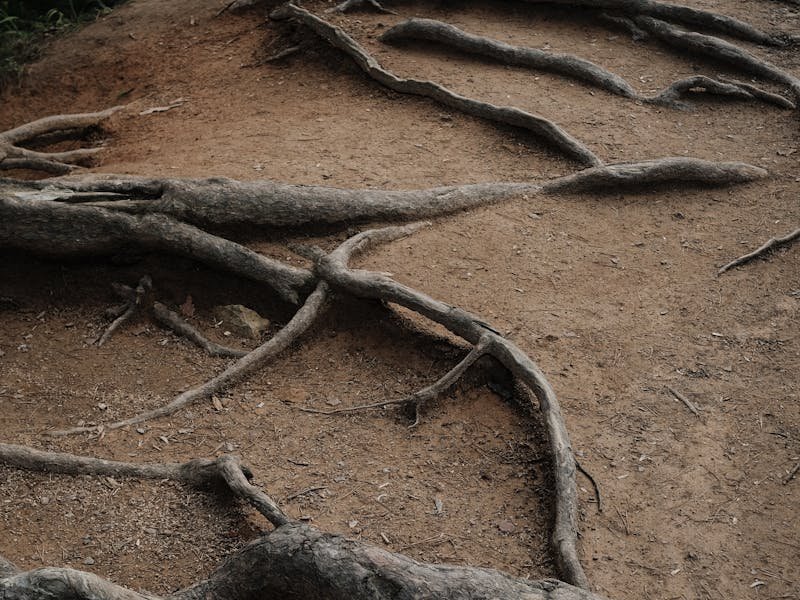
Here is a scenario we run into on at least a couple of jobs every month: A homeowner calls us about a tree they want removed. When we show up, we ask why they want it taken down. And instead of pointing up at dead branches or a leaning trunk, they point down at their foundation. There is a crack running through the block wall, or the brick veneer has a stair-step fracture, or the garage floor has heaved up on one side. And ten feet away from the damage, there is a big water oak, sweetgum, or loblolly pine with roots that are clearly running right toward the house.
Tree root damage to foundations is one of the most expensive and frustrating problems a homeowner can face, and unfortunately, it is exceptionally common in the Huntsville area. The combination of our heavy clay soils, the large mature trees that define our neighborhoods, and the way Alabama's weather swings between torrential rain and dry spells creates almost perfect conditions for root-related foundation issues.
Our crew has removed hundreds of trees that were causing foundation problems across Huntsville, Madison, Decatur, and the surrounding communities. We have seen the damage up close, worked alongside foundation repair companies, and learned a lot about the relationship between trees, roots, soil, and structures. This guide is everything we know about the problem, packed into one resource for Huntsville homeowners.
How Tree Roots Actually Damage Foundations
There is a common misconception that tree roots crack foundations by physically pushing against them, like a slow-motion battering ram. While roots can certainly exert force and exploit existing weaknesses in a foundation wall, the primary mechanism of damage in the Huntsville area is actually more indirect and, in some ways, more insidious.
The Clay Soil Factor: Huntsville's Biggest Problem
To understand root damage here in North Alabama, you first have to understand our soil. The dominant soil types throughout Madison County are heavy clays, including the red clay that so many homeowners love to hate. If you have ever tried to dig in your yard after a dry spell and felt like you were attacking concrete, or tried to dig after rain and felt like you were playing in modeling clay, you know exactly what we are talking about.
Clay soil has a property called "expansiveness," which means it changes volume significantly with moisture content. When clay absorbs water, it swells. When it dries out, it shrinks. The red and gray clays found throughout the Huntsville area are particularly expansive, and this constant cycle of swelling and shrinking is the underlying cause of most foundation movement in our region, with or without trees.
Now add a large tree to the equation. A mature oak or sweetgum can pull 100 to 200 gallons of water out of the soil every single day during the growing season. That water has to come from somewhere, and it comes from the soil surrounding the tree's root system, which extends well beyond the drip line of the canopy. When a large tree's root zone overlaps with the soil supporting your foundation, the tree is essentially pulling moisture out from under your house.
As the clay dries and shrinks, it pulls away from the foundation, creating voids and gaps. The foundation, which is a rigid structure sitting on top of what is now an uneven surface, begins to settle unevenly. This differential settlement is what causes the cracks, gaps, and structural movement that homeowners see. One corner of the house might drop a quarter inch or half inch, and that tiny amount of movement is enough to crack foundation walls, separate brick veneer, jam doors and windows, and create uneven floors.
Direct Root Intrusion
While soil moisture extraction is the primary problem, roots can also cause direct physical damage in certain situations. Roots naturally seek the path of least resistance, and the backfill around a foundation is often looser and more permeable than the surrounding native clay. Roots will grow along the foundation wall, finding their way into any crack, joint, or gap. Once inside a crack, the root grows and expands, widening the opening over time.
We see this most often with older homes that have block or stone foundations, particularly in the historic neighborhoods of Twickenham, Old Town, and Dallas Mill. These foundations were built before modern waterproofing techniques and they often have more joints and imperfections for roots to exploit. Newer poured concrete foundations are more resistant to direct root intrusion, but they are not immune to the soil moisture effects described above.
Sewer and Plumbing Line Damage
This is the hidden cost of trees near foundations that a lot of homeowners do not think about until they have a backup. Tree roots are drawn to the moisture and nutrients in sewer lines and underground plumbing. They can infiltrate even tiny joints and cracks in older clay or cast iron pipes, growing into the pipe and eventually blocking it entirely. The root mass inside the pipe traps grease, paper, and other waste, creating a clog that backs up into the house.
Sewer line repair or replacement can cost $3,000 to $10,000 or more, depending on the depth and length of pipe affected. We have worked with plumbers on numerous properties in South Huntsville, Weatherly Heights, and the older sections of Athens where tree roots had completely blocked sewer lines. In many of these cases, the tree responsible also needed to be removed to prevent the problem from recurring after the pipe was repaired.
Warning Signs of Root Damage to Your Foundation
The tricky thing about root damage is that it develops gradually, often over years. By the time the signs become obvious, the damage may already be significant. Here is what to watch for:
Cracks in Foundation Walls
Not all foundation cracks are caused by trees, but certain crack patterns are suggestive of soil movement related to root moisture extraction. Stair-step cracks that follow the mortar joints in block or brick foundations are a classic sign. Vertical cracks that widen at the top or bottom indicate differential settlement. Horizontal cracks in the middle of a block wall can indicate lateral soil pressure. If the cracks are on the side of the house nearest a large tree, the connection is worth investigating.
Hairline cracks are common in almost every foundation and are not necessarily a concern. But cracks wider than about an eighth of an inch, cracks that are actively growing (you can monitor this by marking the ends with tape and checking back in a few months), or cracks that have visible displacement (one side is offset from the other) are red flags that warrant professional evaluation.
Uneven or Sloping Floors
If you set a marble on the floor in the middle of a room and it rolls toward one wall, you have floor slope. A small amount of slope is normal in any house, especially older ones. But if the slope has increased over time, or if it is noticeably worse on the side of the house nearest a large tree, soil settlement driven by root moisture extraction could be the cause.
We hear this complaint frequently from homeowners in the established neighborhoods of Jones Valley, Research Park, and the subdivisions along Bailey Cove Road. These areas were developed in the 1970s and 1980s, often with trees planted close to foundations that have now matured into large specimens with extensive root systems.
Doors and Windows That Stick or Won't Close
When a foundation moves, even slightly, it distorts the frame of the house above it. Doors and windows, which require square frames to operate properly, are usually the first things to show the effects. A door that used to close smoothly but now sticks at the top or bottom, a window that is suddenly hard to open or will not latch, or gaps appearing between the door frame and the wall are all potential indicators of foundation movement.
Gaps Between the Wall and Ceiling or Floor
As the foundation settles unevenly, the framing above it follows. This can create visible gaps where interior walls meet the ceiling or floor, or where the exterior wall meets the soffit. Crown molding separating from the ceiling, baseboards pulling away from the floor, and gaps around window and door trim are all signs of structural movement that could be related to root-driven soil changes.
Visible Root Activity Near the Foundation
Sometimes the evidence is right there on the surface. Large roots running along or toward the foundation, roots that have lifted sidewalks or driveways near the house, or the ground around the foundation appearing cracked and pulled away from the wall during dry periods are all visible indicators that tree roots are affecting the soil around your foundation.
Which Trees Cause the Most Foundation Problems in Huntsville
All trees have roots, and all roots seek water. But some species are significantly worse than others when it comes to foundation damage risk. Here are the top offenders in the Huntsville area:
Water Oak
Water Oaks top our list because they combine aggressive root growth, high water demand, large mature size, and they are incredibly common in Huntsville neighborhoods. A mature Water Oak has a root system that can extend 60 to 80 feet from the trunk in all directions, and those roots are pulling tremendous amounts of water from the soil. We have seen Water Oaks cause foundation damage to homes that were 25 to 30 feet away from the trunk, well beyond what most homeowners would consider a safe distance.
Sweetgum
Sweetgums have some of the most aggressive root systems of any tree common in our area. Their roots are shallow, wide-spreading, and notorious for invading sewer lines. A sweetgum planted 15 feet from a house is almost guaranteed to cause problems eventually. They also lift sidewalks and driveways like champions. Drive through any neighborhood in Madison or South Huntsville that was developed in the 1980s and you will see the evidence everywhere.
Silver Maple
While not as common as some species on this list, Silver Maples were planted in a lot of Huntsville-area yards during the 1970s and 1980s because of their fast growth and attractive form. Their root systems are infamously aggressive, shallow, and destructive. Silver Maple roots clog sewer lines, buckle sidewalks, and extract massive amounts of moisture from the soil. If you have a Silver Maple within 25 feet of your foundation, it is worth monitoring your foundation closely.
Loblolly Pine
Loblolly Pines are the dominant pine species in the Huntsville area, and they grow everywhere, including way too close to a lot of houses. While their root system is not as aggressive as some hardwoods, their taproot and lateral root spread can be extensive. More importantly, pines are heavy water consumers, and a stand of loblolly pines near a foundation can dry the soil significantly during the growing season. We have removed pines from properties in Hampton Cove, McMullen Cove, and the wooded lots along Green Mountain where the trees were clearly contributing to foundation settlement.
Willow Oak
Similar to Water Oaks in their root behavior, Willow Oaks have wide-spreading, moisture-hungry root systems that spell trouble for nearby foundations. They are popular landscape and street trees throughout the Huntsville area, and many were planted in medians and yards during commercial and residential development from the 1980s through the 2000s.
Tulip Poplar
Tulip Poplars are one of the tallest native hardwoods in our forests, and their root systems are proportionally large. They are heavy water consumers and their roots can extend far beyond the canopy drip line. We have seen Tulip Poplars affect foundations from surprising distances, particularly in the hillside neighborhoods around Monte Sano and Bankhead Parkway where the soil is shallower and roots tend to spread laterally along the surface.
Safe Planting Distances: Preventing Problems Before They Start
If you are planting a new tree, or if you are evaluating existing trees on your property, here are the recommended minimum distances from your foundation based on tree size at maturity:
Large trees (60+ feet at maturity): Keep them at least 20 to 25 feet from the foundation. This includes species like Southern Red Oak, White Oak, Water Oak, Tulip Poplar, Loblolly Pine, Pecan, and large Sweetgums. In Huntsville's clay soil, erring on the side of more distance is always wise.
Medium trees (30-60 feet at maturity): Plant at least 15 to 20 feet from the foundation. This category includes species like Hickory, smaller oaks, Dogwood (the larger varieties), and Cedar.
Small trees (under 30 feet at maturity): Can be planted 8 to 10 feet from the foundation. Crepe Myrtle, Japanese Maple, Eastern Redbud, and smaller ornamentals fall into this group.
These distances are minimums, not ideals. In the heavy clay soils found throughout most of Huntsville, adding an extra 5 to 10 feet beyond these minimums provides a much better safety margin. The tree you plant today might look tiny and harmless 10 feet from your house, but in 20 or 30 years it will be a very different story.
Solutions for Existing Root Damage Problems
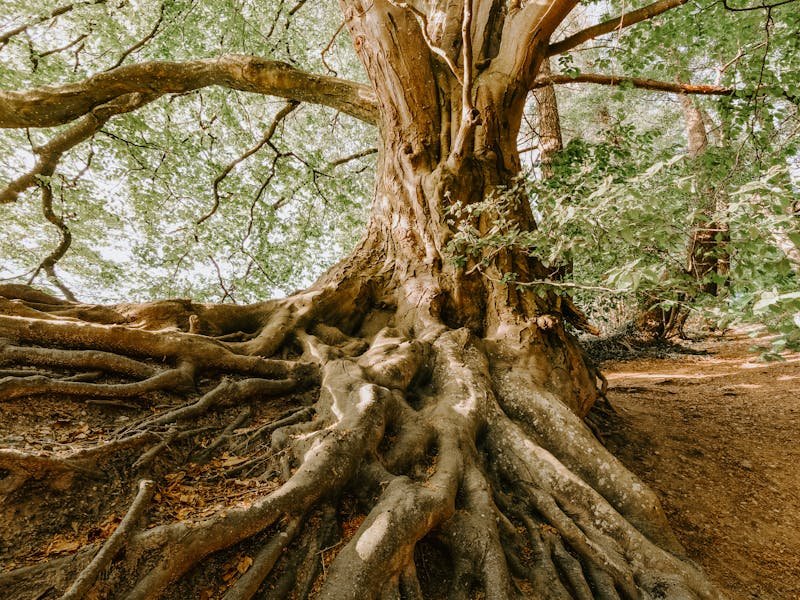
If you already have a tree that is causing or contributing to foundation damage, here are your options, ranked from least to most drastic:
Root Pruning
Root pruning involves cutting the roots on the side of the tree facing the foundation, typically by digging a trench and severing the roots with a saw or trenching machine. This can provide temporary relief by stopping root growth toward the foundation, but it comes with risks. Cutting a significant portion of a tree's root system can destabilize the tree, making it more likely to fall, and it can stress the tree to the point of decline. Root pruning is generally a short-term solution because roots will eventually regenerate and grow back toward the moisture source. It can buy you time, but it is not a permanent fix.
Root Barriers
A root barrier is a physical wall installed underground between the tree and the foundation to redirect root growth. Modern root barriers are typically made of heavy-duty high-density polyethylene panels installed vertically in a trench 24 to 36 inches deep. The barrier forces roots to grow downward and away rather than laterally toward the foundation.
Root barriers work best as a preventive measure, installed when a tree is relatively young and before significant root growth has reached the foundation area. They can also be effective after root pruning, installed in the trench to prevent regrowth. However, barriers are not effective if roots have already grown past the barrier location. They also need to be deep enough to prevent roots from growing under the barrier, which can happen in our relatively shallow soils.
Cost for a root barrier installation in the Huntsville area typically runs $1,000 to $3,000 depending on the length and depth of the barrier needed.
Crown Reduction Pruning
This is a less obvious solution that can help in some situations. By reducing the size of the tree's canopy through professional pruning, you reduce the tree's water demand, which in turn reduces the amount of moisture it extracts from the soil near the foundation. This approach works best for moderate cases where the tree is contributing to soil moisture imbalance but has not yet caused severe structural damage.
Crown reduction has limits, though. You cannot reduce a tree's canopy by more than about 25 percent without seriously stressing it, and even that reduction may not be sufficient to eliminate the soil moisture impact from a large tree close to a foundation.
Tree Removal
In many cases, especially when a large tree is within 15 to 20 feet of a foundation in clay soil and is actively causing settlement, removing the tree is the most effective long-term solution. It permanently eliminates the source of soil moisture extraction and prevents further root intrusion.
However, and this is important, removing a tree near a damaged foundation is not without its own risks. When a large tree that has been drying the soil for years is suddenly removed, the clay soil can rehydrate and swell over the following months and years. This rehydration can cause "heave," which is upward movement of the foundation, the opposite of the settlement that the tree was causing. Heave can be just as damaging as settlement.
This is why we always recommend that homeowners dealing with tree-related foundation damage consult with both a tree service and a structural engineer or foundation repair specialist before deciding on a course of action. The tree removal and the foundation repair need to be coordinated. In some cases, it is better to remove the tree first and let the soil stabilize before repairing the foundation. In other cases, the foundation may need to be underpinned or stabilized before or simultaneously with the tree removal.
After removing a tree near a foundation, stump grinding is strongly recommended. A live stump can continue to sprout new growth and maintain a root system, defeating the purpose of removing the tree. Grinding the stump and major surface roots eliminates this possibility.
Neighborhood-Specific Soil Conditions in Huntsville
Not all soil in the Huntsville metro area is created equal, and understanding your specific neighborhood's soil characteristics can help you assess your risk for root-related foundation problems.
The Valley Floor: Huntsville Proper, Five Points, Research Park
The flat areas in the Tennessee Valley floor tend to have deep clay deposits that are highly expansive. Properties in Blossomwood, Five Points, Dallas Mill, and the Research Park area often have some of the most problematic clay soils in the metro. These soils hold moisture well but also shrink dramatically during dry periods, making the tree root moisture extraction effect especially pronounced.
The Mountain and Ridge Areas: Monte Sano, Wade Mountain, The Ledges
Properties on Monte Sano, Wade Mountain, Green Mountain, and in The Ledges typically have shallower soils over limestone bedrock. The soils are still clay-based but they tend to be thinner and better drained due to the slope. Root damage to foundations is still possible, but the mechanism may be slightly different, with roots following cracks and fissures in the limestone and growing along the surface rather than deep into the ground.
The Eastern Communities: Hampton Cove, Owens Cross Roads, Big Cove
The Hampton Cove and Owens Cross Roads area has variable soil conditions. Lower-lying areas near the Flint River tend to have deep, heavy clay that is very expansive. Properties on the higher ground and hillsides have thinner soils with more rock. We have seen significant root-related foundation issues in some of the Hampton Cove subdivisions, particularly where large water oaks and sweetgums were left in place during development and are now mature trees with extensive root systems reaching toward nearby houses.
Madison and West Huntsville
The rapidly developing areas of Madison, Town Madison, and Clift Farm are on clay soils that range from moderately to highly expansive. Many of the newer subdivisions in this area were built on former agricultural land where the soil had been worked and is particularly susceptible to moisture changes. Homeowners in newer Madison homes who plant large trees close to their foundations today may be creating problems that will not show up for 15 to 20 years.
Insurance and Root Damage: What Is Covered?
This is a conversation that comes up a lot when we are on-site evaluating a tree that has caused foundation damage, and unfortunately, the answer usually disappoints homeowners.
What Is Typically Not Covered
Standard homeowners insurance policies in Alabama generally do not cover foundation damage caused by tree roots or soil movement. Insurance is designed to cover sudden, accidental events, not gradual damage that develops over months or years. Root-related foundation damage falls into the "maintenance" category in the eyes of most insurers, meaning it is the homeowner's responsibility to manage trees and soil conditions to prevent the damage in the first place.
This is particularly frustrating for homeowners who may not have even been aware that their trees were causing a problem until the damage became obvious. But the insurance industry's position is that tree root damage is a foreseeable and preventable issue, and therefore it is not an insurable loss.
What Might Be Covered
There are some related situations where insurance may help. If tree roots damage underground plumbing or sewer lines, some policies cover the repair under the "service line" or "equipment breakdown" endorsement. If a tree falls and physically impacts the foundation during a covered event like a storm, that damage may be covered. And if root-related foundation movement causes a catastrophic plumbing failure (like a burst pipe), the resulting water damage may be covered even if the root intrusion itself is not.
The takeaway here is that preventing root damage is far cheaper than dealing with it after the fact, especially when insurance is unlikely to help. The cost of removing a problematic tree ($500 to $3,000) is a fraction of the cost of a foundation repair ($5,000 to $25,000 or more).
A Practical Action Plan for Huntsville Homeowners
Whether you are dealing with an existing root problem or trying to prevent one, here is a practical step-by-step approach:
Audit your trees. Walk around your property and identify every tree within 25 feet of your foundation. Note the species, approximate size, and any visible root activity near the house. If you are not sure what species a tree is, we can help with identification during a free assessment.
Inspect your foundation. Walk the perimeter of your house and look for cracks, gaps, and signs of movement. Check interior doors and windows for sticking or misalignment. Look for gaps between walls and ceilings or floors. Document what you find with photos and dates so you can track any changes over time.
Manage soil moisture. Ironically, one of the best things you can do for your foundation in clay soil is to maintain consistent moisture levels around it. During extended dry spells, running a soaker hose along the foundation can prevent the extreme shrinkage that causes settlement. The goal is not to soak the soil, just to prevent it from becoming bone dry. This counteracts some of the moisture extraction by nearby trees.
Address problem trees proactively. If you have a large, aggressive-rooted species within 15 to 20 feet of your foundation and you are seeing early signs of foundation movement, do not wait. Getting a professional evaluation now, from both a tree service and a structural engineer, can help you develop a plan before the damage escalates. Proactive tree removal is almost always less expensive and less stressful than emergency action after significant foundation damage has occurred.
Plant smart. When adding trees to your landscape, respect the minimum distances discussed earlier and choose species with less aggressive root systems. A well-placed Crepe Myrtle or Dogwood 10 feet from your house gives you beauty and shade without the risk. If you want a larger shade tree, give it 25 feet or more from the foundation and choose a species with a deeper, less aggressive root system.
If you have a tree on your property that you suspect is causing foundation damage, or if you want a professional evaluation of tree risk near your foundation, give us a call at (256) 555-0123 or request a free assessment online. We will come out, look at the tree and its root system, assess the situation, and give you an honest recommendation. If the tree needs to come down, we will give you a straight quote. And if we think it can stay, we will tell you that too.
Frequently Asked Questions
Can tree roots actually crack a foundation?
Tree roots rarely crack foundations through brute force alone. In Huntsville's expansive clay soil, the primary damage mechanism is moisture extraction. Tree roots pull large volumes of water from the soil near the foundation, causing the clay to shrink and create voids. The foundation settles unevenly into these voids, resulting in cracks, structural movement, and all the secondary damage that follows. Large roots can also exploit and widen existing cracks as they grow. Either way, the end result is real structural damage that needs professional attention.
Which trees cause the most foundation damage in Huntsville?
The top offenders in the Huntsville area are Water Oak, Sweetgum, Silver Maple, Loblolly Pine, Willow Oak, and Tulip Poplar. These species combine aggressive root systems with high water demand, making them especially problematic in our clay soil. Bradford Pear roots also cause significant issues. As a general rule, any large tree planted within 15 to 20 feet of a foundation in clay soil has the potential to cause problems over time, but these species are the worst.
How far should trees be planted from a house?
In Huntsville's clay soil, large trees (mature height over 60 feet) should be at least 20 to 25 feet from the foundation. Medium trees (30 to 60 feet mature) should be 15 to 20 feet away. Small trees (under 30 feet) can be planted 8 to 10 feet from the foundation. Adding extra distance beyond these minimums is always a good idea in our expansive clay soils. The key is to think about the tree's mature size, not its size at planting.
Will removing a tree near my foundation fix the damage?
Removing the tree stops further root-related moisture extraction and prevents additional settlement. However, the existing damage will not repair itself, and removing a large tree can actually cause short-term additional movement as the soil rehydrates and swells. Foundation repairs are typically needed in addition to tree removal. Consult with both a tree service and a structural engineer to develop a coordinated plan that addresses both the tree and the foundation.
Does insurance cover foundation damage from tree roots?
In most cases, no. Standard Alabama homeowners insurance policies exclude gradual damage from tree roots and soil movement, treating it as a maintenance issue. Some policies may cover related plumbing damage from root intrusion or damage from a tree physically falling on the structure during a covered event. Check your specific policy and talk to your agent. Prevention through proper tree management is far more cost-effective than dealing with uninsured foundation damage.
What is a root barrier and does it work?
A root barrier is a physical panel, usually heavy-duty polyethylene, installed vertically underground between a tree and a foundation to redirect root growth. They work well as a preventive measure when installed before significant root growth reaches the foundation. They are less effective when roots have already grown past the barrier location. In Huntsville, root barrier installation typically costs $1,000 to $3,000 and can be a good compromise when you want to keep a tree but protect your foundation from future root encroachment.