We get it. Nobody wants to take down a tree. A big, healthy oak or hickory in your yard is a thing of beauty, and here in Huntsville, our mature trees are a big part of what makes neighborhoods like Blossomwood, Old Town, and Monte Sano so appealing. Trees cool your home, boost property values, and honestly, they just make life better.
But here is the reality we deal with every single week: trees do not live forever, and when they start to fail, they become one of the most dangerous things on your property. A mature water oak can weigh upward of 10,000 pounds. A full-grown loblolly pine? Even more. When something that heavy decides to come down in the middle of a spring thunderstorm, it does not politely avoid your roof, your car, or your kids' playset.
After decades of removing trees across the Huntsville metro area, from Five Points to Hampton Cove to the neighborhoods along Bailey Cove Road, we have seen every kind of tree failure you can imagine. And in almost every case, there were warning signs. The homeowner just did not know what to look for, or they noticed something was off but figured the tree would be fine for another year or two.
This guide is going to walk you through the seven warning signs we see most often. Some of these are obvious once you know about them. Others are easy to miss if you are not climbing around inspecting your trees on a regular basis, which, let's be honest, most people are not. We will tell you what each sign looks like, why it matters, whether the tree might still be savable, and when you need to stop hoping for the best and get that tree out of there.
1. Dead Branches in the Upper Canopy
This is the one most Huntsville homeowners notice first, usually in the spring when everything else is leafing out and one section of the tree just sits there looking bare and lifeless. Dead branches in the upper canopy, sometimes called "widow makers" in the industry for reasons you can probably guess, are one of the most reliable indicators that a tree is in serious trouble.
What It Looks Like
Dead branches are the ones that never leaf out in spring. The bark often looks faded, dried out, or has started peeling away to reveal gray, brittle wood underneath. Sometimes you will see small branches snapping off during normal winds, littering your yard with twigs and sticks. If you look up into the canopy, healthy branches have a gentle flexibility to them when the wind blows, while dead branches are rigid and stiff, like old bones.
On hardwoods like the red oaks, white oaks, and hackberries common throughout Huntsville, dead branches are easy to spot against a backdrop of green foliage. On pines, it is a little trickier. Look for sections where the needles have turned brown and are not being replaced with new growth.
Why It Is Dangerous
A dead branch does not have the living cells that give wood its flexibility and strength. It becomes increasingly brittle over time, and eventually, it will fall. Could be during a storm, could be on a calm Tuesday afternoon. We have been called to properties in the Jones Valley and Research Park area where a dead limb dropped straight through a car windshield on a perfectly clear day. No wind, no warning, just gravity doing its thing.
Dead branches also serve as entry points for decay organisms. Fungi, bacteria, and wood-boring insects move into dead tissue and gradually work their way into the living portions of the tree, accelerating the decline.
Can the Tree Be Saved?
Sometimes, yes. If the deadwood is limited to a few branches and makes up less than about 25 percent of the total canopy, a good pruning and trimming job can remove the hazard and give the tree a fighting chance. We do this all the time, and in many cases the tree recovers well, especially if the dead branches were caused by a specific stressor like drought or storm damage rather than systemic disease.
However, if you are looking at 50 percent or more of the canopy dead or dying, that tree is telling you something. Its vascular system is failing, its root structure may be compromised, or disease has gotten too far ahead. At that point, removal is the responsible choice.
2. Mushrooms and Fungal Growth at the Base
This is the one that catches a lot of folks off guard. You walk out to your yard one morning after a couple of rainy days, which we get plenty of here in North Alabama, and there is a cluster of mushrooms sprouting up right at the base of your biggest tree. Might look kind of interesting, maybe even a little charming. Do not be fooled. What you are seeing is likely the visible tip of a very serious problem.
What It Looks Like
Fungal growth at the base of a tree can take many forms. You might see classic mushroom caps in clusters, bracket fungi that grow out from the wood like little shelves, or even a mat of white, fan-shaped fungal tissue under loose bark near the soil line. In the Huntsville area, some of the most common culprits we encounter are honey mushrooms (Armillaria), which form in dense clusters of tan or honey-colored caps, and chicken of the woods, which produces bright orange and yellow shelf-like growths.
Sometimes the mushrooms appear on exposed surface roots rather than directly on the trunk. This is just as concerning. We see this frequently with the large water oaks and willow oaks found throughout the older Huntsville neighborhoods like Twickenham, Blossomwood, and the areas around Governors Drive.
Why It Is Dangerous
Here is what most people do not realize: the mushrooms you can see are just the reproductive structures. The actual organism, a network of fungal threads called mycelium, is inside the tree, actively digesting the wood. By the time mushrooms appear on the outside, the fungus has typically been working inside the tree for years.
Root rot and butt rot (decay in the lower trunk) are the most dangerous types of tree decay because they compromise the parts of the tree responsible for keeping it upright. A tree can look perfectly healthy in its canopy while its roots and lower trunk are being hollowed out from the inside. These are the trees that fall over in storms and take the root ball with them, pulling up a massive chunk of earth and anything in its path.
This is an especially nasty problem in Huntsville because our heavy clay soils hold moisture, creating ideal conditions for fungal growth. After a wet spring, which happens more often than not in North Alabama, we see a spike in calls from homeowners who have just discovered mushrooms at the base of their trees.
Can the Tree Be Saved?
Honestly, once you can see mushrooms, you are usually past the point of saving the tree. There is no practical way to kill the fungus inside a large tree without killing the tree itself. In some cases where the decay is limited and caught early, a certified arborist can evaluate whether the remaining sound wood is sufficient to keep the tree structurally stable. But more often than not, if you are seeing significant fungal fruiting bodies at the base, removal is the safest course of action.
3. Cracks and Cavities in the Trunk
The trunk is the structural backbone of every tree. When it starts developing deep cracks, splits, or hollow cavities, the tree's ability to stand up under stress is seriously compromised. We see this constantly on older trees throughout Madison County, and it is one of the issues homeowners tend to underestimate the most.
What It Looks Like
Trunk cracks can be vertical splits running with the grain of the wood, horizontal fractures across the trunk, or seams where the tree has tried to grow over old damage. Some cracks are shallow and superficial. Others are deep enough that you can stick your hand or a screwdriver into them and feel soft, punky wood inside.
Cavities are exactly what they sound like: holes in the trunk where wood has rotted away. Squirrels, woodpeckers, and other wildlife often take advantage of these openings, which can make them look almost natural or intentional. Do not let that fool you. A cavity means the tree has lost structural wood, and the surrounding tissue may be continuing to decay.
One thing we see a lot in the Madison and Hampton Cove subdivisions that were developed in the 1990s and 2000s is trees with included bark. This is where two trunks or major limbs grow tightly together with a V-shaped crotch, and bark gets trapped in the joint instead of wood. These joints are structurally weak and prone to splitting apart, especially under wind load or the weight of ice during our occasional winter storms.
Why It Is Dangerous
A cracked or hollow trunk is a trunk that cannot handle the forces put on it. When a strong thunderstorm rolls through the Tennessee Valley, and we all know they do with regularity from March through June, the wind pushes against the canopy and creates enormous leverage forces on the trunk. A healthy, solid trunk can handle that stress. A cracked or hollow one cannot.
Trunk failures are some of the most catastrophic tree failures we see. Unlike a branch failure, where one limb drops, a trunk failure can bring the entire tree down in one piece. If that tree is near your home, garage, fence, or anywhere people spend time, the consequences can be devastating.
Can the Tree Be Saved?
Small, shallow cracks that the tree is actively compartmentalizing (walling off with new growth) can sometimes be monitored over time. Trees are remarkably resilient organisms and they do have mechanisms to deal with wounds. But deep cracks, cracks that go all the way through the trunk, or cavities that encompass more than about a third of the trunk diameter are beyond the tree's ability to compensate for. In those situations, the math simply does not work out, there is not enough sound wood left to support the weight above it.
We had a call a few years back from a homeowner over near the Huntsville Botanical Garden who had a massive post oak with a cavity you could practically climb inside. Beautiful tree, probably 80 years old. He did not want to take it down, and we understood that. But when we did a resistograph test (a tool that measures wood density) on the trunk, there was so little solid wood left that failure was not a question of "if" but "when." He had the tree removed, and a month later we had one of those nasty spring storms that would have absolutely brought it down.
4. Root Damage and Soil Heaving
Roots are the foundation of every tree, and like any foundation, when they fail, everything above them is at risk. Root problems are probably the trickiest warning sign on this list because most of the root system is underground and out of sight. But if you know what to look for on the surface, you can spot trouble before it turns into a full-blown emergency.
What It Looks Like
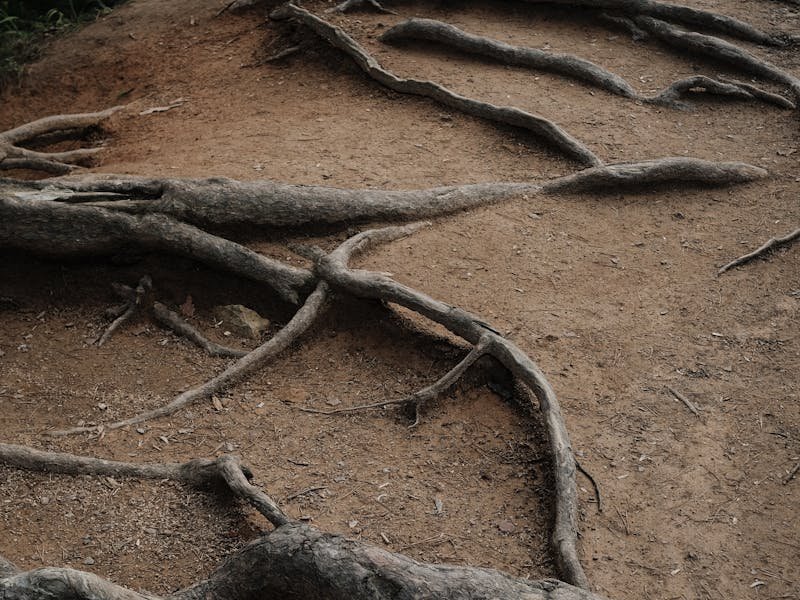
There are several surface clues that point to root problems. Soil heaving, where the ground on one side of the tree has lifted or cracked, is one of the most alarming because it suggests the root plate is shifting. You might also see exposed roots that are severed, decayed, or girdling (wrapping around the base of the trunk instead of growing outward). Sometimes the first sign is that the tree has started leaning slightly, with a crack in the soil on the opposite side from the lean.
Here in the Huntsville area, root problems are unfortunately common because of our clay soil. The red and brown clay prevalent throughout Madison County shrinks and swells dramatically with moisture changes. During a dry summer, the soil contracts and can pull away from root systems, leaving air gaps that dry out and weaken fine feeder roots. Then when fall rains come back, the soil expands and puts lateral pressure on structural roots. This constant cycle of shrink-and-swell is tough on root systems, especially for trees planted in heavily compacted yards.
Construction damage is another huge cause of root problems in our area. With all the development happening in Madison, Meridianville, and out along Highway 72, we see it constantly. A contractor runs heavy equipment over the root zone, trenches through major roots for a utility line, or changes the grade around a tree. The damage happens during construction but the tree might not show symptoms for two to five years, long after the builder is gone and the homeowner has no idea why their tree is suddenly in decline.
Why It Is Dangerous
A tree with compromised roots is like a building with a cracked foundation. It might stand there looking fine for months or even years, but it is vulnerable to sudden, catastrophic failure. Root-compromised trees are the ones that topple over in storms, pulling up a root ball and leaving a crater in your yard. They fall with very little warning because the failure happens below ground where nobody can see it developing.
In Huntsville, our severe weather season makes root problems especially dangerous. A tree with healthy roots can withstand 60 mph straight-line winds from a typical springtime thunderstorm. A tree with significant root decay or damage might not survive a 30 mph gust. And given that the Tennessee Valley sees its fair share of tornadoes and severe thunderstorms every spring, a root-compromised tree is a ticking time bomb.
Can the Tree Be Saved?
If root damage is limited, say a single root was cut during a utility repair, and the tree otherwise has a healthy, extensive root system, it can often recover with proper care. Mulching over the root zone, ensuring adequate water during drought, and avoiding any further soil compaction can help.
But if you are seeing soil heaving, multiple severed roots, or significant root decay, the tree's anchorage is compromised and there is no way to rebuild a root system. Those trees need to come down. We tell people, if the ground itself is telling you something is wrong, listen to it.
5. Severe or Sudden Lean
Let's be clear about something upfront: lots of trees lean a little, and that is perfectly fine. Walk through any neighborhood in Southeast Huntsville or over in the older parts of Decatur and you will see plenty of trees that have grown at a slight angle their whole lives. They have developed compensating root structures and adapted their growth patterns. A natural lean is usually nothing to worry about.
A sudden lean, however, is a completely different story. And that is the one that should have you picking up the phone.
What It Looks Like
The distinction is between a tree that has always leaned and one that has recently started leaning or has increased its lean noticeably. Signs of a new or worsening lean include cracked or buckled soil on the side opposite the lean, exposed roots on the leaning side, a visible gap between the root crown and the ground, and the lean being more pronounced than you remember it being last year.
Sometimes the lean develops gradually over a season or two. Other times it happens suddenly, often after heavy rain saturates the soil. We get calls after major rain events from homeowners in areas like Owens Cross Roads and Big Cove who have noticed a tree that is suddenly tilting at an angle it was not at before the storm. That saturated Alabama clay soil loses its ability to grip the roots, and once the lean starts, it rarely corrects itself.
Why It Is Dangerous
A sudden lean means the root system is failing. The tree is literally coming out of the ground in slow motion. Sometimes the process stops and the tree stabilizes at a new angle. But often, especially if the cause is root decay or soil instability, the lean continues until the tree falls over entirely.
Trees that fail from a lean tend to fall as a whole unit, root ball and all. They do not break apart the way a tree with trunk failure might. That means the entire weight of the tree, potentially 15,000 to 20,000 pounds or more for a large hardwood, comes down in one direction. If your home, your neighbor's home, a power line, or a road is in that direction, you have a serious problem.
When Removal Is Necessary
As a general rule, any tree that has developed a lean of more than 15 degrees from vertical, particularly one that was not there before, is a candidate for removal. If the lean is accompanied by soil heaving, cracked ground, or exposed roots, that tree should be assessed by a professional immediately. Do not wait for the next storm. A leaning tree with root failure can go over in a moderate wind event or even under its own weight on a calm day.
We have seen it happen. A large willow oak in a neighborhood off Whitesburg Drive went over on a clear morning in April, no storm, no wind to speak of. It had been leaning for about six months and the homeowner kept meaning to call someone. It landed across the street and hit two parked cars. Nobody was hurt, but it could have been a lot worse.
6. Bark Falling Off in Large Sections
A certain amount of bark shedding is normal and even healthy for some species. Sycamores, which are common along creeks and waterways throughout the Tennessee Valley, naturally shed bark in large patches as they grow. Some species of hickory have shaggy bark that peels away in strips. That is just how those trees work.
But when a tree that normally has tight, intact bark starts losing it in large sheets or sections, exposing bare wood underneath, that is a warning sign that something has gone wrong internally.
What It Looks Like
We are talking about large sections of bark separating from the trunk and falling away, leaving smooth, bare wood or soft, punky tissue exposed. On oaks, maples, and other tight-barked species, this is abnormal and noticeable. The exposed wood underneath may appear stained, discolored, wet, or have a soft, spongy texture when you press on it. Sometimes you will see insect galleries (tunnels) in the exposed wood, indicating that borers have been at work.
Bark loss can also show up as "cankers," which are sunken, dead areas in the bark that look like wounds the tree cannot heal. These are caused by various fungal and bacterial pathogens and they can girdle a trunk or branch, killing everything above the canker by cutting off the flow of nutrients.
Why It Is Dangerous
Bark is not just the tree's skin. It contains the phloem, the tissue that transports sugars and nutrients manufactured by the leaves down to the roots. When bark is lost around a significant portion of the trunk's circumference, the tree loses its ability to feed its root system. The roots weaken, decay sets in, and structural integrity begins to fail.
Bark loss also exposes the sapwood to pathogens, insects, and moisture that accelerate decay. Once the protective barrier of bark is gone, the tree is essentially defenseless against a whole host of organisms that want to move in.
We see a lot of bark loss caused by storm damage here in Huntsville. Lightning strikes are a common culprit. A lightning bolt can blow a strip of bark right off a tree from crown to ground. Sometimes the tree survives the strike and compartmentalizes the wound. Other times, the damage is too extensive and the tree slowly declines over the following months or years.
Can the Tree Be Saved?
If the bark loss is limited to one side of the trunk and covers less than about 25 percent of the circumference, the tree has a decent chance of surviving and sealing over the wound, especially if it is an otherwise healthy, vigorous tree. Good care, including proper watering during drought and avoiding any additional stressors, gives it the best shot.
However, if you have bark loss around 50 percent or more of the trunk's circumference, the tree is in critical condition. It will not be able to sustain its root system, and decline is inevitable. At that point, it is better to remove it on your terms rather than waiting for it to weaken to the point where it becomes a hazard.
7. Tree Growing Too Close to Structures or Power Lines
This last one is a little different from the others because it is not necessarily about the tree being sick or damaged. It is about a perfectly healthy tree being in the wrong place. And in a city like Huntsville, where residential development has boomed over the last three decades, this is probably the most common tree issue we deal with.
What It Looks Like
You have got a tree whose branches are scraping your roof, hanging over your house, or intertwined with power lines. Maybe the roots are buckling your driveway, cracking your foundation, or clogging your sewer line. Perhaps the canopy is so dense over your home that you have perpetual shade and moisture problems leading to moss on the roof and mold in the crawlspace.
In the Huntsville area, we see this constantly with species that were popular in landscaping 30 and 40 years ago but grow much larger than homeowners anticipated. Water oaks, silver maples, Bradford pears (before everyone realized what a terrible tree they are), and sweetgums were planted close to homes throughout the 1980s and 1990s in neighborhoods across Madison, South Huntsville, and the Athens area. Now those trees are mature, massive, and way too close to structures.
Loblolly pines are another frequent offender. They are native, fast-growing, and they do well in our soil and climate. But a loblolly can reach 80 to 100 feet tall with a root system that spreads well beyond the drip line. A pine planted 15 feet from a foundation 25 years ago is now a legitimate threat to that foundation, the plumbing beneath it, and the roof above it.
Why It Is Dangerous
The danger here is straightforward: proximity means any failure, a falling branch, a split trunk, an uprooted tree, will directly impact your home, your family, or critical infrastructure like power lines. The closer the tree is to the target, the greater the risk and the less reaction time anyone has.
Root intrusion is the slow-motion version of this problem. Roots seeking moisture can find their way into sewer lines, foundation drains, and irrigation systems. Once inside, they expand and cause blockages or structural damage. Alabama's clay soil exacerbates this because roots tend to follow the path of least resistance, and the backfill around foundations and utility trenches is often softer and more permeable than the surrounding native clay.
And then there is storm damage. During tornado season in North Alabama, which really runs from late February through June, trees near structures become potential battering rams. We respond to emergency storm damage calls every single year where a tree that was growing too close to a house came down on it during a severe thunderstorm. In many of those cases, the homeowner had thought about having the tree removed but had not gotten around to it.
When Removal Is Necessary
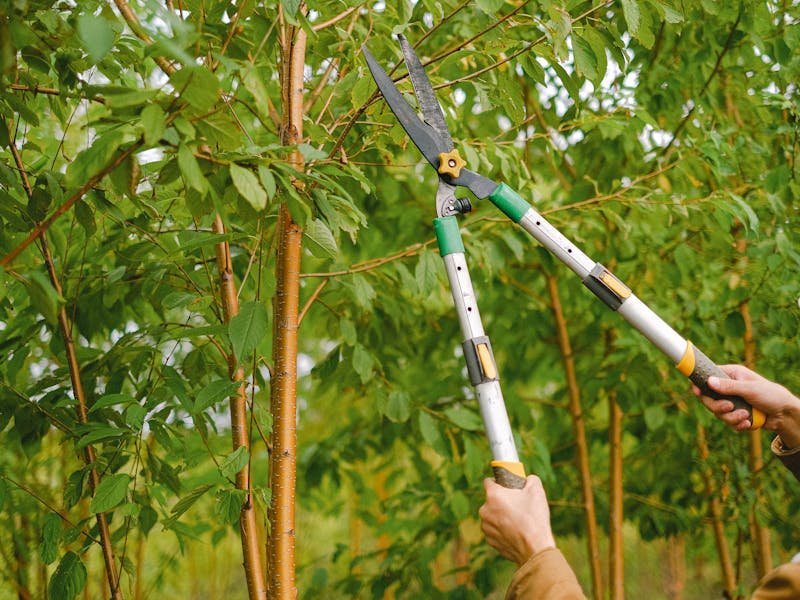
Not every tree near a structure needs to come down. Proper pruning and crown reduction can manage risk in many cases, buying you years of continued enjoyment from the tree while keeping your home safe. We always look at trimming as a first option because we would rather save a healthy tree when we can.
But removal becomes necessary when the tree is simply too large for the space, when roots are causing active structural damage, when the canopy cannot be adequately cleared from the roof and power lines through pruning alone, or when the tree's species and growth pattern make it inherently unsuitable for its location. A water oak growing 10 feet from your foundation is never going to stop being a problem, no matter how much you trim it. Sometimes the kindest thing, both for the tree and your wallet, is to remove it and plant a more appropriate species.
What to Do If You Spot These Warning Signs
If you have read through this list and something clicked, if you walked outside and looked at a tree and thought, "That is exactly what mine looks like," here is our straightforward advice:
Do not panic, but do not wait either. Trees rarely fail without some warning, which is the whole point of this article. But once the warning signs are there, the clock is ticking. The question is not whether the tree will eventually fail, but when, and whether it will fail on your terms or its own.
Get a professional evaluation. We offer free assessments for homeowners across Huntsville, Madison, Decatur, Athens, and all of Madison County. We will come out, look at your tree, tell you honestly what we think, and give you your options. Sometimes the answer is pruning. Sometimes it is monitoring. And sometimes, yes, the answer is removal. But you will get a straight answer from us, not a sales pitch.
Prioritize based on proximity. If you have a questionable tree growing right next to your home, over your driveway, or near where your family spends time, that one gets attention first. A declining tree in the back corner of a large lot is a very different risk profile than one overhanging your bedroom.
Think about timing. If your tree needs to come down, doing it proactively in decent weather is always cheaper, safer, and less stressful than dealing with it as an emergency after a storm. We see our call volume triple during tornado season, and emergency removals cost more than planned ones because of the urgency and the conditions involved. Planning ahead saves you money and headaches.
If you have a tree you are concerned about, do not spend another storm season wondering if tonight is the night it comes through your roof. Give us a call at (256) 555-0123 or fill out our online form and we will come take a look. The evaluation is free, and we would much rather tell you your tree is fine than get the call after it has already come down.
Frequently Asked Questions
How do I know if a tree needs to be removed?
The seven warning signs covered in this article are the most reliable indicators: dead branches making up a large portion of the canopy, mushrooms or fungal growth at the base, deep cracks or cavities in the trunk, visible root damage or soil heaving, a sudden or severe lean, bark falling off in large sections, and the tree growing dangerously close to your home or power lines. If you notice one or more of these signs, have a certified arborist evaluate the tree. We provide free assessments throughout the Huntsville metro area.
Can a leaning tree be saved?
It depends entirely on the cause. A tree that has grown at a slight angle its entire life has adapted to that lean and is usually structurally sound. But a tree that has recently developed a lean, especially after storms or heavy rain, likely has root system failure. A sudden lean of more than 15 degrees generally means the tree needs to come down. If you are unsure whether your tree's lean is natural or new, a professional evaluation can give you a clear answer.
Are mushrooms at the base of my tree a bad sign?
In most cases, yes. Mushrooms growing at the base of a tree or on surface roots indicate active fungal decay inside the tree's root system or lower trunk. The visible mushrooms are just the fruiting bodies of a much larger organism that has been breaking down wood internally, sometimes for years. By the time mushrooms appear, the decay is often advanced enough to compromise the tree's structural stability. This is especially common in Huntsville's clay soil, which retains moisture and creates ideal conditions for fungal growth.
How much does it cost to remove a dangerous tree in Huntsville?
Tree removal costs in the Huntsville area typically range from $300 to $2,500 depending on the tree's size, location, species, and the complexity of the job. Small trees under 30 feet generally cost $300 to $800. Medium trees between 30 and 60 feet run $800 to $1,500. Large trees over 60 feet can cost $1,500 to $2,500 or more. Trees growing close to homes, power lines, or other structures may cost more because of the technical rigging and extra precautions required. We provide free estimates with no obligation.
Do I need a permit to remove a tree in Huntsville, Alabama?
For most residential properties in Huntsville, you do not need a permit to remove a tree on your own land. However, there are exceptions. Some HOAs have covenants restricting tree removal without approval. Properties in designated historic districts may have additional requirements. The City of Huntsville's tree preservation ordinance can apply in certain situations, particularly for larger or significant trees. Our crew is familiar with local regulations and can help you figure out whether your specific situation requires any permits or approvals.
What is the best time of year to remove a tree in Alabama?
If a tree is hazardous, it should be removed as soon as possible regardless of the season. For planned, non-emergency removals, late fall through winter (November through February) is often the ideal window in our area. Deciduous trees are dormant, making them lighter and easier to work with. The ground is typically firmer, which is better for equipment access. And there is less disruption to surrounding plants and landscaping. That said, we remove trees safely year-round, so scheduling should not prevent you from addressing a hazardous situation.