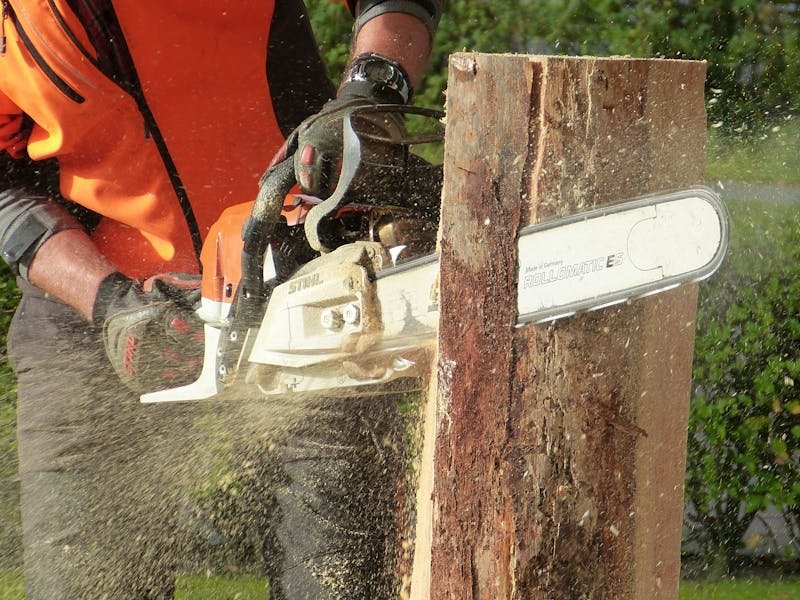
If you own a home in Huntsville, Alabama, chances are you have at least a few trees on your property. Probably more than a few. North Alabama is covered in hardwoods and pines, and most neighborhoods from Blossomwood to Hampton Cove to South Huntsville have mature tree canopies that have been growing for decades. That shade is wonderful until a tree starts dying, leaning toward your roof, or drops a massive limb during one of our spring thunderstorms.
At that point, the first question every homeowner asks is the same: how much is this going to cost me?
We get that question every single day. And the honest answer is that it depends on a handful of factors we will walk you through in this guide. But we are not going to leave you hanging with vague answers. We are going to give you actual dollar ranges based on what tree removal really costs here in the Huntsville metro area in 2026, not national averages pulled from some generic website that has never set foot in Madison County.
We have been removing trees across Huntsville, Madison, Decatur, and the surrounding communities for years. We know what a 60-foot Loblolly Pine in a tight backyard in Five Points costs to take down. We know what it takes to remove a massive Southern Red Oak hanging over a historic home in Twickenham. And we are going to share all of that knowledge with you right here.
Average Tree Removal Costs in Huntsville, AL (2026)
Let us start with the numbers. The table below shows what you can realistically expect to pay for tree removal in the Huntsville area this year. These ranges are based on standard removals where the tree is reasonably accessible and does not require specialized crane work or extensive rigging near structures.
| Tree Size | Height | Price Range | Common Species in Huntsville |
|---|---|---|---|
| Small | Under 30 ft | $300 – $800 | Dogwood, Crepe Myrtle, Redbud, small ornamentals |
| Medium | 30 – 60 ft | $800 – $1,800 | Bradford Pear, Sweetgum, smaller Pines, Maple |
| Large | 60 – 80 ft | $1,500 – $2,500 | Loblolly Pine, Red Oak, White Oak, Hickory |
| Very Large | 80+ ft | $2,500 – $3,500+ | Southern Live Oak, mature Tulip Poplar, old-growth Pines |
| Hazardous/Emergency | Any size | $500 – $5,000+ | Storm-damaged, fallen, leaning on structures |
A few important notes about these prices. First, these are for complete removal including cutting, sectioning, and hauling away all wood and debris. They do not include stump grinding, which is typically an additional $100 to $400 per stump depending on size. Second, these prices assume reasonable access. If your tree is in a spot where we cannot get equipment close to it, or if it is tangled in power lines, the price will be on the higher end or above these ranges.
Factors That Affect Tree Removal Cost in Huntsville
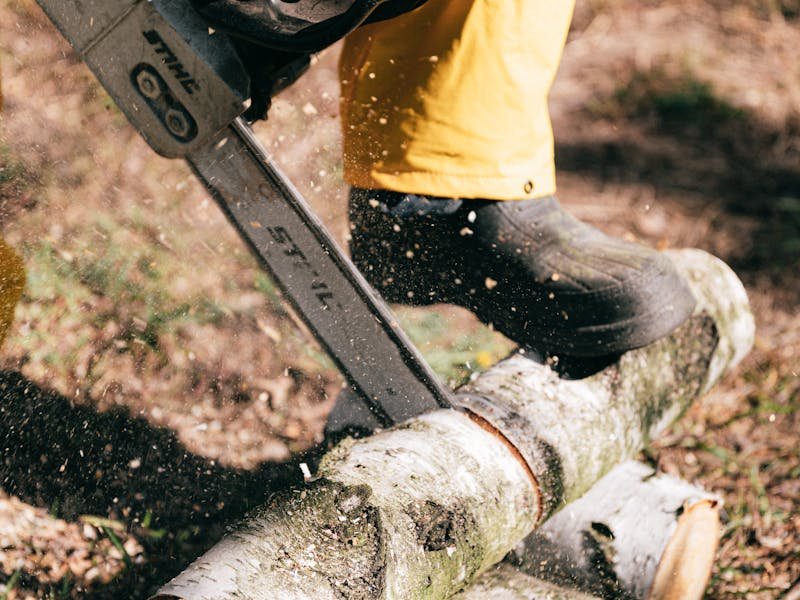
No two tree removal jobs are identical. A 50-foot pine in an open yard in Harvest is a completely different job than a 50-foot pine wedged between a house and a fence in the older neighborhoods near Governors Drive. Here are the main factors that will push your price up or down.
1. Tree Size (Height and Trunk Diameter)
This is the single biggest factor. A bigger tree means more wood to cut, more weight to manage, more debris to haul, and more time on the job. A 25-foot Crepe Myrtle might take one crew member an hour. A 75-foot Red Oak could take a four-person crew most of a day.
Trunk diameter matters too. A tall but skinny pine is less work than a shorter but massively thick oak with a 3-foot diameter trunk. Thick trunks take longer to cut through and produce heavier sections that require more careful rigging.
2. Tree Species
Here in Huntsville, we deal with a wide variety of tree species, and some are harder to remove than others. Hardwoods like Oak, Hickory, and Sweetgum are denser and heavier than softwoods like Pine. That means they take more time to cut, the sections are heavier to move, and the equipment works harder.
Some specific species considerations for our area:
- Loblolly Pine – These are everywhere in North Alabama. They grow tall and straight, which usually makes them relatively straightforward to remove. But they are also brittle, which means storm-damaged pines can be unpredictable. A healthy 70-foot pine in an open area is a standard job. A storm-split pine leaning on your garage is a whole different story.
- Southern Red Oak and White Oak – These are the big, spreading hardwoods you see all over Monte Sano and the older Huntsville neighborhoods. They can have enormous canopy spreads, sometimes 60 to 80 feet across. Removing a large oak with a wide spread near a house often requires sectional dismantling from the top down, which is more labor intensive and more expensive.
- Sweetgum – Common throughout Madison County. Medium-difficulty removal. They are not as dense as oaks but can grow quite tall. The real headache with sweetgum is the root system, which can be aggressive and is worth considering if you are also planning stump removal.
- Hickory – Very hard, very heavy wood. Hickory removals take longer because the wood is dense and tough on equipment. If you have a large hickory that needs to come down, expect to pay toward the higher end of the range for its size category.
- Bradford Pear – You see these all over Huntsville subdivisions. They were planted heavily in the 1990s and 2000s, and now many of them are splitting apart because of their weak branch structure. They are relatively easy to remove, but we get a lot of calls for them, especially after ice storms or heavy winds.
3. Location and Accessibility
Where the tree is on your property has a big impact on cost. The easiest and cheapest removals are trees in open areas with good access for our trucks and equipment. The hardest and most expensive are trees in tight spots with obstacles on every side.
Factors that increase cost due to location:
- Proximity to structures – A tree next to your house, garage, shed, or deck requires careful sectional removal. Every piece has to be roped and lowered with control rather than felled freely. This takes significantly more time and skill.
- Power lines – If the tree is near or touching power lines, special procedures are required. In some cases, we have to coordinate with Huntsville Utilities to temporarily disconnect power. Trees in power lines add both time and liability to the job.
- Fences and landscaping – Backyards with privacy fences, irrigation systems, patios, and ornamental gardens all create obstacles we have to work around carefully.
- Steep terrain – Homes on Monte Sano Mountain, Green Mountain, and the Ledges community often sit on steep, rocky terrain. Getting equipment up steep driveways and working on slopes adds difficulty and cost.
- Limited access – Some properties in older neighborhoods like Blossomwood, Five Points, and Twickenham have narrow driveways, low-hanging utilities, or tight alleyways that make it difficult or impossible to get a bucket truck or crane in close. When we cannot use heavy equipment, everything has to be done by hand with climbing, which takes more time.
4. Tree Condition
The health and structural condition of the tree affects both the difficulty and the cost. A healthy, structurally sound tree behaves predictably when you cut it. A dead or decaying tree does not.
Dead trees are actually harder and more dangerous to remove than living ones. The wood is brittle and can break unexpectedly. Dead branches can snap off while the climber is in the tree. The trunk may be hollow or rotted inside, which changes how it responds to cuts. All of this requires more caution, more planning, and sometimes different techniques, which adds to the cost.
Likewise, trees that have been damaged by storms, struck by lightning, or are actively leaning in a dangerous direction require careful assessment and precise execution. We have seen plenty of storm-damaged pines in Jones Valley and Bailey Cove that look like they are about to come down any minute. Those situations call for extra caution.
5. Number of Trees
If you need multiple trees removed, most tree services including ours will give you a better per-tree rate. The mobilization cost, the truck and equipment transport, and the crew setup are the same whether we are removing one tree or five. So if you have been thinking about taking down a couple of trees, getting them all done at the same time will save you money compared to doing them one at a time.
6. Time of Year
Tree removal prices in Huntsville can vary by season. Late fall and winter, roughly November through February, is generally the slowest season for tree services. Trees are dormant, there are fewer leaves to deal with, and there is less demand. You can often get better pricing during this window.
Spring and summer are busier. That is when trees are in full leaf and homeowners start noticing problems. It is also when our severe weather season ramps up. Huntsville sits squarely in Dixie Alley, and between March and June we get hit with some serious thunderstorms, straight-line winds, and the occasional tornado. After a big storm rolls through, demand for tree removal spikes hard and prices can go up temporarily just because every tree service in town is booked solid.
7. Cleanup and Hauling
Most reputable tree services include full cleanup and debris removal in their quoted price. But it is worth asking, because some companies will quote you a lower price for the cutting only and then charge extra for cleanup and hauling, or leave the wood in your yard for you to deal with.
Our prices always include complete cleanup. We chip the branches on-site, remove all wood, and rake the area clean. If you want us to leave the firewood, we are happy to do that and it can sometimes knock a little off the price since it saves us hauling weight.
Additional Costs to Consider
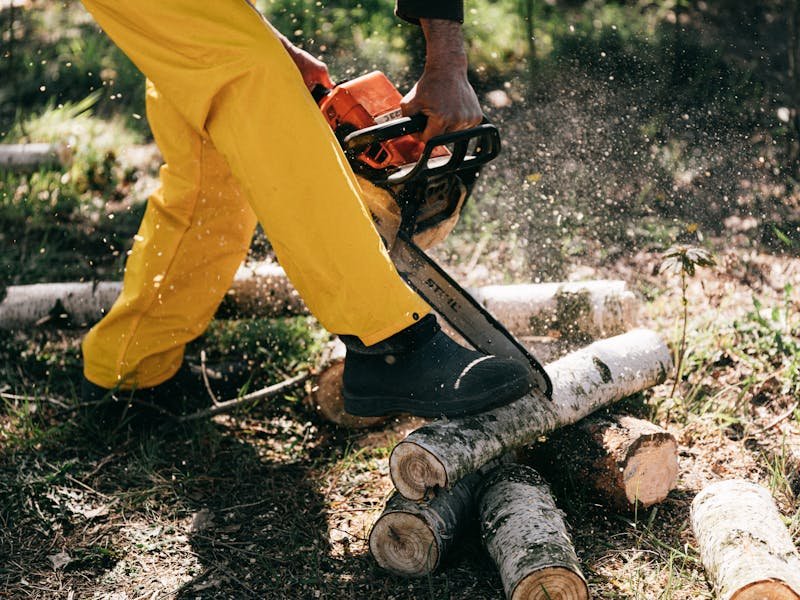
The tree removal price is not always the only expense. Here are some add-on costs that many homeowners do not think about until the tree is already down.
Stump Grinding
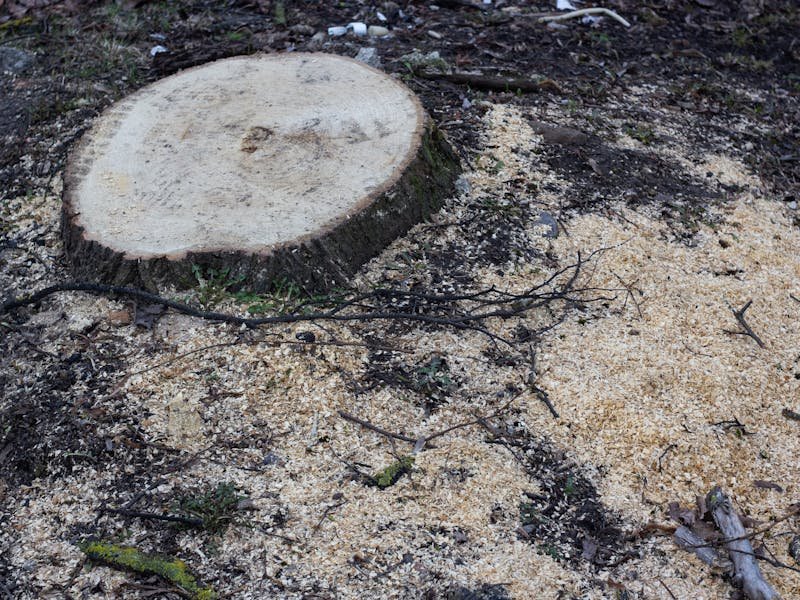
Once the tree is gone, you are left with a stump. Some homeowners do not mind a stump in their yard, but most want it gone. Stump grinding in Huntsville typically costs:
- Small stump (under 12 inches diameter): $100 – $200
- Medium stump (12 to 24 inches): $150 – $300
- Large stump (over 24 inches): $250 – $400
- Additional stumps: $50 – $100 each when done with the first one
We almost always recommend bundling stump grinding with your tree removal. You will get a better price than scheduling it as a separate job, and you will not have to coordinate another visit. The grinding itself usually takes 30 minutes to an hour per stump, and we grind 6 to 12 inches below grade so you can fill the hole with topsoil and plant grass over it.
Limb Chipping and Hauling
As mentioned, our standard price includes chipping and hauling. But if you are getting quotes from other companies, make sure you ask whether debris removal is included. Some outfits will cut the tree and leave everything in your yard. That pile of branches and wood might look manageable at first, but trust us, a single large oak can produce several tons of material. Hauling it to the dump yourself is not a fun weekend project.
Permit Fees
In most cases, you do not need a permit to remove a tree on your own private property in Huntsville. However, there are a few exceptions. If your property is in a historic district, if the tree is in the public right-of-way, or if your subdivision HOA has tree preservation rules, you might need approval before removal. The Twickenham Historic District and the Old Town Historic District are two areas where this can come up. If a permit is required, the fee is typically modest, but the approval process can take a few weeks.
Crane Rental
For very large trees in tight spaces, sometimes the safest and most efficient method is to use a crane to lift sections out. Crane-assisted removals are more expensive because of the equipment rental cost, but they can actually save you money in some situations. A crane can do in two hours what a climbing crew might take two days to accomplish. Crane-assisted removals in the Huntsville area typically add $500 to $2,000 to the job depending on the crane size needed and duration.
Emergency Tree Removal Costs in Huntsville
If you have lived in Huntsville for any length of time, you know our weather can turn violent fast. We are in the heart of Dixie Alley. The tornado that hit Harvest and the northern part of the county back in 2011 flattened thousands of trees. Major straight-line wind events roll through every spring. Even a routine afternoon thunderstorm in July can drop enough wind and rain to bring down weakened trees.
Emergency tree removal costs more than planned removal. That is true everywhere, but especially here because our storm events tend to create widespread damage and overwhelming demand at the same time. When a major storm hits, every tree service in North Alabama is running full speed, and some companies come in from out of state to pick up overflow work.
Here is what you can expect to pay for emergency tree removal in Huntsville:
- Tree fallen in yard, no structural damage: $500 – $1,500
- Tree on fence or shed: $800 – $2,500
- Tree on house or garage: $1,500 – $4,000
- Tree on car or blocking road: $1,000 – $3,000
- Tree in power lines: $1,500 – $5,000+ (may require utility coordination)
Emergency pricing is typically 25 to 50 percent higher than standard pricing, and that premium is justified. Emergency crews work outside normal hours, in potentially dangerous conditions, and with urgency to secure your property. If your emergency is a true safety hazard, like a tree on your house or blocking your only way out, most good companies will prioritize you.
Does Insurance Cover Tree Removal in Alabama?
This is one of the most common questions we hear, and the answer depends on your situation. Here is the general rule of thumb for homeowners insurance in Alabama:
If a tree falls and damages a covered structure such as your house, garage, fence, or car, your homeowners or auto insurance will typically cover the cost of removing the tree and repairing the damage, minus your deductible. The tree removal coverage is often capped, commonly at $500 to $1,000 per tree, but that varies by policy.
If a tree falls but does not hit anything, most standard homeowners policies will not cover the removal cost. A tree lying in your yard is an inconvenience, but insurers generally consider it your responsibility to remove.
If you proactively remove a hazardous tree before it falls, insurance almost never covers that. It is considered maintenance.
Our recommendation: call your insurance agent before you do anything. Take photos of the damage. Document the situation. If there is structural damage, your agent will typically send an adjuster out. We work with insurance adjusters regularly and can provide the documentation and invoicing format that makes the claims process smoother for you.
One more thing on this topic. After a major storm event, sometimes FEMA or the city will provide debris removal assistance for public right-of-way areas. But for trees on private property, the responsibility falls on the homeowner. Having an emergency fund or good insurance coverage is important if you live in a heavily treed neighborhood, which is most of Huntsville.

How to Save Money on Tree Removal in Huntsville
Tree removal is not cheap, but there are legitimate ways to reduce your cost without cutting corners on safety. Here are our best tips.
Schedule During the Off-Season
If your tree removal is not urgent, schedule it between November and February. This is when tree service companies in Huntsville have the most availability, and many will offer lower rates or run seasonal promotions to keep their crews busy. The exception is right after a major winter ice storm, which can create its own surge in demand.
Bundle Multiple Trees
Getting two or three trees removed at once will almost always be cheaper per tree than getting them done individually. The setup, equipment transport, and crew mobilization costs get spread across multiple trees. We regularly give bundle discounts, and if you have a neighbor who also needs tree work, coordinating jobs on the same day can save both of you money.
Keep the Wood
If you have a fireplace, fire pit, or wood-burning stove, ask your tree service to leave the firewood. Oak and hickory from North Alabama make excellent firewood. Keeping the wood reduces our hauling costs and we can pass some of that savings to you. Just make sure you have a spot to stack it and let it season for at least six months before burning.
Do Your Own Cleanup
Some tree services will give you a lower price if you handle the final yard cleanup yourself, specifically raking up small debris and wood chips after the main work is done. This is only worth it if you are physically able and have the time. The heavy lifting, cutting, and hauling should always be left to the professionals.
Get Multiple Estimates
This should go without saying, but always get at least three written estimates before committing to a tree removal job. There is real variation in pricing among tree services in the Huntsville area, and an estimate is a chance for you to evaluate not just the price but the professionalism and knowledge of the company. Be wary of any quote that comes in dramatically lower than the others. That can be a sign of an uninsured operator or someone who will cut corners.
Combine with Stump Grinding
If you are going to need the stump ground anyway, get it done at the same time as the tree removal. Most companies charge less for stump grinding when it is part of a tree removal job than when it is a standalone visit. You will save on the trip charge and setup time.
Warning Signs Your Tree Needs to Come Down
Sometimes it is obvious a tree needs to go. Other times, the signs are subtler and easy to miss until something goes wrong. Here are the warning signs we tell every Huntsville homeowner to watch for.
- Dead or dying branches in the upper canopy – A few dead branches can be pruned, but if more than 25 to 30 percent of the canopy is dead, the tree is in serious decline and removal is usually the best option.
- Fungal growth at the base – Mushrooms or conks growing at the base of the trunk or on surface roots usually indicate internal decay. The tree may look fine on the outside but be rotting from the inside out.
- Leaning – A tree that has always grown at a slight angle is probably fine. A tree that has recently started leaning, especially if you can see the soil heaving on one side, may have compromised roots and could fall.
- Cracks in the trunk – Deep vertical cracks or splits in the main trunk are structural weaknesses. During a storm, these cracks can cause the tree to split apart.
- Root damage – Construction, trenching, or soil compaction near a tree can damage its root system. Trees with compromised roots are much more likely to fall during wind events. This is something we see a lot in areas of Huntsville that are experiencing heavy development.
- Proximity to your home – If large branches are overhanging your roof, or the trunk is within striking distance of your house, the tree may be worth removing simply for risk reduction, especially in a storm-prone area like North Alabama.
- Severe storm damage – A tree that has lost major limbs or been partially uprooted during a storm is compromised. Even if it looks like it might recover, the structural integrity is often permanently weakened.
If you notice any of these signs, the best move is to have a professional come take a look. We offer free assessments and will give you an honest recommendation. Sometimes pruning or trimming can solve the problem without full removal. But if the tree is truly hazardous, waiting just increases the risk and the potential cost if it comes down on its own during a storm.

Choosing a Tree Removal Company in Huntsville
Huntsville has no shortage of tree service companies, and unfortunately the quality varies widely. After every major storm, you will see out-of-state trucks and crews popping up looking for work. Some are legitimate. Many are not. Here is what to look for when choosing a tree service.
Verify Insurance
This is the most important thing. Ask for proof of both general liability insurance and workers' compensation coverage. Not just a verbal assurance. An actual certificate of insurance. If a crew member gets hurt on your property and the company does not have workers' comp, you could be held liable. If the company damages your property and does not have liability insurance, you are paying for the repair out of your own pocket.
We carry full liability and workers' comp coverage and are happy to show our certificates to any customer who asks. Every homeowner should ask. It takes 30 seconds and protects you from potentially massive financial exposure.
Check for Proper Licensing
Alabama does not have a statewide license specifically for tree service, but the City of Huntsville requires a business license for any company operating within city limits. The company should also have any applicable trade licenses and should be registered with the Alabama Secretary of State if they are an LLC or corporation.
Look for Experience with Local Tree Species
Removing a large Southern Red Oak on Monte Sano requires different knowledge and techniques than removing a pine on a flat lot in Madison. Companies that have worked in the Huntsville area for years understand the local tree species, the typical soil conditions on our limestone-heavy terrain, and the specific challenges of our landscape. They know that Red Clay soil in South Huntsville behaves differently than the rocky soil up on the mountain, and that affects how trees root and how they respond to cutting.
Get Everything in Writing
A reputable company will provide a detailed written estimate that includes the scope of work, what is and is not included, the total price, and payment terms. Avoid companies that only give verbal quotes or pressure you to decide on the spot. Good tree work requires careful planning, and a company that rushes the estimate process will probably rush the job too.
Read Reviews
Check Google reviews, Facebook reviews, and ask for references. A company with consistent five-star reviews from customers in Huntsville, Madison, and the surrounding areas is going to be a safer bet than one with no online presence. Pay special attention to reviews that mention the cleanup. Anyone can cut a tree down. The mark of a professional crew is leaving the property cleaner than they found it.
Avoid Door-Knockers After Storms
After a major storm in Huntsville, people will show up at your door offering to remove your damaged tree for a great deal. Be extremely cautious. Many of these are uninsured, unlicensed operators who do subpar work, disappear after getting paid, and leave you with no recourse if something goes wrong. Some are running outright scams. Stick with established local companies that have a track record in the community.
Tree Removal Cost by Huntsville Neighborhood
One thing that surprises some homeowners is that the cost of removing the same type of tree can vary depending on where in Huntsville you live. This is not because companies charge different rates in different neighborhoods. It is because the characteristics of different neighborhoods create different working conditions.
- Monte Sano – Steep terrain, rocky soil, dense tree cover, and sometimes narrow access roads. Tree removal on the mountain tends to run on the higher end due to the difficulty of getting equipment in and working on slopes. Large oaks and hickories are common up here.
- Blossomwood and Five Points – Mature trees, small lots, older homes built close together. Limited equipment access in some areas. Mid to high range pricing due to the care required around structures and utilities.
- Twickenham – Historic district with massive, mature trees and historic homes. Some of the most challenging removals in the city happen here because of the tree size, property value, and potential permit requirements. Expect higher-end pricing.
- Hampton Cove – Newer development with a mix of established hardwoods and pines. Generally good access and larger lots, which means more straightforward removals and mid-range pricing.
- South Huntsville and Bailey Cove – Established neighborhoods with mature pines and hardwoods. Most properties have decent access. Mid-range pricing is typical.
- Madison – Many newer subdivisions with younger trees that are easier and cheaper to remove. Older areas along Hughes Road and near the original town center have larger, more mature trees. Pricing is generally mid-range.
- Harvest and Meridianville – More rural character, larger lots, good access. Lots of pines. Generally the most affordable area for tree removal due to easy access and open work areas.
DIY Tree Removal: Why You Should Think Twice
We understand the temptation. You see a tree in your yard that needs to go, you own a chainsaw, and you figure you can save a couple thousand dollars by doing it yourself. We are not here to tell you what to do with your own property, but we are going to be straight with you about the risks.
Tree removal is consistently ranked among the most dangerous occupations in America. Professional tree workers train for years and use specialized equipment, rigging systems, and safety gear for good reason. Things that can go wrong include:
- The tree falls in an unexpected direction, hitting your house, car, fence, or a neighbor's property
- A cut branch under tension snaps back and strikes you
- The chainsaw kicks back, which is the leading cause of chainsaw injuries
- You fall from a ladder while attempting to cut upper branches
- A falling limb strikes a power line, creating an electrocution hazard
For small trees under 15 to 20 feet with no overhead obstacles, an experienced homeowner with proper equipment can handle the job safely. But anything larger than that, anything near a structure, and anything near power lines should be left to professionals. The potential cost of a mistake, in terms of property damage, personal injury, or even a fatality, far exceeds the cost of hiring a professional crew.
There is also the liability question. If you drop a tree on your neighbor's fence or car, your homeowners insurance may not cover the damage if you were performing the work yourself without professional qualifications. And if you hit a power line, Huntsville Utilities is going to have questions.
When Is the Best Time to Remove Trees in Huntsville?
The ideal window for planned tree removal in the Huntsville area is late fall through winter, roughly November through February. Here is why:
- Dormant season: Deciduous trees have dropped their leaves, which means less material to deal with, better visibility of the tree's structure, and lighter overall weight.
- Drier ground: Alabama summers can dump a lot of rain, and our red clay soil gets saturated and soft. Heavy equipment can tear up a wet yard. Winter ground is generally firmer and less likely to be damaged by trucks and machinery.
- Lower demand: Tree service companies are less busy in winter, which means faster scheduling and potentially better rates.
- Before storm season: Getting hazardous trees down before our March-through-June severe weather season is smart planning. Once storm season hits, you are rolling the dice every time a front comes through.
That said, tree removal can be done any time of year. If you have a tree that is an immediate hazard, do not wait for the ideal season. Get it taken care of now. A dead tree leaning toward your bedroom does not care what month it is.
Frequently Asked Questions About Tree Removal Costs
Get a Free Tree Removal Estimate in Huntsville
We hope this guide has given you a clear picture of what tree removal costs in the Huntsville area. Every job is different, and the only way to get an exact price is to have someone look at your specific tree and situation.
We offer free, no-obligation estimates for tree removal anywhere in Huntsville, Madison, Decatur, Athens, and the surrounding communities. We will come to your property, assess the tree, and give you an honest written quote with no surprises and no pressure. If we think the tree can be saved with trimming or pruning instead of removal, we will tell you that too.
Call us at (256) 555-0123 or request your free estimate online. We typically respond within 24 hours and can have a crew member out to your property within a few days for non-emergency situations.