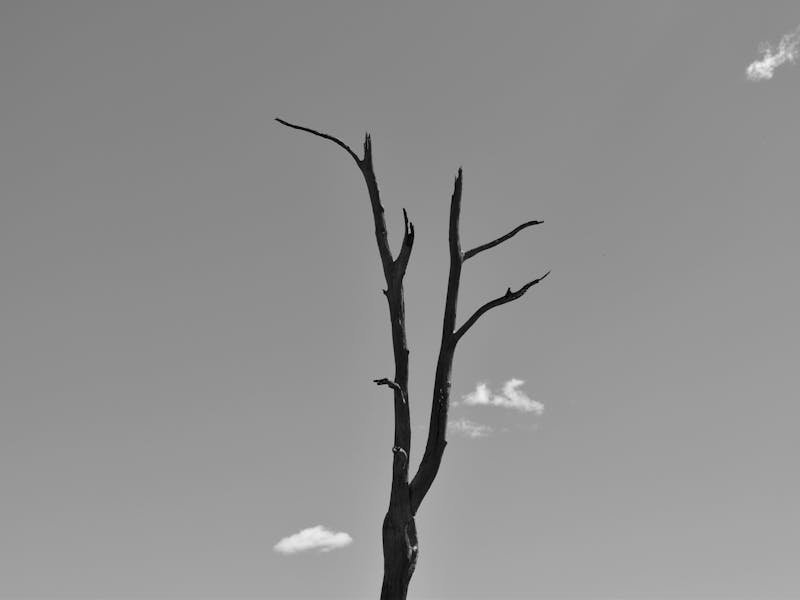
Every tree on your property is a living organism with a finite lifespan, and as trees age, decline, or sustain damage, they can become dangerous. A large oak that has provided shade for decades can become a 15,000-pound liability if its internal structure deteriorates to the point where failure is likely. The challenge is that many of the most dangerous conditions are invisible to the untrained eye—a tree can look green and healthy from the outside while rotting from within.
In the Huntsville area, where severe thunderstorms, tornadoes, and ice storms regularly test the structural integrity of every tree in the landscape, understanding tree hazards is not optional. It is an essential part of responsible property ownership. A falling tree can destroy your home, crush vehicles, block roads, and injure or kill people. And in Alabama, if you knew or should have known that a tree on your property was hazardous and you failed to act, you can be held legally and financially liable for the damage it causes.
This guide explains how professional hazardous tree assessments work, what warning signs you can identify yourself, the hidden hazards that only trained arborists can detect, and when you should schedule a professional evaluation. At Huntsville Tree Pros, our ISA-certified arborists perform comprehensive tree risk assessments using the same methodology trusted by municipalities, utilities, and property managers throughout the country.
What Is a Hazardous Tree Assessment?
A hazardous tree assessment, formally known as a tree risk assessment, is a systematic evaluation of a tree's likelihood of failing and the potential consequences if it does. The International Society of Arboriculture (ISA) has developed a standardized methodology called TRAQ (Tree Risk Assessment Qualification) that is the industry standard for evaluating tree risk.
A TRAQ assessment evaluates three components that together determine the overall risk rating:
- Likelihood of failure — How probable is it that the tree, or a part of the tree, will fail? This considers structural defects, health conditions, species characteristics, site factors, and environmental loading (wind, ice, soil saturation)
- Likelihood of impacting a target — If the tree or branch fails, how likely is it to hit something of value? A tree leaning over a driveway used daily has a much higher target impact probability than a tree leaning over an unused portion of a large lot
- Consequences of impact — If the tree fails and hits the target, how severe would the consequences be? A large tree falling on a house creates far more serious consequences than a small branch falling on a lawn
The combination of these three factors produces an overall risk rating of low, moderate, high, or extreme. This rating guides the arborist's recommendations for management, which may range from "no action needed" to "immediate removal."
Visual Warning Signs of a Hazardous Tree
While a comprehensive assessment requires professional training and equipment, there are many warning signs that homeowners can identify through careful observation. If you notice any of the following conditions, schedule a professional arborist consultation promptly:
Trunk Defects
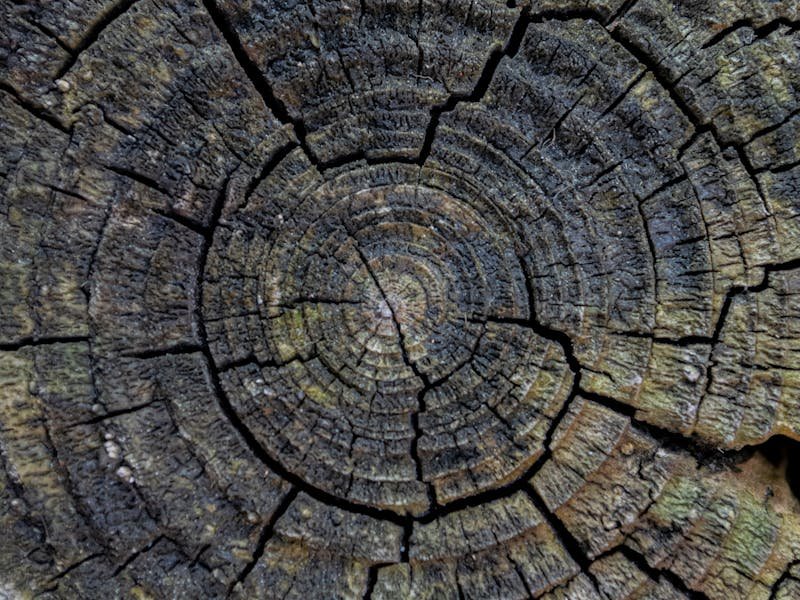
- Large cracks or splits — Vertical cracks in the trunk indicate structural failure may be imminent. Deep cracks that extend through the bark into the wood are especially serious. If you can see daylight through a crack, the tree has already partially failed
- Cavities and hollows — Open cavities in the trunk indicate decay has consumed a portion of the tree's structural wood. A tree can survive with significant internal decay because the outer ring of wood (sapwood) handles both water transport and much of the structural support. However, when cavities extend more than about one-third of the trunk diameter, structural integrity is significantly compromised
- Fungal fruiting bodies — Mushrooms, conks, or shelf fungi growing on the trunk or at the base of the tree indicate internal wood decay. The visible fungus is just the reproductive structure; the actual organism has already colonized and is actively decomposing wood inside the tree. Species like Ganoderma and Laetiporus are particularly destructive and commonly found on Huntsville area trees
- Bark abnormalities — Missing bark, cankers (sunken dead areas), oozing sap, or bark that is separating from the wood can indicate disease, pest damage, or mechanical injury that has compromised the trunk's integrity
- Codominant stems with included bark — When a tree splits into two nearly equal stems (instead of having one dominant trunk), the junction between them often develops a wedge of bark rather than wood. This "included bark" creates a weak point that is prone to splitting apart, particularly during storms. Codominant stems are one of the most common structural defects in Huntsville landscape trees and are a leading cause of storm damage
Crown and Branch Defects
- Dead branches — Dead branches (identified by lack of leaves in growing season, peeling bark, and brittle wood) can fall at any time, not just during storms. Large dead branches over driveways, walkways, decks, and play areas are immediate hazards
- Hanging or broken branches — Partially broken branches still attached to the tree, sometimes called "hangers" or "widow makers," can fall with minimal provocation. Never walk or park under a hanging branch
- Heavy end-weight on long branches — Branches that extend far from the trunk with dense foliage at the tips create significant leverage forces that can cause them to break, especially when weighted by rain or ice
- Previous lion-tailing — Trees that have been improperly pruned by removing interior branches while leaving dense tufts at branch tips (lion-tailing) are prone to branch failure because the foliage acts as a sail in wind
- Asymmetric canopy — A tree with a heavily lopsided canopy is structurally unbalanced. Combined with root problems on the heavy side, this can create enough force to topple the tree in a storm
Root and Base Defects
- Visible root decay — Mushrooms growing at the base of the tree or from surface roots indicate root decay, which undermines the tree's anchoring system. Root decay is particularly dangerous because the tree can appear perfectly healthy above ground while losing its grip on the ground
- Soil heaving — Cracked or raised soil on one side of the tree, especially opposite a lean, indicates the roots are pulling out of the ground. This is an emergency condition
- Recent lean — A tree that has recently started leaning (as opposed to one that has grown at an angle its entire life) is actively failing. Check for soil heaving, cracked soil, and exposed roots on the opposite side of the lean
- Root cutting or damage — Roots that have been severed by construction, utility work, or grade changes may no longer adequately anchor the tree. Root damage effects can take 3 to 5 years to fully manifest
- Girdling roots — Roots that wrap around the base of the trunk and constrict it can slowly strangle the tree. These are common in trees that were container-grown and not properly root-pruned at planting
Hidden Hazards Only Professionals Can Detect
Some of the most dangerous tree conditions are completely invisible without specialized training and equipment. These hidden hazards are the primary reason why professional assessment is so important:
Internal Decay
A tree can be completely hollow inside while maintaining a full, green canopy. The sapwood (outer ring of living wood) handles water transport and can sustain the tree's life functions even when the heartwood (inner core) has been entirely consumed by decay fungi. From the outside, the tree looks fine. But its structural integrity may be critically compromised. Professional arborists use tools like resistographs (micro-drill resistance devices) and sonic tomographs to map internal decay without damaging the tree.
Root Rot
Below-ground root rot organisms like Armillaria (honey fungus) and Phytophthora can destroy a tree's root system while the above-ground symptoms remain subtle or absent. A tree with extensive root rot can topple in a moderate wind that would not affect a healthy tree. In Huntsville's heavy clay soils, poor drainage creates conditions that favor root rot, particularly during wet winters and springs.
Included Bark at Branch Unions
Some branch attachments that appear strong from the outside have included bark (bark trapped within the branch union) that creates a wedge between the branch and trunk. Instead of the interlocking wood grain that creates a strong attachment, included bark creates a flat, weak connection that can separate under load. A trained arborist can identify included bark by examining the branch collar shape and bark pattern at the union.
Structural Defects Masked by Foliage
During the growing season, dense foliage can hide cracks, dead sections, previous failures, and other structural problems. Dormant-season assessments (winter) allow arborists to evaluate branch structure and trunk integrity without the obscuring effect of leaves.
Liability Risks for Huntsville Property Owners
In Alabama, property owners have a legal duty of care to maintain their trees in a reasonably safe condition. The key legal concepts are:
- Known hazards — If you know a tree is dead, diseased, or structurally compromised and you fail to act, you can be held liable for any damage or injury the tree causes. This is straightforward negligence
- Constructive knowledge — Even if you did not actually know a tree was hazardous, if a reasonable person exercising ordinary care would have recognized the danger, you can still be held liable. A large dead tree with no leaves in midsummer is something any reasonable person should notice
- Neighbor notification — If your neighbor has notified you in writing that they believe a tree on your property is hazardous, that written notice creates a strong presumption that you were aware of the risk. If the tree subsequently fails and causes damage, defending against a negligence claim becomes very difficult. For more on neighbor tree issues, read our guide on fallen tree neighbor responsibility in Alabama
- Due diligence defense — Having a professional tree risk assessment performed and following the arborist's recommendations demonstrates due diligence. If a tree fails despite reasonable professional care, liability is significantly reduced because you took appropriate action based on expert guidance
Having your trees professionally assessed is not just about tree health—it is about protecting yourself legally and financially. The cost of a tree risk assessment is trivial compared to the potential cost of a tree failure liability claim.
When to Get a Professional Tree Assessment
Schedule a professional hazardous tree assessment with a certified arborist in any of these situations:
- You notice any of the visual warning signs listed above—cracks, cavities, fungal growth, dead branches, lean, root issues
- After a major storm — Even if your trees are still standing, storm events can cause hidden damage to roots, create internal cracks, and weaken branch attachments that may fail later. See our advice on signs you need tree removal
- Before or after construction — Construction can damage roots, change drainage patterns, and compact soil in ways that stress trees for years afterward
- When buying property — Large trees near the house should be assessed as part of your due diligence. A tree that needs removal could cost $2,000 to $10,000 or more
- Routine assessment of mature trees — Trees over 50 years old or larger than 24 inches in trunk diameter should be assessed every 2 to 3 years, especially if they are within striking distance of structures or high-use areas
- When deciding whether to remove or save a tree — Our guide on when to remove vs. save a tree covers this decision in detail
- After a neighbor expresses concern — If a neighbor tells you they think your tree is dangerous, get a professional assessment to protect yourself legally and to address any legitimate risk
- When you notice sudden changes — A tree that drops a major limb, develops a sudden lean, shows rapid canopy thinning, or begins producing excessive deadwood is telling you something has changed. Pay attention
What to Expect During a Professional Assessment
When you schedule a tree risk assessment with Huntsville Tree Pros, here is what the process typically involves:
- Site walkthrough — Our arborist examines the tree and its surroundings, noting the species, size, health, site conditions, and proximity to targets (structures, walkways, driveways, play areas)
- Visual assessment (Level 1 and 2) — A thorough visual inspection of the trunk, crown, root flare, and surrounding soil for all visible defects. The arborist examines the tree from all sides and at different distances to evaluate overall form and structure
- Advanced diagnostics (if needed) — For trees with suspected internal decay or root problems, the arborist may recommend advanced testing. Resistograph drilling measures wood density along a drill path to map internal decay. Sonic tomography uses sound waves to create a cross-sectional image of the trunk interior. Air excavation can expose root systems for direct inspection without damaging roots
- Risk rating — Based on the assessment findings, the arborist assigns a risk rating (low, moderate, high, or extreme) using the ISA TRAQ matrix
- Written report — You receive a detailed written report documenting the findings, the risk rating, and specific management recommendations. This report serves as evidence of due diligence and can be provided to insurance companies, neighbors, or in legal proceedings if needed
Management Options for Hazardous Trees
Not every hazardous tree needs to be removed. Depending on the nature and severity of the risk, several management options may be appropriate:
- Pruning — Removing dead branches, reducing weight on long limbs, and improving structural balance through professional pruning can significantly reduce risk
- Cabling and bracing — Supplemental support systems can reinforce weak branch unions, codominant stems, and other structural defects without removing the tree
- Target relocation — Sometimes the most practical solution is moving the target rather than treating the tree. Moving a picnic table, parking area, or play structure away from a potentially hazardous tree eliminates the risk without removing a valuable landscape asset
- Increased monitoring — Trees rated as moderate risk may be managed through more frequent professional inspections rather than immediate intervention
- Removal — When risk is extreme, when the tree is dead or dying, or when no other mitigation can reduce the risk to an acceptable level, removal is the appropriate recommendation
Frequently Asked Questions About Hazardous Tree Assessment
What is a TRAQ tree risk assessment?
TRAQ stands for Tree Risk Assessment Qualification, a professional credential from the International Society of Arboriculture. A TRAQ assessment systematically evaluates a tree's likelihood of failure, the likelihood of hitting a target, and the consequences. It produces a risk rating of low, moderate, high, or extreme that guides management decisions.
How much does a hazardous tree assessment cost in Huntsville?
A basic visual tree risk assessment costs $75 to $200 per tree. A comprehensive TRAQ assessment with a written report costs $150 to $400 per tree. Advanced diagnostic testing (resistograph, sonic tomography) costs $200 to $600 per tree depending on size and testing required.
Can a tree look healthy but still be dangerous?
Yes. Internal decay can hollow out a trunk while the outer wood maintains a green canopy. Root rot can destroy the anchoring system with no visible symptoms above ground. Codominant stems with included bark can appear strong but have a critical structural weakness. This is why professional assessment matters.
Am I liable if my tree falls on a neighbor's property?
In Alabama, you can be liable if the tree was dead, diseased, or obviously hazardous and you failed to act. If a healthy tree falls in a storm, you are generally not liable. Having a professional assessment and following recommendations provides a strong due diligence defense. Read more about neighbor tree responsibility in Alabama.
How often should I have my trees assessed?
Large, mature trees near structures should be assessed every 2 to 3 years. Also schedule assessments after major storms, if you notice new symptoms, after nearby construction, and when buying property with large trees. Annual homeowner walk-around inspections can catch obvious changes between professional assessments.
What happens if my tree is rated as high risk?
The arborist will recommend specific actions: removal (for extreme risk), pruning to reduce weight and wind load, cabling and bracing to support weak unions, target relocation, or increased monitoring. The goal is reducing risk to an acceptable level, which sometimes means removal but can often be achieved through less drastic measures.