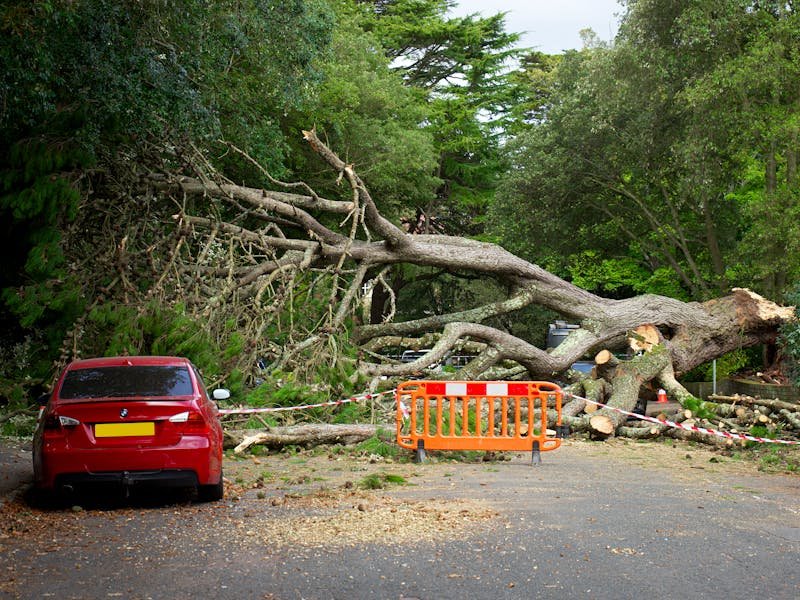
A storm rips through the Tennessee Valley, and the next morning your neighbor's 80-foot oak is lying across your fence, on top of your shed, and covering half your backyard. Or maybe the opposite happened—your tree fell onto your neighbor's property. Either way, the question that immediately comes up is one we hear constantly in the Huntsville area: who is responsible for paying for the removal and the damage?
The answer under Alabama law is not always what people expect, and misunderstanding the rules can lead to unnecessary conflict, wasted money, or missed insurance claims. As a tree removal company that regularly deals with fallen trees on shared property lines across Huntsville, Madison, Decatur, and surrounding communities, we see these disputes play out frequently. This guide explains the law, the insurance implications, and the practical steps you should take.
Disclaimer: This article provides general information about Alabama tree law and is not legal advice. Every situation is different. For specific legal guidance, consult an Alabama attorney.
The General Rule in Alabama: "Act of God" Doctrine
Alabama follows what is commonly referred to as the "Act of God" doctrine when it comes to trees that fall due to natural events like storms, wind, lightning, or ice. Under this principle:
- If a healthy tree falls on your neighbor's property due to a storm or other natural event, you (the tree owner) are generally NOT liable for the damage or the removal cost. The storm—not your negligence—caused the tree to fall, and you are not expected to prevent acts of nature.
- The property owner where the tree lands is typically responsible for dealing with the damage and removal on their property. Their homeowners insurance would be the primary coverage for damage to their structures.
This means that if your neighbor's perfectly healthy oak tree falls on your fence during a thunderstorm, your neighbor is generally not responsible for fixing your fence or paying for the tree removal on your side of the property line. Your homeowners insurance (or your own out-of-pocket expense) covers the damage to your structures, and you are responsible for removing the portion of the tree that is on your property.
We understand this can feel unfair—after all, it was their tree. But Alabama law, like most states, treats natural events as circumstances beyond either party's control.
The Critical Exception: Negligence
The "Act of God" protection disappears when negligence is involved. Under Alabama law, a tree owner can be held liable for damage caused by their tree if they knew (or should have known) that the tree was dead, diseased, or structurally dangerous and failed to take reasonable steps to address the hazard.
What Constitutes Negligence in Alabama Tree Law?
Negligence in tree liability cases typically requires proving three things:
- The tree was in a hazardous condition — It was dead, severely diseased, structurally compromised, had major dead branches, significant lean, visible root damage, or other clear signs of decline.
- The tree owner knew or should have known about the hazardous condition — "Should have known" means the condition was visible and obvious to a reasonable person. You do not have to prove the neighbor had an arborist assessment; you only need to show the danger was reasonably apparent.
- The tree owner failed to take reasonable action — Despite knowing about the hazard, the owner did nothing to address it (no trimming, no removal, no consultation with a professional).
Examples of Negligence vs. Non-Negligence
Here are some scenarios based on situations we commonly encounter in the Huntsville area to help illustrate the distinction:
Likely NOT negligence:
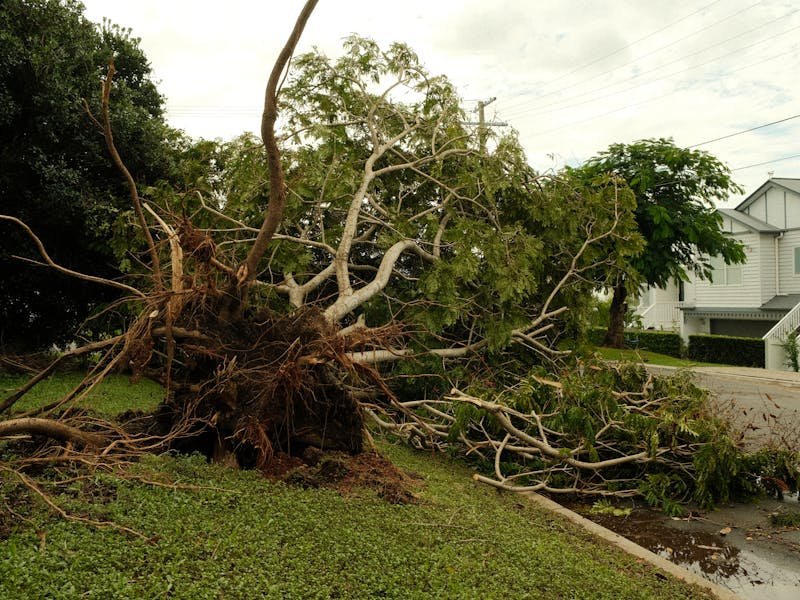
- A healthy, full-canopied red oak is uprooted during a tornado or severe thunderstorm and falls onto your neighbor's house. Even though the tree was on your property, you had no reason to believe a healthy tree would fail, and the storm was an extraordinary event.
- A seemingly healthy pine tree has internal rot that was not visible from the outside. It snaps during moderate winds and damages a neighbor's car. Because the defect was hidden, you could not have reasonably known about it.
- A large branch breaks from a healthy tree during an ice storm—an unusual weather event for the area—and damages a neighbor's fence.
Likely IS negligence:
- A tree on your property has been dead for two years. The bark has fallen off, the branches are bare, and woodpeckers have riddled the trunk with holes. Your neighbor has asked you twice to remove it. It falls during a modest windstorm and crushes their garden shed. You knew the tree was dead and did nothing.
- An arborist examined your tree, told you it had severe structural damage and recommended removal, and you ignored the recommendation. The tree later falls on your neighbor's property.
- Your neighbor sent you a certified letter noting that a large dead branch on your tree was hanging directly over their driveway. You did not address it, and the branch fell, damaging their vehicle. The written notice proves you knew about the specific hazard.
The Importance of Written Notice
One of the most important things you can do if your neighbor has a tree that concerns you is to provide written notice. A verbal conversation about a dangerous tree is hard to prove later. Written documentation establishes that the tree owner was aware of the problem.
How to Write an Effective Notice
If you believe a neighbor's tree poses a hazard to your property, send a written notice that includes:
- The date
- A description of the tree and its location (species if you know it, approximate height, location relative to the property line and structures)
- A specific description of the hazard you have observed (dead branches, significant lean, visible decay, loss of bark, fungal growth, etc.)
- A clear request that the neighbor have the tree inspected by a professional and address any hazard
- Your contact information
Send the notice by certified mail with return receipt requested so you have proof it was delivered. Keep a copy for your records. Also take photographs of the tree showing the hazardous condition, and date-stamp the photos.
This written notice does not guarantee your neighbor will act, but it creates a clear record that they were informed of the danger. If the tree subsequently falls and damages your property, you have strong evidence for a negligence claim against the neighbor (and their insurance company).
Insurance Claims When a Neighbor's Tree Falls on Your Property
In most cases involving fallen trees between neighbors, insurance is the primary mechanism for dealing with the costs. Here is how it typically works in Alabama:
Scenario 1: Healthy Tree Falls During a Storm (No Negligence)
- Damage to your structures (house, garage, fence, shed) is covered by your homeowners insurance under the wind/storm peril. You file a claim with your insurer, pay your deductible, and your policy covers the repairs.
- Tree removal costs are typically covered by your insurance as part of the claim, subject to per-tree and aggregate limits in your policy (usually $500 to $1,000 per tree, up to $5,000 total).
- Your neighbor's insurance is generally NOT involved because your neighbor was not negligent. Their tree fell due to a storm, which is not their fault.
Scenario 2: Dead or Neglected Tree Falls (Negligence Exists)
- You may have a claim against your neighbor's homeowners insurance under their liability coverage. Their negligence in maintaining a known hazardous tree makes them potentially responsible for the damage.
- You can still file with your own insurance first to get the situation addressed quickly. Your insurance company may then pursue a subrogation claim against your neighbor's insurer to recover the costs.
- Documentation is critical. Your previous written notices, photographs of the dead tree, any arborist reports, and witness statements all strengthen the claim. Without evidence of prior knowledge, proving negligence becomes much harder.
Scenario 3: The Tree Lands in Your Yard But Does Not Damage Any Structure
- Most standard homeowners policies do not cover tree removal unless a covered structure was damaged. If the tree falls in your yard without hitting anything, you are generally paying for removal out of pocket, regardless of whose tree it was.
- Some policies have an exception for trees blocking access to your driveway or home. Check your policy for "debris removal" provisions that may apply even without structural damage.
For more details on how insurance handles tree removal in Alabama, read our full guide: Does Homeowners Insurance Cover Tree Removal in Alabama?
Trees That Straddle the Property Line
A special situation arises when a tree's trunk is directly on or straddling the property line. Under Alabama law, a tree whose trunk grows on both sides of the boundary line is generally considered the joint property of both landowners. Neither neighbor can unilaterally remove the tree without the other's consent.
If a boundary tree falls, both property owners share responsibility for the tree itself, while damage to each owner's property and structures is handled by that owner's insurance (absent negligence). This is a good reason to maintain open communication with your neighbor about shared trees, especially large, older trees that could cause significant damage if they fail.
Overhanging Branches: Your Right to Trim
A related issue that comes up constantly is overhanging branches. Under Alabama law and the common law of most states, you have the right to trim branches from a neighbor's tree that extend over your property line—but only up to the property line, and only at your own expense.
Key rules for trimming overhanging branches in Alabama:
- You can trim branches back to the property line but not beyond it. You cannot enter your neighbor's property to do the trimming, and you cannot remove branches that are entirely on their side of the line.
- You cannot kill the tree. If your trimming is so aggressive that it kills or severely damages the tree, you could be liable for the replacement value of the tree. Trim conservatively and follow proper pruning practices.
- You pay for the trimming. Even though the branches originate from your neighbor's tree, the cost of trimming branches on your side is your responsibility.
- The trimmed branches are yours to dispose of. You cannot dump the trimmings back over the fence onto your neighbor's property.
- Fruit that falls on your property is yours. Similarly, leaves, acorns, pine needles, and other natural debris from a neighbor's tree that fall on your property are considered a natural occurrence, not something you can demand your neighbor prevent.
If branches from a neighbor's tree are a significant concern—overhanging your roof, blocking light, or dropping heavy debris—the best approach is to talk with your neighbor first. Many neighbors will agree to share the cost of professional tree trimming, or they may be willing to have the tree trimmed on their own dime to maintain good relations. A friendly conversation is almost always more productive than asserting legal rights.
What to Do When a Neighbor's Tree Falls on Your Property
If you wake up to find a tree from the other side of the fence lying across your property, here are the steps you should take in order:
- Ensure safety. Stay away from any downed power lines. If the tree is on a power line or near electrical wires, call Huntsville Utilities at 256-535-4448 immediately. Do not approach the tree until the area is confirmed safe.
- Document everything. Before anything is moved or cleaned up, take extensive photos and video showing the fallen tree, all damage to your property, and the condition of the tree itself (trunk, root ball, any visible signs of prior decay or disease).
- Notify your neighbor. Let them know what happened. Keep the conversation factual and non-confrontational. In most storm situations, neither party is at fault.
- Assess whether negligence may apply. Look at the tree. Was it clearly dead before the storm? Were there obvious signs of decay, missing bark, or dead canopy? If so, document those conditions thoroughly—they may support a negligence claim later.
- Contact your insurance company. Report the damage and start a claim. Even if you believe the neighbor may be negligent, filing with your own insurance gets the process moving. Your insurer can pursue the neighbor's insurer later if negligence is established.
- Get estimates for tree removal and repairs. Contact licensed, insured tree service companies for written estimates. Having multiple estimates strengthens your insurance claim and gives you leverage in any discussions with the neighbor.
- Handle the portion of the tree on your property. You are responsible for removing the tree from your property, regardless of whose tree it was. The neighbor is responsible for the stump and any portion of the tree remaining on their side of the line.
Resolving Disputes with Neighbors Over Trees
Not every tree situation involves a clear-cut legal answer, and even when the law is clear, maintaining a good relationship with your neighbor is valuable. Here are practical approaches to resolving tree disputes before they escalate:
Start with a Conversation
Most tree disputes in Huntsville neighborhoods—from Five Points and Twickenham to Hampton Cove and Bailey Cove—can be resolved with a calm, direct conversation. Many people genuinely do not realize their tree is in poor condition or that its branches are causing problems. Approach your neighbor with the attitude that you are bringing a shared concern to their attention, not making an accusation.
Share the Cost
When a tree or its branches affect both properties, splitting the cost of professional trimming or removal is a fair and common solution. It is usually much cheaper than either party would pay for legal action, and it preserves the relationship.
Get a Professional Assessment
If you and your neighbor disagree about whether a tree is hazardous, suggest bringing in a professional for an assessment. An ISA-certified arborist can provide an objective evaluation of the tree's health and structural integrity. Having a professional opinion often resolves disagreements quickly because both parties have reliable information to work from.
Community Mediation
If direct conversation does not resolve the issue, consider community mediation before pursuing legal action. The Madison County community mediation program and similar services offer low-cost or free mediation sessions where a neutral third party helps neighbors reach a mutually acceptable solution. Mediation is faster, cheaper, and less adversarial than going to court.
Legal Action as a Last Resort
If a neighbor has a clearly hazardous tree, you have notified them in writing, they have refused to act, and mediation has failed, consulting an Alabama attorney is your next step. An attorney can advise you on sending a formal demand letter, filing a complaint, or pursuing a claim in small claims court (for damages under $6,000 in Alabama) or circuit court for larger claims.
Preventing Fallen Tree Disputes: Proactive Steps
The best way to handle fallen tree disputes is to prevent them entirely. Whether you are the tree owner or the concerned neighbor, these steps will help:
- Inspect your trees annually. Walk your property each spring and fall and look for signs of decline: dead branches, leaning trunks, fungal growth, bark loss, root heaving, and canopy thinning. Address problems promptly.
- Hire a professional for regular maintenance. Professional tree trimming every 3 to 5 years keeps trees healthy and removes potentially hazardous branches before they fail.
- Remove dead and dying trees promptly. A dead tree on your property is not just an eyesore—it is a liability. The longer it stands, the greater the risk of it falling and the stronger the negligence argument if it damages a neighbor's property.
- Communicate with your neighbors. If you notice a tree on their property that concerns you, say something early and kindly. Early conversation is always easier than post-damage conflict.
- Review your homeowners insurance. Make sure you understand your coverage for tree-related damage, including your deductible, per-tree removal limits, and debris removal provisions. For more details, see our guide on tree service insurance.
Need Help with a Fallen Tree in Huntsville?
Whether a tree fell on your property from a neighbor's lot or your tree came down during a storm, Huntsville Tree Pros provides fast, professional emergency tree removal across the Huntsville metro area. We understand the sensitivity of neighbor situations and work efficiently to remove the tree and clean up the site with minimal disruption to either property.