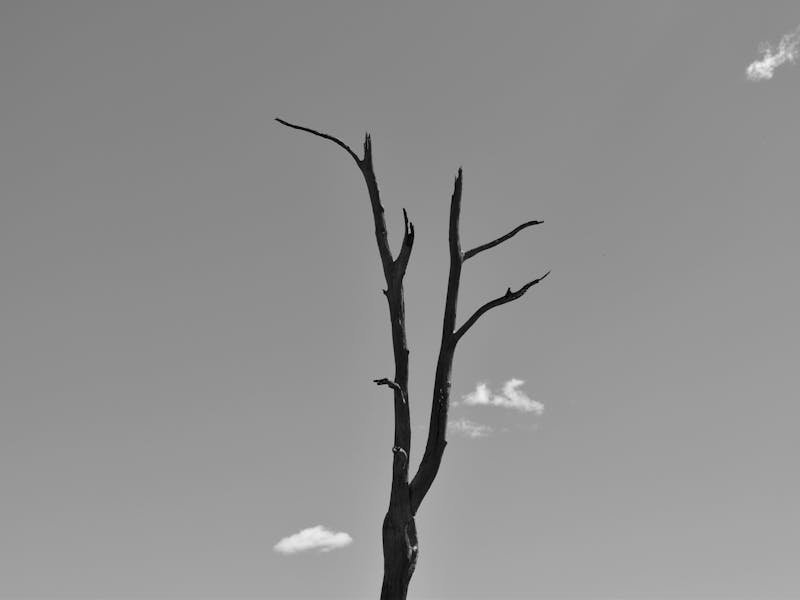
We're going to guess something about you. You've got a dead tree on your property, or at least one that's looking pretty rough, and you've been putting off dealing with it. Maybe you noticed it didn't leaf out this spring and thought you'd give it one more year to see if it came back. Maybe you got a quote for removal and it was more than you wanted to spend. Maybe the tree is in the back corner of your lot and you figure it's not bothering anyone. Or maybe, and we hear this one a lot, the tree has sentimental value. It was there when you bought the house, or your kids used to climb it, or it's the last big tree on the block and you don't want to be the one to take it down.
We get it. Every single one of those reasons is understandable. But here's what we need you to understand: a dead tree is not a neutral presence on your property. It's not just sitting there harmlessly waiting for you to get around to it. From the moment a tree dies, it begins an accelerating process of deterioration that makes it more dangerous with every passing week. And in Huntsville's warm, humid climate, that process moves faster than you might think.
Our crew has removed dead trees from properties across Huntsville, Madison, Decatur, Athens, and throughout Madison County. We've seen the full spectrum of what happens when dead trees are left standing too long, from branches through roofs to termite infestations that traveled from a dead tree stump straight into a home's foundation. We're not writing this to scare you into a sale. We're writing it because the consequences of waiting are real, they're expensive, and they're almost always worse than the cost of just handling the tree proactively.
How Fast Dead Trees Deteriorate in Alabama's Climate
If you lived in the desert Southwest, a dead tree might stand for decades. The dry air and lack of moisture slow decomposition to a crawl. You've probably seen photos of dead trees in Arizona or New Mexico that look like bleached skeletons standing in place for years.
Alabama is the exact opposite. Our combination of warmth, humidity, and rainfall creates one of the most active decomposition environments in the country. When a tree dies here in the Huntsville area, the decay organisms, fungi, bacteria, and insects, don't waste any time moving in. They're already present in the soil and on the bark, waiting for the tree's defenses to drop.
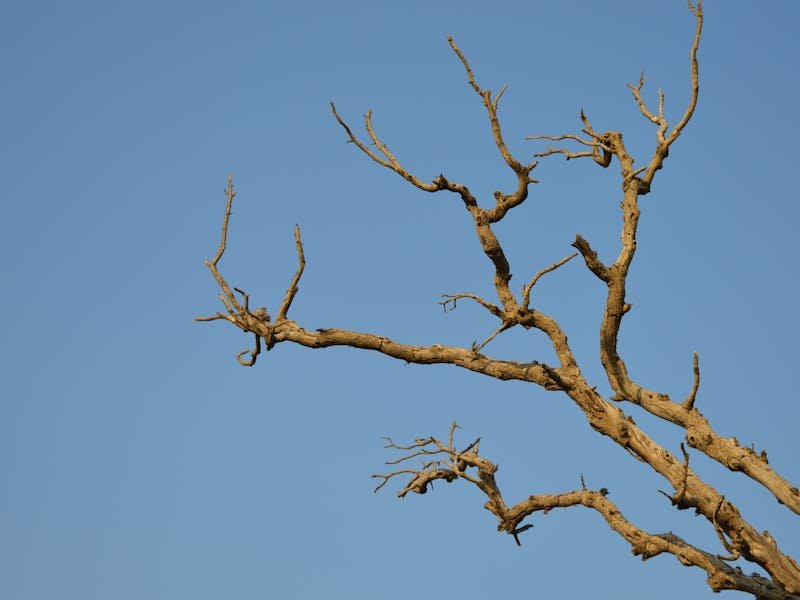
Within the first year: The wood begins losing moisture unevenly, causing cracks and checks in the bark and sapwood. Wood-boring beetles, including the emerald ash borer and various bark beetles, discover the dead tissue and begin tunneling. Fungal spores germinate on the surface and send hyphae (fungal threads) into the wood. Branch attachments weaken as the tissues that held them in place begin to decay. Small branches in the canopy start falling during normal wind events.
Within one to two years: Fungal decay has penetrated deep into the sapwood and is working on the heartwood. Carpenter ants may establish colonies in the softening wood. Bark begins sloughing off in large sections. Branch failures become more frequent and more dangerous as larger limbs lose their attachment strength. The root system is decaying underground where you can't see it, and the tree's anchorage in the soil is weakening.
Within two to four years: In Alabama's climate, a dead tree of moderate size (30 to 50 feet) can be extensively decayed internally within this timeframe. The trunk may appear solid from the outside but be soft and punky inside. Root rot has advanced to the point where the tree's hold in the ground is seriously compromised. This is the danger zone where catastrophic failure, the whole tree coming down, becomes a realistic possibility during any storm, or even on a calm day.
We've seen Loblolly Pines in the Huntsville area that were completely hollowed out by decay within three years of dying. One tree we removed off of Bailey Cove Road was still standing upright, bark still on, but when our climber put a rope on it to lower sections, the entire trunk collapsed in on itself like a cardboard tube. That tree had been dead for less than 30 months. If it had come down on its own, it would have hit the homeowner's fence and the neighbor's shed.
The humidity is the key factor. Our average relative humidity in Huntsville runs 70 to 80 percent or higher for much of the year. That moisture-laden air keeps dead wood perpetually damp, which is exactly what fungi need to thrive. Compare that to a dead tree in Colorado where the humidity sits at 20 to 30 percent, and you understand why our dead trees fall apart so much faster.
The Danger of Falling Limbs and Full Tree Failure
This is the most obvious risk, and it's the one that should concern you the most if you have a dead tree near your home, your driveway, your fence, or anywhere that people spend time.
A dead branch doesn't need a storm to fall. It just needs gravity and the right moment. As the wood dries out and decay weakens the attachment point, the branch reaches a tipping point where its weight exceeds the remaining strength of the connection. That moment can come during a wind gust, or it can come on a still day when a squirrel jumps on it, or it can come for no discernible reason at all. We call these "deadfall" events, and they happen constantly in the Tennessee Valley, especially during the warmer months when decay activity peaks.
The numbers are serious. A dead limb that's 6 inches in diameter and 10 feet long can weigh 100 pounds or more. Falling from a height of 40 or 50 feet, that's enough force to go straight through a roof, crush a car's hood, or cause severe injury to anyone underneath. We responded to a call in Weatherly Heights a couple of years ago where a dead Hickory limb fell on a homeowner who was mowing his lawn under the tree. He was hospitalized with a broken collarbone and cracked ribs. The tree had been dead for over a year, and the limb was one of many that had been slowly breaking off during that time.
Full tree failure, where the entire tree falls over, is the worst-case scenario. Dead trees fail as whole units when the root system or lower trunk decays to the point where it can no longer support the weight above. When a 50-foot dead tree comes down, there's nothing gentle about it. The root ball pulls out of the ground, the trunk comes down in one piece, and everything in its fall zone, house, cars, fences, utility lines, gets hit with thousands of pounds of force.
And here's something that keeps us up at night: dead trees are unpredictable. A living tree that's starting to fail usually gives you some warning signs, a lean, cracked soil, sounds of splitting wood. A dead tree can look the same today as it looked last month, right up until the moment it falls. The decay has been happening internally, invisible, and by the time there's an external sign of imminent failure, it's too late to get out of the way.
Dead Trees: A Superhighway for Termites and Pests
Here's a danger that many Huntsville homeowners don't think about, and it might actually be the most expensive one: a dead tree on your property, especially one with a stump left in the ground, is an engraved invitation for subterranean termites to move in. And once they've moved into that dead tree, your house is next on the list.
North Alabama has one of the highest termite pressure environments in the United States. Subterranean termites are active year-round in our mild climate, and they're always looking for cellulose, which is the primary component of wood. A dead tree is a massive, concentrated source of cellulose that's becoming softer and more accessible to termites as it decays.
But it's not just the food source that matters. It's the root system. A dead tree's roots extend outward from the trunk for 20, 30, sometimes 50 feet or more, and as they decay, they create underground tunnels and channels. Termites travel through these channels. If those roots happen to run near or under your home's foundation (and if the tree is within 30 feet of your house, they almost certainly do), they provide a direct, protected pathway for termites to travel from their colony to your home's wood structure.
We've talked to pest control companies in the Huntsville area who confirm this is a regular occurrence. They'll treat a home for termites and find that the infestation originated in a dead tree stump or root system in the yard. The homeowner had no idea that the dead Water Oak they'd been meaning to deal with for the past two years had been serving as a termite staging area, with underground tunnels running right to their crawlspace.
The cost of termite damage in Alabama averages $7,000 to $8,000 per incident, according to pest control industry data. Some cases run much higher. Compare that to the cost of removing the dead tree and grinding the stump, which eliminates both the food source and the underground tunnel network, and the math is pretty clear.
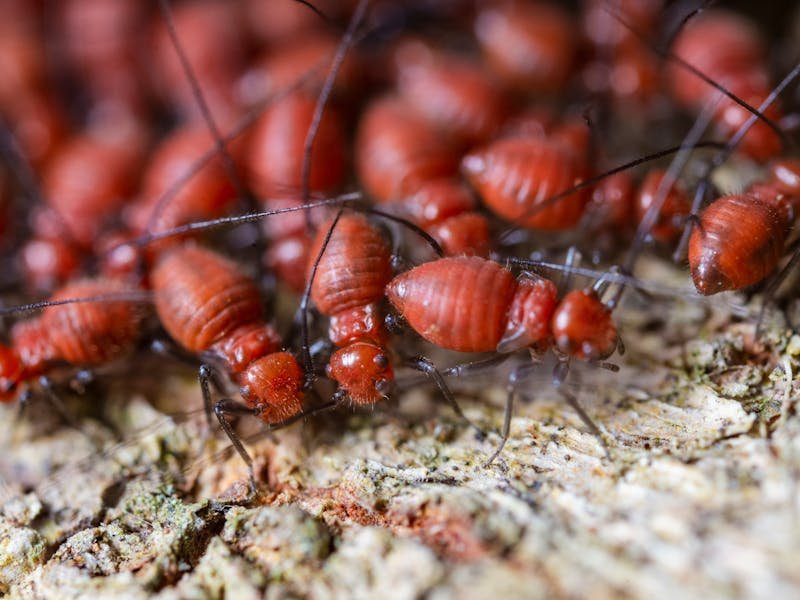
Beyond termites, dead trees attract a whole ecosystem of unwanted guests. Carpenter ants bore into dead wood and can establish satellite colonies in your home. Powderpost beetles infest dead hardwood. Rodents nest in hollows and cavities. Snakes are attracted to the insect and rodent activity around dead trees. A dead tree in your yard is essentially a pest apartment complex, and every resident is something you don't want near your home.
Insurance Liability: What Happens When Your Dead Tree Damages Somebody Else's Property
This is the risk that catches homeowners completely off guard, and it can be financially devastating.
Alabama property law generally follows what's called the "natural condition" doctrine for healthy trees. If a healthy tree on your property falls on your neighbor's house during a storm, it's typically considered an act of God, and your neighbor files a claim with their own insurance. You're not held liable because you couldn't have reasonably predicted or prevented the failure.
But dead trees are a completely different legal situation. A dead tree is a "known hazard." If you know or should have known that a tree on your property is dead, and that dead tree falls and damages someone else's property or injures someone, you can be held liable for all resulting damages. The legal standard is "reasonable care." A reasonable homeowner would have recognized that a dead tree poses a foreseeable danger and would have had it removed.
This gets especially tricky when neighbors are involved. Let's say your neighbor has told you, verbally or in writing, that they're concerned about a dead tree on your property that's leaning toward their house. You acknowledge the concern but don't do anything about it. Six months later, the tree falls on their house during a storm. In that scenario, you could be on the hook for the damage to their home, their personal property, temporary housing costs, and potentially their legal fees if they have to sue to recover.
We've seen this play out in neighborhoods across the Huntsville metro area, from the tight lot lines in Five Points and Old Town to the larger properties in McMullen Cove and The Ledges. Neighbor disputes over dead and hazardous trees are far more common than most people realize, and they can strain relationships and drain bank accounts.
Your homeowners insurance adds another layer to this. Most policies require you to maintain your property in a reasonable condition. If your insurer determines that you knew about a dead tree and failed to address it, they can deny your claim if the tree falls on your own home. They'll argue negligence, that you failed to maintain your property, and that the damage was therefore preventable. Getting your claim denied on a $40,000 roof replacement because you delayed a $1,500 tree removal is the kind of financial gut-punch that nobody needs.
Why Homeowners Delay (And Why Every Reason Falls Apart)
We've heard every reason in the book for putting off dead tree removal. Let's run through the most common ones and give you the honest truth about each.
"It's too expensive right now." We understand. Tree removal isn't cheap, and it's not the kind of expense anyone plans for. But here's the financial reality: dead tree removal gets more expensive the longer you wait, not cheaper. As the tree deteriorates, it becomes more dangerous to work on. A dead tree with advanced decay is unpredictable. Our climbers can't trust the wood to hold their ropes. Dead branches fall unexpectedly. The trunk can split during felling. All of this means more time, more equipment, and more safety precautions, which all cost more money. A tree that costs $1,200 to remove today might cost $1,800 a year from now when the decay has made it significantly more hazardous to work on.
And that's before factoring in the potential costs of waiting: roof repair ($5,000 to $15,000), fence replacement ($2,000 to $5,000), vehicle damage ($3,000 to $10,000), termite treatment and damage repair ($5,000 to $15,000), or a liability lawsuit from a neighbor (potentially tens of thousands). Against those numbers, the cost of proactive removal is a bargain.
"Maybe it'll come back." If a tree fails to produce leaves during one growing season, there's a small chance it could recover, particularly if the cause was a temporary stressor like an unusual drought or a late frost. But if the tree misses two growing seasons without leafing out, it is dead. Period. No amount of watering, fertilizing, or hoping is going to bring it back. The sooner you accept that reality, the sooner you can address the hazard.
Do the scratch test if you're unsure. Take a knife and scratch through the bark on a small branch. If the tissue underneath is green and moist, that branch is alive. If it's brown and dry, it's dead. Test several branches across different parts of the tree to get a full picture.
"It's in the backyard, so it doesn't matter." The location of the dead tree affects what it might hit, but it doesn't change the fact that it's deteriorating and will eventually fall. Backyard trees still fall on fences, sheds, above-ground pools, playset equipment, patio covers, and in some cases, the back of the house. They also still attract termites and other pests, and the stump is still sending dead root channels toward your foundation. A dead tree in the back corner of your lot in Wade Mountain or Moores Mill is still a problem that needs addressing.
"I feel bad taking it down." We hear this more than you'd think, and we respect the sentiment. Trees are living things, and many people feel a genuine attachment to them. But here's the thing: the tree is already dead. Removing it doesn't kill it. What removing it does is protect everything around it, your home, your family, your neighbors, from the inevitable consequences of it falling on its own. And once the dead tree is gone, you have the opportunity to plant a new, healthy tree in a better location, one that will grow for decades and provide all the benefits the dead tree no longer can.
Real Scenarios We've Seen in the Huntsville Area
To give you a sense of what can happen when dead trees are left standing, here are some real situations our crew has responded to across the Huntsville metro area. We've kept them anonymous, but the details are accurate.
The Sweetgum in South Huntsville. A homeowner on a quiet residential street in South Huntsville had a large Sweetgum that died after a prolonged drought. She got a quote for removal, thought it was too expensive, and decided to wait until the following spring. That December, an ice storm put about half an inch of ice on every surface in the neighborhood. The dead Sweetgum, its branches already brittle and weakened by decay, shattered under the ice weight. Large sections crashed down on her driveway, crushing one car and damaging another. Smaller branches punched holes in the roof of a neighbor's storage building. The emergency cleanup, car repairs, and roof repair cost more than triple what the planned removal would have been.
The Water Oak in Madison. A family in a Madison subdivision noticed their 45-foot Water Oak wasn't looking great but figured it was just stressed from the summer heat. They didn't realize the tree had a severe case of bacterial leaf scorch and was essentially dead. Over the following year, large branches started falling into the neighbor's yard. The neighbor sent a letter expressing concern. The homeowners still didn't act. When the tree finally lost a major limb that crushed the neighbor's privacy fence and damaged their air conditioning unit, the neighbor's insurance company came after the homeowners for damages. The total cost, including legal fees, was over $12,000.
The Loblolly Pine near Hampton Cove. This one involved a dead Loblolly Pine about 20 feet from the house. The homeowner had the dead tree standing for about 18 months. Their pest control company discovered an active termite infestation in the home's crawlspace and traced the infestation back to the dead pine's root system, which ran directly under the foundation. The termites had been using the decaying roots as a highway. The termite treatment cost $2,500, and the structural repairs to the crawlspace joists ran another $6,000. The dead tree removal and stump grinding, which would have been about $900, would have prevented the entire ordeal.
The Cost of Removal vs. The Cost of Waiting
Let's put real numbers on this so you can make an informed decision. These are typical costs we see in the Huntsville market.
Proactive dead tree removal costs:
- Small dead tree (under 30 feet): $300 to $700
- Medium dead tree (30 to 60 feet): $700 to $1,400
- Large dead tree (over 60 feet): $1,400 to $2,000+
- Stump grinding (additional): $150 to $400
Potential costs of waiting:
- Emergency removal after failure (premium pricing): $1,500 to $4,000+
- Roof repair from fallen tree or limb: $5,000 to $20,000
- Vehicle damage: $3,000 to $15,000
- Fence replacement: $1,500 to $5,000
- Termite treatment and damage repair: $5,000 to $15,000
- Neighbor liability lawsuit: $5,000 to $50,000+
- Insurance claim denial for negligence: full cost of all damages
When you look at these numbers side by side, the decision becomes pretty straightforward. Proactive removal is almost always the least expensive option.
What to Do Right Now
If you've read this far and you've got a dead tree on your property, here's our advice.
First, assess the urgency. Is the dead tree near your home, your driveway, power lines, or areas where people spend time? If yes, this is urgent. Don't wait. Is the dead tree in a back corner of your property, away from any structures or high-traffic areas? You have a little more time, but don't put it off indefinitely. The tree is still deteriorating and still attracting pests.
Second, get an estimate. Call a reputable, local tree service and get a written estimate. We offer free, no-obligation estimates for homeowners across the Huntsville metro area. Knowing the actual cost takes the uncertainty out of the equation and lets you plan financially.
Third, don't forget the stump. When you have a dead tree removed, grind the stump too. Leaving a dead stump in the ground accomplishes nothing except maintaining the underground root highway for termites and other pests. Stump grinding eliminates the stump and the upper portion of the root system, removing the pest pathway and freeing up that space for replanting or landscaping.
Fourth, consider replanting. Removing a dead tree doesn't have to mean less tree cover on your property. It's an opportunity to plant a healthier, more appropriate species in a better location. Check out our guide to the best shade trees for Huntsville for recommendations on species that thrive in our climate and soil.
That dead tree isn't going to get better, and the risks it poses aren't going to decrease. The safest, cheapest, and smartest time to deal with it is now. Give Huntsville Tree Pros a call at (256) 555-0123 or reach out online to schedule your free assessment. We'll give you an honest evaluation and a clear quote, no pressure and no games.
Frequently Asked Questions
How quickly does a dead tree become dangerous?
A dead tree begins losing structural integrity almost immediately after death. In Alabama's humid climate, fungal decay accelerates the process significantly. Within 6 to 12 months, most dead trees have enough weakened branch attachments that falling limbs become common. Within 2 to 3 years, the trunk and root system can be compromised enough for the entire tree to fall. The warmer and more humid the conditions, the faster the deterioration.
Am I liable if my dead tree falls on a neighbor's property in Alabama?
Potentially yes. While Alabama generally doesn't hold homeowners liable for damage from healthy trees that fall during storms, dead trees are different. A dead tree is a "known hazard." If you knew or should have known that the tree was dead and a potential danger, and it falls and damages someone else's property or causes injury, you can be held liable. Written notice from a neighbor about a concerning tree significantly increases your exposure.
Can a dead tree attract termites to my house?
Absolutely. Dead trees are magnets for subterranean termites, which are extremely active in the Huntsville area. The decaying root system creates underground tunnels that termites use to travel from their colony to your home's foundation. Removing the dead tree and grinding the stump eliminates both the food source and the underground pathway.
How much does it cost to remove a dead tree in Huntsville?
Dead tree removal in Huntsville typically costs $300 to $2,000 depending on the tree's size, location, and condition. Small trees under 30 feet usually cost $300 to $700. Medium trees (30 to 60 feet) run $700 to $1,400. Large trees over 60 feet can be $1,400 to $2,000 or more. Advanced decay can increase costs because the work is more unpredictable and requires extra safety precautions. We provide free estimates with no obligation.
Will my homeowners insurance pay for dead tree removal?
Generally, no. Most policies don't cover removing a dead tree that hasn't yet caused damage. Insurance typically only covers tree removal after a tree has fallen on an insured structure. Worse, if your insurer determines the tree was dead and you failed to remove it, they may deny your claim entirely if it damages your home, citing homeowner negligence.
How can I tell if a tree on my property is dead?
Key signs of a dead tree include: failure to produce leaves in spring, bark falling off in large sections, brittle branches that snap easily, mushrooms or fungal growth on the trunk or at the base, and visible holes from wood-boring insects. For a definitive test, scratch through the bark on a small branch with a knife. Green, moist tissue means the branch is alive. Brown, dry tissue means it's dead. Test multiple branches across different parts of the tree.