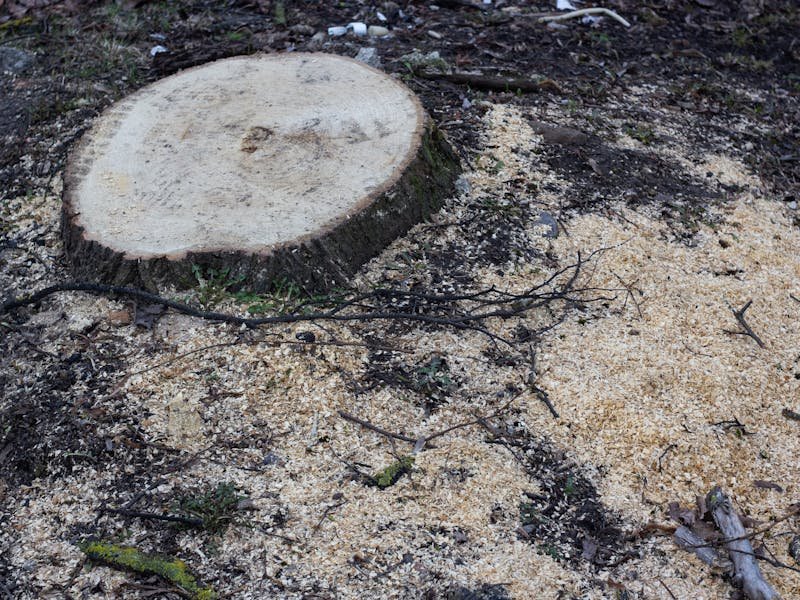
If you have had a tree removed from your Huntsville property—whether it was a towering water oak that finally gave way during spring storm season or a diseased Bradford pear you decided to take down before it split apart—you are left with a decision that trips up a lot of homeowners: should you grind the stump or have it fully removed?
It is not just a cosmetic question. Here in North Alabama, the method you choose has real implications for your soil, your foundation, your termite risk, and your wallet. Huntsville sits right in the heart of the Southeast termite belt, and our heavy red clay soil behaves very differently than sandy or loamy ground when you start excavating around old root systems.
At Huntsville Tree Pros, we handle hundreds of stump jobs every year across Huntsville, Madison, Decatur, and surrounding Madison County communities. In this guide, we will break down both methods honestly so you can make the right call for your property, your budget, and your plans for the space.
What Is Stump Grinding?
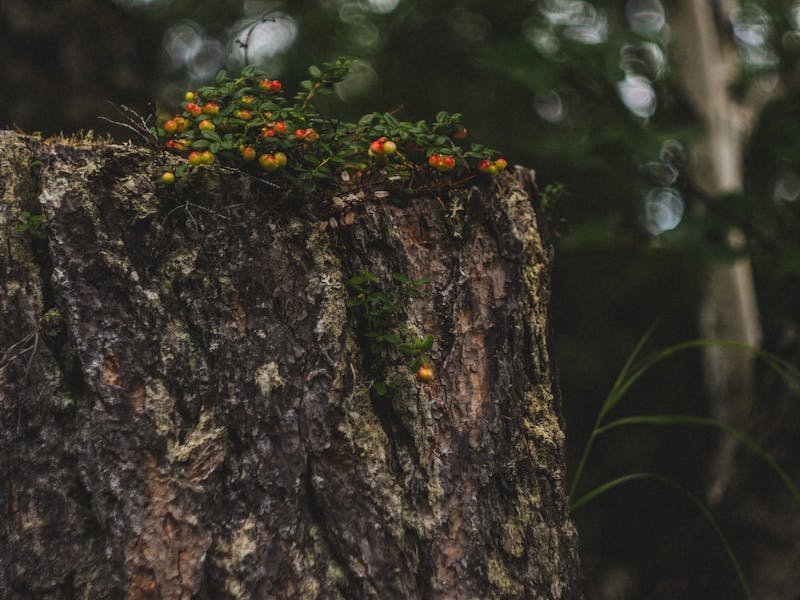
Stump grinding is the most common way to deal with leftover stumps in the Huntsville area. A specialized machine called a stump grinder uses a rotating carbide-tipped wheel to chew the stump wood into small chips, grinding it down to 6–12 inches below the surrounding soil level.
How the Stump Grinding Process Works
- Site assessment — Our crew inspects the stump, measures its diameter, checks for nearby utility lines (especially important in older Huntsville neighborhoods like Five Points and Twickenham where underground utilities can run close to mature trees), and provides a written quote.
- Area preparation — We clear rocks, dirt, and debris from around the base. In Huntsville's red clay, we sometimes need to wash soil away from the trunk flare to expose the wood and protect the grinder teeth from embedded rocks that are common in our clay soil.
- Grinding — The grinder is positioned over the stump and systematically moved back and forth, shaving the wood into mulch-like chips. We grind below grade so the area can be filled and leveled.
- Cleanup and fill — The resulting wood chips are used to fill the hole. Any excess chips can be spread in your landscape beds as mulch or hauled away. We rake the area smooth so it is ready for topsoil and seed.
The entire process typically takes 30 minutes to 2 hours per stump for most residential jobs. Hardwood stumps from the oaks, hickories, and maples that dominate Huntsville yards take somewhat longer than softwood stumps from loblolly pines, which are also extremely common throughout Madison County.
Pros of Stump Grinding
- Affordable — Stump grinding costs a fraction of full removal, typically ranging from $75 to $500 per stump depending on diameter
- Fast — Most stumps are ground in under two hours, and our crew can handle multiple stumps in a single visit
- Minimal yard disruption — The grinder works only on the stump itself, leaving your lawn, flower beds, and hardscape intact
- No heavy excavation — This is a big deal in Huntsville, where digging through compacted red clay is slow, expensive, and leaves a mess that takes months to settle
- Free mulch — The wood chips produced make excellent mulch for garden beds and tree rings
- Works in tight spaces — Modern stump grinders can fit through standard fence gates, making them practical for backyard stumps in neighborhoods like Blossomwood, Weatherly Heights, and Jones Valley where lots can be narrow
Cons of Stump Grinding
- Roots remain in the ground — The root system is left to decompose naturally, which takes several years. In Huntsville's warm, humid climate, this happens faster than in cooler regions but still requires patience.
- Possible regrowth — Some species, particularly water oaks and sweetgums that thrive in Alabama, can send up sucker shoots from the remaining roots. These are manageable with mowing or herbicide treatment, but they can be persistent.
- Not ideal for immediate construction — If you plan to pour a slab, install a fence post, or build a retaining wall exactly where the stump sits, the remaining roots may interfere.
What Is Full Stump Removal?
Full stump removal—sometimes called stump extraction or stump pulling—involves digging out the entire stump along with its major root ball. This is a much more involved process that uses heavy equipment such as excavators, backhoes, or specialized stump extraction machines.
How the Stump Removal Process Works
- Excavation — Heavy equipment digs around the stump to expose the root system. In Huntsville's dense red clay, this often requires significant effort because the clay clings tightly to the roots and does not break apart easily like loamy or sandy soils would.
- Root cutting — Major lateral roots are severed using chainsaws, root saws, or the excavator bucket itself. Large oaks and pecan trees common in the Tennessee Valley can have root systems extending 20 feet or more from the trunk.
- Extraction — The stump and root ball are pried and pulled from the ground. A large hardwood stump with its root mass can weigh several thousand pounds.
- Hole filling and grading — The resulting crater—which can be several feet deep and 6 to 10 feet wide for a mature tree—is filled with clean fill dirt or topsoil and graded to match the surrounding yard.
- Hauling — The extracted stump and root ball must be loaded and hauled to a disposal site, adding to the overall cost.
Pros of Full Stump Removal
- Complete elimination — No roots, no stump, no chance of regrowth. The space is completely clear.
- Immediate replanting or construction — You can plant a new tree, pour concrete, or build in the exact same spot right away.
- No future settling — Because the roots are removed rather than left to decompose, you avoid the gradual ground settling that sometimes occurs after stump grinding.
Cons of Full Stump Removal
- Significantly more expensive — Full removal typically costs 3 to 5 times more than grinding due to the equipment, labor, hauling, and fill material required
- Major yard disruption — The excavation process tears up a large area of your lawn. In Huntsville, where most residential lots feature established landscaping, this damage can take an entire growing season to repair.
- Red clay complications — Alabama red clay is notoriously difficult to work with when excavated. It clumps, does not drain well, and takes a very long time to settle back to a stable grade. Homeowners on Monte Sano, Green Mountain, and other elevated areas with especially dense clay soils face even greater challenges.
- Equipment access issues — Backhoes and excavators need wide access paths. In established Huntsville neighborhoods with fenced yards and mature landscaping, getting heavy equipment to the stump location can be difficult or impossible without removing fencing.
- Longer project time — A full removal can take half a day to a full day per stump, compared to under two hours for grinding.
Stump Grinding vs. Stump Removal Cost Comparison in Huntsville
Cost is one of the biggest factors for Huntsville homeowners deciding between these two methods. Here is a realistic breakdown of what you can expect to pay in the Huntsville and Madison County area:
| Stump Size (Diameter) | Stump Grinding Cost | Full Stump Removal Cost |
|---|---|---|
| Small (under 12″) | $75 – $150 | $250 – $450 |
| Medium (12″ – 24″) | $150 – $300 | $400 – $800 |
| Large (24″ – 36″) | $300 – $500 | $700 – $1,200 |
| Very Large (36″+) | $500 – $800 | $1,000 – $2,000+ |
Multi-stump discounts: If you have several stumps to address—which is common after large-scale tree removal or storm cleanup—most Huntsville tree services, including our team, offer per-stump discounts when grinding or removing multiple stumps in a single visit. If you are already having a tree removed, adding stump grinding to the same job is almost always cheaper than scheduling it as a separate service call.
It is worth noting that the cost of full removal in Huntsville can run higher than these estimates when the property has especially dense red clay, when the stump is located near a foundation or utility line, or when heavy equipment access is limited.
Why Huntsville's Soil and Climate Matter for Your Decision
This is not a decision you should make based on generic advice from a national website. Huntsville has specific conditions that directly affect which method is right for your property.
Alabama Red Clay Soil
Anyone who has ever tried to dig a fence post hole in a Huntsville backyard knows the reality of our red clay. This dense, mineral-rich soil is the dominant soil type throughout Madison County, and it creates unique challenges for stump removal:
- Excavation is slow and expensive — Clay clings to roots and does not break apart cleanly, requiring more equipment time and labor for full removal.
- Drainage problems after excavation — Red clay drains poorly. When you dig a large hole for stump removal and fill it with looser soil, that backfilled area can become a water collection point, creating soggy spots in your yard and potentially directing water toward your foundation.
- Settling takes years — Backfilled clay never compacts to its original density. Homeowners who opt for full removal in clay soil frequently deal with depressions and uneven ground for two to three years after the job.
- Stump grinding avoids all of this — Because grinding does not disturb the surrounding soil structure, you sidestep the drainage and settling problems entirely.
The Termite Factor: A Serious Concern in the Tennessee Valley
Alabama ranks among the highest-risk states in the country for subterranean termite activity, and Huntsville is no exception. The warm, humid summers and mild winters in the Tennessee Valley create ideal year-round conditions for Eastern subterranean termites and the increasingly aggressive Formosan subterranean termite.
A decaying tree stump is essentially a termite buffet. As the wood softens and retains moisture, it becomes an ideal food source and nesting site. Here is why this matters for your stump decision:
- Stumps left untreated are a termite magnet — A rotting stump within 20 feet of your home's foundation can serve as a staging ground for termites to find their way to your house.
- Grinding reduces the risk significantly — By grinding the stump below grade and removing the bulk of the wood mass, you eliminate the primary food source. The remaining root fragments are small and scattered, making them far less attractive to colony establishment.
- Full removal eliminates the risk entirely — If the stump is very close to your foundation (within 5 to 10 feet), full removal may be worth the extra cost to ensure every bit of wood and root is gone.
- Timing matters — In Huntsville's climate, a freshly cut stump can begin attracting termites within a single season. Do not leave that stump sitting through summer. The sooner you grind or remove it after tree removal, the better.
Storm Season and Damaged Stumps
Huntsville sits in what meteorologists call Dixie Alley—the corridor of severe thunderstorm and tornado activity that runs through the Southeast. Every spring, powerful storms roll through the Tennessee Valley, and our crews see a sharp increase in emergency tree service calls from neighborhoods across South Huntsville, Hampton Cove, Harvest, and beyond.
Storm-damaged stumps present unique considerations:
- Splintered stumps decay faster — A stump left by a storm-snapped tree has torn, exposed wood fibers that absorb moisture and begin rotting much faster than a clean-cut stump. This accelerates the termite timeline.
- Jagged stumps are more dangerous — Storm stumps often have sharp, uneven edges that are a serious tripping and injury hazard, especially for children.
- Root systems may be compromised — If the tree was partially uprooted by wind, the remaining root system may be unstable, causing the ground around the stump to shift and settle unpredictably. In these cases, full removal might be necessary to stabilize the area.
- Insurance considerations — Homeowners insurance in Alabama sometimes covers storm debris removal. Check your policy—stump grinding after a covered storm event may be reimbursable.
When to Choose Stump Grinding
Stump grinding is the right choice for the majority of residential situations in Huntsville. Choose grinding when:
- You want to reclaim the space for lawn, landscaping, or a garden bed
- The stump is in an area with limited equipment access (fenced backyard, close to structures, or on a slope)
- You are working within a tighter budget
- You want the job done quickly with minimal disruption to your yard
- The stump is more than 10 feet from your home's foundation
- You do not have immediate plans to build or pour concrete in the exact stump location
- You need multiple stumps handled in a single visit (common after lot clearing or storm cleanup)
- The stump is on a hillside or slope, where excavation could cause erosion—a real concern on properties around Monte Sano, Green Mountain, and Wade Mountain
When to Choose Full Stump Removal
Full stump removal makes sense in specific situations where grinding will not fully address the need:
- You plan to pour a concrete slab, install a patio, or build a structure directly over the stump location
- The stump is within 5 feet of your home's foundation and you want to completely eliminate termite risk from that proximity
- You are doing a major landscaping overhaul or land clearing project where the ground will be regraded anyway
- You want to plant a new tree in the exact same location and do not want to wait for old roots to decompose
- The tree was partially uprooted by a storm and the remaining root ball is heaved above ground level, making grinding impractical
- You are preparing a property for new construction in areas like Meridianville or Owens Cross Roads where new development is expanding into wooded lots
Common Stump Mistakes Huntsville Homeowners Make
After years of serving homeowners across the Huntsville metro, we have seen the same mistakes repeated. Avoid these pitfalls:
Leaving Stumps to "Rot on Their Own"
This is the most common mistake. A hardwood stump from an oak or hickory can take 10 to 15 years to fully decompose in Huntsville's climate, and during that entire time it is attracting termites, carpenter ants, and other wood-boring insects. Meanwhile, many species send up aggressive sucker growth that you will be battling with a mower or hedge trimmer for years. The cost of grinding a stump now is far less than the cost of a termite treatment later.
Trying DIY Chemical Stump Removal
Potassium nitrate stump removers sold at hardware stores can work, but they take 6 to 12 months and still leave you with a soft, punky stump that needs to be removed or burned. Burning stumps is illegal within Huntsville city limits without a burn permit, and the process is difficult to control safely. Professional grinding is faster, cleaner, and surprisingly affordable.
Choosing Full Removal Without Considering the Yard Impact
Homeowners sometimes assume full removal is the "better" option without understanding how much yard damage the excavation will cause in our red clay soil. We have seen customers spend $1,500 on stump removal and then another $1,000 on sod, topsoil, and regrading to repair the surrounding lawn. In most cases, a $200 stump grinding job would have achieved the same practical result with zero yard damage.
Waiting Too Long After Tree Removal
The best time to grind a stump is the same day the tree comes down. Our crew is already on site with equipment, and the stump is fresh and easy to grind. Waiting months or years allows the stump to begin decaying, attracts pests, and may require a separate service call at a higher cost.
Frequently Asked Questions
Our Recommendation for Huntsville Homeowners
After handling thousands of stump jobs throughout the Huntsville metro area, our honest recommendation is this: stump grinding is the right choice for 90% of residential situations in Huntsville, Alabama.
It is faster, significantly more affordable, far less disruptive to your yard, and works well with our challenging red clay soil. The only time we actively recommend full stump removal is when the homeowner has specific construction plans for the stump location, when the stump is dangerously close to a foundation (within 5 feet), or when a storm has partially uprooted the tree and the root ball is already heaved out of the ground.
If you are still not sure which option is right for your property, the simplest thing to do is give us a call. We will come out, assess the stump, talk through your plans for the space, and give you an honest recommendation along with a free, no-pressure estimate for both options if you want to compare.