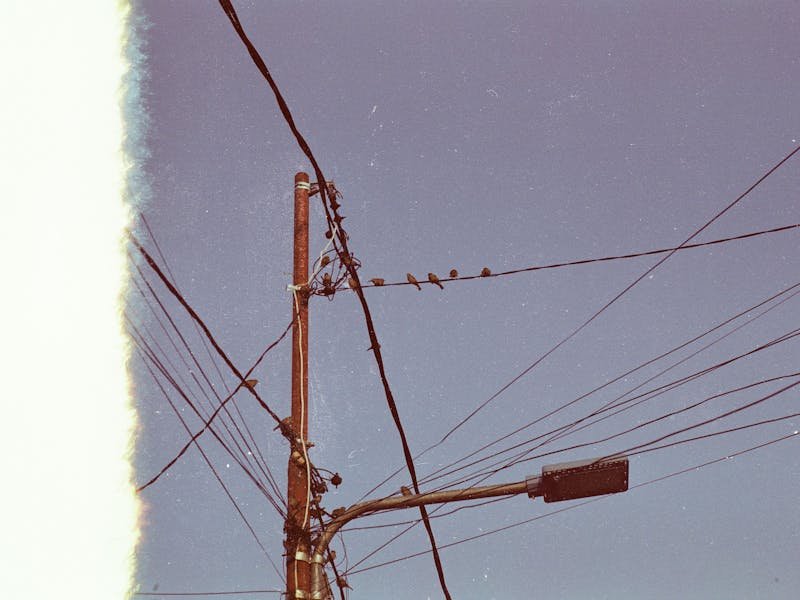
If you have lived in the Huntsville area for any length of time, you have seen it happen: a spring thunderstorm rolls through the Tennessee Valley, the wind picks up, and the next thing you know, a tree limb drops on a power line somewhere and half the neighborhood goes dark. Maybe it was your neighborhood. Maybe you were sitting in the dark for six hours waiting for Huntsville Utilities to get the power restored while everything in your fridge slowly warmed up.
Trees and power lines are a constant battle in North Alabama. We have some of the most beautiful mature tree canopy of any metro area in the Southeast, and we also have an extensive overhead power line infrastructure that runs through and alongside all of it. Those two things do not always coexist peacefully, and when they clash, the results range from annoying (a brief power flicker) to catastrophic (a house fire started by arcing electricity through a tree branch).
Our crew at Huntsville Tree Pros deals with trees near power lines on a weekly basis. We have worked in neighborhoods from Twickenham to Madison to Harvest, and we can tell you that confusion about this topic is universal. Homeowners do not know who is responsible for what, they are not sure what they are allowed to do themselves, and they often have no idea how dangerous the situation actually is. So let's clear all of that up right now.
Why Trees Near Power Lines Are So Dangerous
Before we get into the logistics of who handles what, let's talk about why this matters so much. This is not just about keeping the lights on, though that is certainly part of it. Trees near power lines represent a genuine life-safety hazard that kills people in the United States every year.
Electrocution Risk Is Real and Lethal
The power lines running along most residential streets in Huntsville carry between 7,200 and 14,400 volts. The primary distribution lines, those thicker lines higher up on the poles, can carry even more. For context, it only takes about 100 milliamps of current, which is a tiny fraction of what these lines carry, to cause fatal cardiac arrest in a human being.
Here is what a lot of people do not understand: you do not have to touch a power line to be electrocuted by one. Electricity can arc, meaning it can jump through the air across a gap, especially in the humid conditions we have here in Alabama for about eight months of the year. A wet tree branch within a few feet of a line can become a conductor. A metal ladder leaning against a tree near a line can become an electrocution pathway. Even the stream of water from a garden hose can conduct electricity if it contacts an energized line.
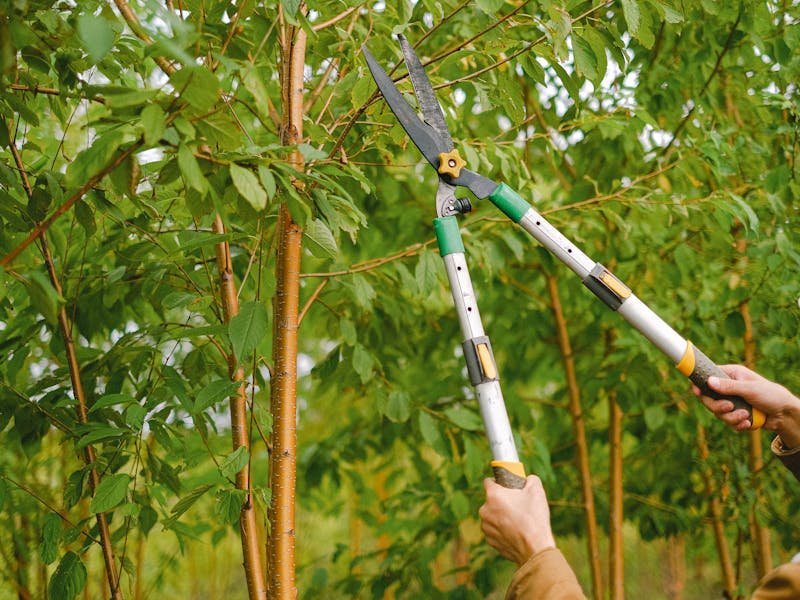
We had a situation a couple of years ago where a homeowner out near Meridianville decided to trim a Bradford pear that was growing up into the service line running to his house. He figured the service line was "not that dangerous" compared to the bigger lines on the poles. He was standing on an aluminum ladder with a pair of long-handled loppers when a cut branch fell across the line and energized the tree. He is lucky to be alive. The service line to your home typically carries 240 volts, which is absolutely enough to kill you.
Fire Hazard
When a tree branch contacts a power line, the electrical resistance at the contact point generates intense heat. This can ignite the branch, the tree, and anything nearby. Dry conditions in late summer and fall make this risk even worse, but it can happen any time of year. We have seen scorch marks and small fires started by tree-to-line contact in neighborhoods throughout South Huntsville and over in the Five Points area where the mature tree canopy is particularly dense.
Arcing, where electricity jumps the gap between a line and a nearby branch without direct contact, is also a fire starter. It creates sparks that can land on dry leaves, mulch, roof shingles, or the tree itself. During Alabama's periodic drought spells, a single arc-generated spark can start a fire that spreads quickly through dry vegetation.
Power Outages and Property Damage
Beyond the immediate danger to life and property, trees interfering with power lines cause massive inconvenience and economic damage. According to utility industry data, tree contact is the single leading cause of power outages in the United States. Here in the Tennessee Valley, where our severe storm season runs from roughly February through June, tree-related outages spike dramatically every spring.
When a large limb falls on a power line, it does not just cut your power. It can pull down the line, snap the utility pole, damage the transformer, and take out service to dozens or even hundreds of homes. The repair costs run into the thousands, and while the utility company absorbs those costs for infrastructure on the public right-of-way, damage to the service line and electrical panel on your property may be your responsibility.
Who Is Responsible: Homeowner vs. Huntsville Utilities
This is the number one question we get from homeowners, and the answer is not as simple as most people would like. Responsibility for trees near power lines in Huntsville is divided between the utility company and the property owner, and which parts fall to whom depends on the type of line and where the tree is located.
What Huntsville Utilities Handles
Huntsville Utilities has an active vegetation management program that's responsible for maintaining clearance around their primary distribution and transmission lines. These are the lines that run along public streets and rights-of-way, typically the higher lines on the utility poles. Huntsville Utilities employs contract crews that cycle through the service area on a regular trimming schedule, pruning branches that encroach on these primary lines.
If you notice a tree growing into or threatening a primary power line along the street in front of your house, you can report it to Huntsville Utilities. They will evaluate the situation and, if warranted, send a crew to trim the branches back from the line. This service is provided at no cost to the homeowner because maintaining those lines is the utility's responsibility.
Here is an important thing to know: Huntsville Utilities' vegetation management crews practice what is called "directional pruning." They are going to trim the tree to establish clearance from the line, which means they will cut branches on the side facing the line. They are not going to balance the tree aesthetically or make it look pretty. After the utility crews are done, you might have a tree that looks great on one side and has a big flat wall of cuts on the other. It is functional, not decorative. If you want the tree shaped properly after utility trimming, you will need to hire a private tree service for that.
What Falls on the Homeowner
As a homeowner in Huntsville, you are generally responsible for:
The service drop line. This is the line that runs from the utility pole to the weatherhead on your house. Trees growing into or threatening this line are your responsibility to address. You will need to hire a licensed, insured tree service to handle any trimming or removal near this line.
Trees on your property that could reach power lines. Even if a tree on your property is not currently touching a power line, if it is large enough and close enough that it could fall onto a line, you have a responsibility to manage that risk. If a tree on your property falls and damages utility infrastructure, you could potentially be held liable for the damage, especially if the tree was visibly dead, diseased, or leaning toward the line.
Replanting decisions. When a tree near a power line is removed, either by the utility or by you, choosing what to plant in its place is up to you. This is where a lot of homeowners make the same mistake over again, planting a species that will grow right back into the lines within 10 to 15 years. We will talk about the right species to plant a little later in this article.
The Gray Areas
There are situations that are not entirely clear-cut. For example, if a tree on your property has grown to the point where it threatens both the primary distribution lines and your service drop, the utility may trim the portion near their lines while leaving the rest to you. Or if a tree on your neighbor's property is threatening the service line to your house, figuring out responsibility can get complicated. In these situations, the best approach is to call Huntsville Utilities first, explain the situation, and get their guidance on which portions they will handle and which portions require a private tree service.
Understanding Power Line Clearance Requirements
Utility companies across the country maintain specific clearance distances between vegetation and power lines. While exact requirements can vary, here are the general guidelines that apply in the Huntsville area:
Minimum Clearance Standards
Primary distribution lines (street-level): A minimum of 10 to 15 feet of clearance is typically maintained on all sides of these lines. This provides enough buffer to account for branch growth between trimming cycles and for wind-blown branch movement during storms.
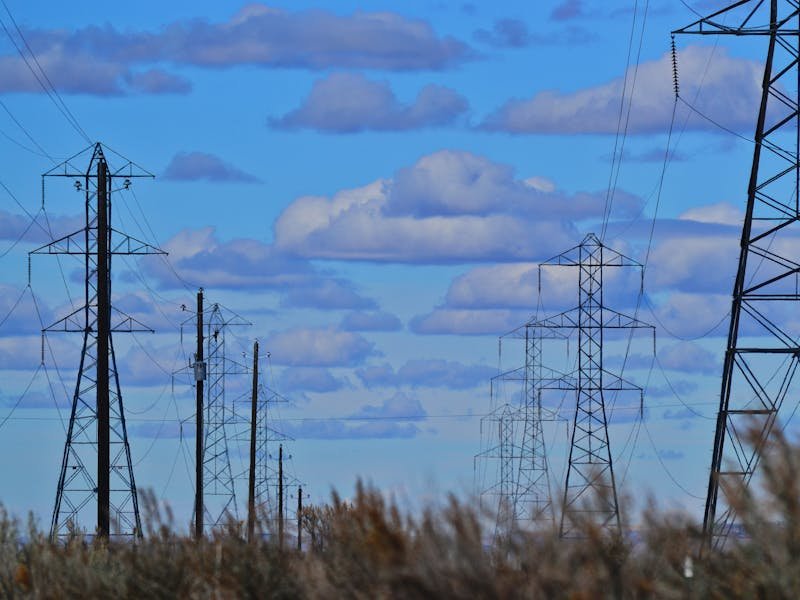
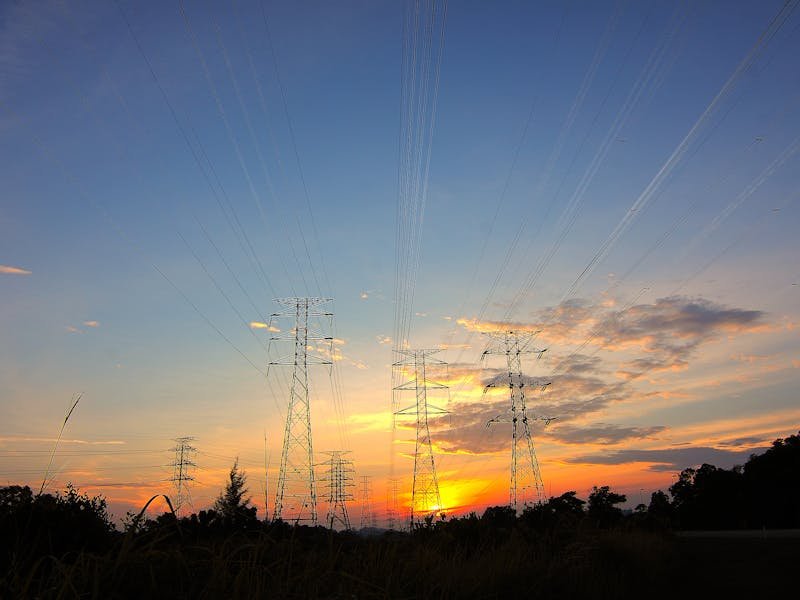
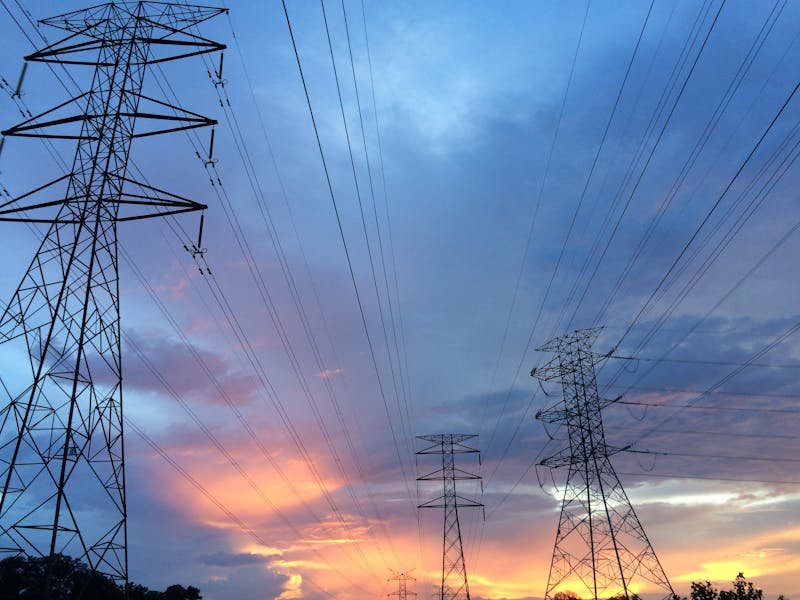
Transmission lines (high-voltage): These require even greater clearance, often 20 to 35 feet or more, depending on voltage. You will see these on the tall metal towers and large wooden H-frame structures. If you have one of these crossing your property, you are already dealing with an easement that restricts what you can plant and build nearby.
Service drop lines: While there is no legally mandated clearance distance for the service drop to your house, maintaining at least 3 to 5 feet of clearance from all vegetation is strongly recommended. This line is typically the lowest on the pole and the most accessible to homeowners, which unfortunately also makes it the one people are most tempted to try dealing with themselves.
Why Clearance Matters More in Huntsville
Our weather amplifies the importance of maintaining proper clearance. The Tennessee Valley sits in what meteorologists call "Dixie Alley," a region that experiences some of the most severe weather in the country. We get powerful thunderstorms with damaging straight-line winds from spring through summer, and we are not strangers to tornadoes either. When 60 mph winds hit a tree with branches near a power line, those branches are going to move significantly. A branch that is three feet from a line on a calm day could easily be pushed into contact during a strong storm.
Ice storms are the other weather event that wreaks havoc on trees near power lines. While they are less common here than in, say, the mountains of East Tennessee, Huntsville does get ice storms every few years. Even a quarter inch of ice accumulation on branches dramatically increases their weight and sag. Branches that normally clear the lines by several feet can droop right down onto them under ice load, causing widespread outages. The ice storm of February 2015 is still fresh in a lot of longtime Huntsville residents' memories.
Trees That Cause the Most Problems Near Power Lines
Not all trees are equal when it comes to power line conflicts. Some species, because of their growth rate, mature height, or structural characteristics, are chronic troublemakers around utility lines. If you have any of these species growing within striking distance of power lines on or near your property, pay close attention.
Loblolly Pine
Loblolly pines are native to North Alabama and they are everywhere, including in way too many spots near power lines. A mature loblolly can reach 80 to 100 feet, making it tall enough to hit even the highest lines. They grow fast, putting on two to three feet per year in good conditions, which means they can go from "not a problem" to "major problem" in just a few years. Their wood is also relatively soft and prone to snapping in high winds, and they tend to uproot in saturated soils. We remove more loblolly pines from near power lines than any other species in the Huntsville metro area.
Water Oak
Water oaks grow fast, get big (60 to 80 feet), and have a relatively short lifespan for an oak, typically 50 to 80 years. As they age, they become increasingly brittle and prone to dropping large limbs without warning. Water oaks near power lines are a ticking time bomb, especially the older specimens you find in established neighborhoods like Blossomwood, Old Town, and along the older parts of Whitesburg Drive.
Sweetgum
Sweetgums are one of the most common trees in the Huntsville area, and they reach 60 to 75 feet at maturity. They are strong trees in general, but their tall, straight growth pattern puts them right in the path of overhead lines. They are also prolific self-seeders, which means volunteer sweetgum seedlings pop up along fence lines and property edges near utility poles all the time. If you do not catch them when they are small, you have got a power line conflict tree in the making.
Tulip Poplar
Tulip poplars are one of the tallest hardwoods in our forests, reaching 70 to 90 feet or more. They grow straight and fast. The wood is relatively soft for a hardwood, making them susceptible to wind damage and ice loading. A tulip poplar near power lines on a windy day is a recipe for trouble, and we see plenty of them in neighborhoods around Monte Sano and the hillside communities along Bankhead Parkway.
Bradford Pear
The Bradford pear deserves special mention because of just how structurally awful this tree is. They were planted by the thousands across Huntsville neighborhoods in the 1980s and 1990s, especially in subdivisions in Madison, Hampton Cove, and Jones Valley. The Bradford pear's branching structure is inherently weak. Its limbs grow at tight, narrow angles from the trunk, creating weak attachment points that split apart under wind, ice, or just the weight of the branches themselves as the tree matures. If you have a Bradford pear near power lines, it is not a question of if it will fail, it is when. We strongly recommend proactive removal of any Bradford pear that could reach a power line.
What You Should Never Do: The Critical Safety Rules
This might be the most important section in this entire article, so please read it carefully and share it with anyone you know who might be tempted to handle a tree-near-power-line situation on their own.
Never Trim or Cut a Tree Within 10 Feet of a Power Line
This is the golden rule. Do not do it. Do not get on a ladder to do it. Do not use pole pruners to reach it. Do not throw a rope over a branch to pull it down. Do not try to push a branch away from a line with a wooden pole. None of these things are safe. Wood is not a reliable insulator, especially when it is alive and full of moisture, which all living trees are.
If a branch is within 10 feet of any power line, it is either a job for the utility company or a professional tree service with line-clearance certified workers. Period. No exceptions.
Never Use Metal Ladders or Tools Near Power Lines
Aluminum ladders, steel poles, metal-handled tools, and even long wet wooden poles can conduct electricity. If any part of your body, or any conductive object you are holding or touching, creates a path between an energized line and the ground, the electricity will take that path. Through you.
We know a lot of folks in the Huntsville area are handy. We get it. You have done your own yard work for 30 years and you can handle a chainsaw. But there is a massive difference between cutting a tree in the middle of your back yard and cutting one near power lines. The skills do not transfer because the danger is fundamentally different. A chainsaw mistake might cost you a trip to the ER. A power line mistake will cost you your life.
Never Assume a Line Is De-Energized
After a storm, you might see a power line that is down or sagging, and the power might be out in your area. Do not assume that the line is dead just because your lights are off. Power lines can remain energized even when they appear to be damaged or disconnected. Automatic reclosers on the utility system can re-energize a line at any time without warning. The only people qualified to determine whether a line is de-energized are utility company linemen with testing equipment.
Stay at least 35 feet away from any downed power line, and keep everyone else away too. If you see a downed line, call 911 and then Huntsville Utilities at 256-535-1200.
Never Plant or Build Under Power Lines Without Checking First
This one is less about immediate danger and more about preventing future problems. Before you plant a tree, build a structure, or install anything tall near a utility easement, check with Huntsville Utilities about their clearance requirements. A tree you plant today could be a power line conflict in 10 to 15 years. Getting it right from the start saves everyone headaches and money down the road.
When to Call the Utility vs. a Private Tree Service
Knowing which phone call to make first can save you time, money, and frustration. Here is a straightforward guide:
Call Huntsville Utilities When:
A tree or branch is in contact with or very close to the primary lines along the street. These are the utility's lines, and they have crews trained and equipped to handle vegetation near energized conductors. Call 256-535-1200 to report the situation.
A tree has fallen on a power line. This is an emergency. Call 911 first, then Huntsville Utilities. Do not approach the tree or the line.
You notice a tree growing into lines on the public right-of-way. Even if the tree is on your property, if it is affecting the utility's primary lines, they need to be involved in the solution.
You need lines temporarily de-energized for tree work. If a private tree service needs to work near primary lines and the lines need to be shut off for safety, that coordination goes through Huntsville Utilities.
Call a Private Tree Service When:
A tree is growing into your service drop line. The line from the pole to your house is your responsibility. A qualified tree service with line-clearance experience can handle trimming or removal near this line.
You want a tree near lines completely removed. The utility will trim for clearance, but they generally will not remove the whole tree. If you want the tree gone, that is a job for a private company with the right insurance, equipment, and certification.
A tree that was trimmed by the utility looks terrible. Utility trimming is functional, not aesthetic. If you want the tree reshaped or balanced after utility crews have cleared their lines, hire a tree service to do corrective pruning and trimming.
You need proactive removal of a tree that could potentially reach lines. If a tree is not currently in the lines but it is getting closer every year, taking it out before it becomes a utility conflict is a smart move. A private tree service can handle this while the job is still relatively straightforward.
The Cost of Tree Work Near Power Lines
Let's talk money, because this is a question we get all the time and the answer is usually higher than people expect. Tree work near power lines costs more than standard tree work, and there are legitimate reasons for that.
Why It Costs More
Specialized training and certification. The crews working near energized power lines need to be line-clearance qualified, which means additional training, certifications, and ongoing safety education. That expertise costs money.
Specialized equipment. Working near power lines often requires insulated tools, non-conductive rigging equipment, bucket trucks with insulated booms, and other specialized gear that costs significantly more than standard tree service equipment.
Higher insurance requirements. The liability exposure for tree work near power lines is enormous, and the insurance premiums to cover that exposure are proportionally high. Legitimate companies carry that insurance and pass the cost along in their pricing. Be very wary of any company that offers you a suspiciously low price for tree work near lines. They may not have adequate insurance, and if something goes wrong, you could be holding the bag.
Coordination with the utility. Some jobs near power lines require coordination with Huntsville Utilities, including scheduling line de-energization, having a utility representative on-site, or working within specific time windows. All of that adds complexity and time to the job.
Typical Cost Ranges in Huntsville
For tree trimming near power lines in the Huntsville area, expect to pay roughly $400 to $1,200 depending on the size of the tree, the number of branches involved, and the proximity to the lines.
For complete tree removal near power lines, costs typically run $800 to $3,500 or more. A large loblolly pine or water oak growing directly under high-voltage lines on the back side of a property in, say, Hampton Cove or Bailey Cove, where access is limited, can push past the $3,000 mark easily. The most expensive jobs are the ones that require the utility to temporarily shut off a line, because that involves scheduling, a utility crew on standby, and a hard time limit for getting the work done.
By contrast, proactively removing a tree before it grows into the lines is typically 25 to 50 percent less expensive than waiting until it is already entangled. That is a strong financial argument for not procrastinating on this.
Smart Planting: Choosing the Right Tree Near Power Lines
The best long-term solution to the trees-near-power-lines problem is not just removing the troublemakers, it is planting the right species in the right locations going forward. This is where a lot of Huntsville homeowners can make a huge difference, especially if they are landscaping a new home or replacing a tree that was just removed.
The Right Tree in the Right Place
The general rule is simple: within 20 feet of overhead power lines, only plant trees that will mature at 25 feet tall or shorter. Between 20 and 40 feet from lines, you can use medium-height trees that top out at 25 to 40 feet. Beyond 40 feet from the lines, plant whatever you want.
Here are some excellent small to medium trees that thrive in the Huntsville area and will never bother a power line:
Crepe Myrtle (15-25 feet): The quintessential Southern landscape tree. They love our heat, tolerate our clay soil, and provide gorgeous summer blooms. Just make sure you choose a variety suited to the size you want, as some crepe myrtle cultivars are larger than others.
Dogwood (15-30 feet): Both the native flowering dogwood and the Kousa dogwood are beautiful understory trees that stay well under line height. They are great in the partial shade conditions you find in many Huntsville neighborhoods.
Eastern Redbud (20-30 feet): A native tree that puts on a stunning spring flower display. Compact, well-behaved, and perfectly sized for planting near utility lines.
Japanese Maple (15-25 feet): Elegant, slow-growing, and available in dozens of varieties. They do well in Huntsville's climate, especially with some afternoon shade and well-amended soil.
Vitex or Chaste Tree (10-20 feet): Often grown as a large shrub or small tree. Produces lovely purple flower spikes in summer and is extremely heat and drought tolerant.
Specific Neighborhood Advice
In established neighborhoods like Five Points, Twickenham, and Old Town, where mature tree canopy is a defining feature of the streetscape, losing a large tree near power lines can feel like a significant loss. We understand that. But replacing a 70-foot water oak with another 70-foot species under the same power lines is just kicking the can down the road. Consider planting a couple of well-placed smaller trees instead. Two or three crepe myrtles or dogwoods, strategically located, can provide beauty and shade without repeating the power line conflict.
In newer subdivisions like those in Town Madison, Clift Farm, or around the Zierdt Road corridor, builders often plant trees without much consideration for power line proximity. If you just moved into a new home and notice the builder planted a sweetgum or tulip poplar near the lines, it is worth considering a proactive swap while the tree is still small enough to replace easily and cheaply.
What to Do After a Storm Takes a Tree Into Power Lines
Given that we live in Dixie Alley and severe weather is a fact of life in North Alabama, there is a good chance you or someone you know will deal with a tree-in-power-lines situation at some point. Here is what to do and, just as importantly, what not to do.
Immediate Steps
Stay away. Maintain at least 35 feet of distance from the downed tree and any line it is touching or near. Assume every line is energized and lethal until a utility crew confirms otherwise.
Call 911 if the situation poses an immediate threat to life or if anyone is injured or trapped. Then call Huntsville Utilities at 256-535-1200 to report the downed line.
Keep others away. Set up some kind of visible barrier if you can do so safely. Kids, pets, and curious neighbors need to stay clear. A downed power line can energize the ground around it in a wide radius, especially in wet conditions. Stepping into the energized zone can be fatal even without touching the line itself.
Do not drive over a downed line. If a line falls across a road, do not drive over it. If a line falls on your car while you are in it, stay in the car and call 911. The car's tires insulate you from the ground. If you must exit the vehicle due to fire, jump clear without touching the car and the ground at the same time, then shuffle away with small steps.
After the Utility Clears the Lines
Once Huntsville Utilities has restored power and confirmed the lines are safe, you can address the tree itself. If the tree is badly damaged or uprooted, you will likely need emergency tree removal service. If the tree survived but lost significant limbs, a professional evaluation can help determine whether it can be saved with corrective pruning or whether removal is the better long-term choice.
After major storms, tree services in the Huntsville area get swamped with calls. If your situation is not an immediate emergency, be patient, but do get on the schedule. Do not attempt to clean up storm-damaged trees near power lines yourself, even after the utility says the lines are restored. Storm-damaged trees near lines still pose unique hazards that require professional handling.
Frequently Asked Questions
Who is responsible for trimming trees near power lines in Huntsville?
Responsibility is divided. Huntsville Utilities handles trimming around their primary distribution and transmission lines along public rights-of-way at no cost to homeowners. Property owners are responsible for trees affecting the service drop line (the line from the utility pole to your house) and for managing trees on their property that could fall onto power lines. When in doubt, call Huntsville Utilities at 256-535-1200 to clarify who handles your specific situation.
Can I trim a tree near power lines myself?
No. Never attempt to trim any tree or branch within 10 feet of a power line. Power lines carry thousands of volts, and electricity can arc through wet wood, moist air, and metal tools. Even the service drop line to your home carries 240 volts, more than enough to be fatal. This is a job strictly for utility crews or professional tree services with line-clearance certified workers. No exceptions, no matter how handy you are.
What trees can I plant near power lines?
Within 20 feet of overhead power lines, only plant species that mature at 25 feet or less. Great choices for the Huntsville area include Crepe Myrtle, Dogwood, Eastern Redbud, Japanese Maple, and Vitex. Avoid any species that grows tall, including Loblolly Pine, Tulip Poplar, Southern Red Oak, Water Oak, Sweetgum, and Pecan. Choosing the right tree from the start prevents costly removals 15 to 20 years down the road.
How much does tree removal near power lines cost in Huntsville?
Tree removal near power lines in the Huntsville area typically costs $800 to $3,500, which is roughly 25 to 50 percent more than standard removals. The premium covers specialized line-clearance certified crews, insulated equipment, higher insurance requirements, and coordination with the utility company. Proactive removal before a tree grows into the lines is typically less expensive than waiting until the situation becomes urgent.
What should I do if a tree falls on a power line during a storm?
Stay at least 35 feet away and assume the line is energized. Call 911, then contact Huntsville Utilities at 256-535-1200. Do not attempt to move the tree or any debris in contact with the line. If someone is in a vehicle with a downed line on it, tell them to stay inside until crews arrive. After the utility clears the lines, contact a professional tree service for tree cleanup and removal.
Will Huntsville Utilities remove a whole tree for free?
Generally, no. Huntsville Utilities will trim branches threatening their primary lines on the public right-of-way at no charge, but they do not typically remove entire trees from private property. For full tree removal, you will need to hire a private tree service. If a tree poses an imminent threat to critical utility infrastructure, contact Huntsville Utilities to discuss whether they can assist or expedite the situation.