Huntsville is growing. If you have driven anywhere along Research Park Boulevard, down through Town Madison, out to Clift Farm, or along the 72 corridor toward Owens Cross Roads lately, you have seen it with your own eyes. New subdivisions, shopping centers, road widening projects, and home additions are popping up everywhere across Madison County. And honestly, that growth is a great thing for our community.
But here is what keeps us up at night as tree care professionals: construction is the single biggest killer of mature trees in urban and suburban areas. Not storms. Not disease. Not insects. Construction. And the brutal part is that it usually happens slowly and silently. A tree that looks perfectly fine on the day the builder finishes can quietly die over the next two to five years from damage that happened during the building process, damage that nobody noticed or thought was a big deal at the time.
We have seen this play out hundreds of times across Huntsville and the surrounding areas. A homeowner adds a pool, expands their driveway, or builds an addition onto their house. The beautiful 50-year-old white oak in their backyard, the one that first sold them on the property, starts looking thin the following summer. The leaves come out smaller. Some branches do not leaf out at all. By year three, the tree is clearly in decline, and by year five, it is dead. They call us to remove it and they are heartbroken, because they had no idea the construction work is what killed it.
This article is our attempt to prevent that story from happening to you. Whether you are building a new home in one of Huntsville's booming developments, adding an addition, installing a pool, or even just having your driveway repaved, what you do and do not do around your existing trees during the process will determine whether those trees survive. Let's walk through exactly how construction kills trees and what you can do to protect them.
Why Construction Is So Devastating to Trees
To understand why construction is so dangerous for trees, you need to understand one key fact that most people get wrong: a tree's root system is not a mirror image of its canopy growing downward into the soil. The roots of most hardwood and softwood species found in the Huntsville area grow primarily in the top 12 to 18 inches of soil, and they spread outward far beyond the drip line of the canopy. For a large Southern red oak or tulip poplar, the root system can extend two to three times the radius of the canopy.
That means the zone of soil that your tree depends on for survival is much larger than most people realize. And it is that vast, shallow root network that construction activities destroy through four main mechanisms.
Soil Compaction
This is the number one killer, and it is also the most insidious because it leaves no visible mark. When heavy equipment drives over the root zone, a loaded concrete truck, a backhoe, even repeated passes by a pickup truck on wet clay, it compresses the soil and eliminates the tiny pore spaces between soil particles that roots need for oxygen and water uptake.
Here in Huntsville, our native red clay soil is especially vulnerable to compaction. Clay particles are flat and plate-like, and when pressure is applied, they stack tightly together like a deck of cards. Once compacted, our clay is incredibly difficult to remediate. You cannot just fluff it back up. The damage is essentially permanent on any timeline a homeowner cares about.
Roots in compacted soil slowly suffocate. They cannot absorb water or nutrients efficiently, and the fine feeder roots that do most of the work begin to die back. The tree responds by producing smaller leaves, growing less each year, and gradually thinning out. It is a slow death by strangulation, and by the time the symptoms are obvious above ground, the root system has been deteriorating for years.
We have seen this pattern repeatedly in neighborhoods like Hampton Cove and The Ledges, where homes were built among existing trees. The builder preserved the trees on paper, but during construction, equipment repeatedly drove through root zones, materials were stockpiled under canopies, and the soil was compacted beyond recovery. Five years after move-in, the homeowners are calling us to remove the very trees they paid a premium to keep.
Root Cutting
Every time a trench is dug, a foundation is excavated, or a utility line is installed, roots get severed. Think about it: if the roots extend two to three times the canopy radius, and they are growing in the top 18 inches of soil, any digging within that zone is going to cut through roots.
A tree can generally survive losing up to about 25 percent of its root system, assuming the tree was healthy to begin with and the remaining roots are not further stressed. But here is the problem: on a construction site, roots are rarely cut on just one side. The foundation is on one side, the utility trench is on another, the driveway on a third. By the time the project is done, the tree may have lost 40, 50, or even 60 percent of its root system. That is not survivable.
Root cuts also create large wound surfaces that are perfect entry points for decay fungi. Species like Armillaria (honey fungus), which is extremely common in North Alabama soil, will colonize cut root ends and work their way into the heartwood. The tree does not just lose the root that was cut. It loses structural integrity as decay spreads from the wound site.
Grade Changes
Changing the soil grade, either adding fill soil over existing roots or removing soil and exposing roots, is another construction activity that can be fatal to trees. And it happens constantly because builders need to establish proper drainage and level surfaces for foundations, driveways, and patios.
Adding even four to six inches of fill soil over a tree's root zone can kill it. The additional soil changes the oxygen and moisture dynamics that the roots have adapted to over decades. Roots that were getting adequate oxygen at their original depth are suddenly too deep. Water drainage patterns change. The fine feeder roots suffocate, and the tree begins to decline.
Removing soil is equally dangerous because it exposes and damages surface roots, strips away the organic layer that feeds the tree, and changes the soil temperature and moisture retention around the root system. We see this frequently in the McMullen Cove and Wade Mountain areas where builders cut into hillsides and dramatically change grades around existing trees.
Chemical Exposure
Construction sites are full of chemicals that trees were never meant to deal with. Concrete washout is one of the worst offenders. When a concrete truck washes out its drum on or near the root zone of a tree, it dumps a highly alkaline slurry into the soil. This drastically raises the soil pH, which can lock out essential nutrients and directly damage fine roots. Our native Alabama soils are naturally acidic, and most of our native tree species, oaks, hickories, pines, dogwoods, are adapted to that acidity. A sudden jump to alkaline conditions is chemical shock.
Other common construction chemicals that damage trees include fuel and oil spills from equipment, herbicides sprayed to clear vegetation before building, paint washout, and excess fertilizer or lime applied to new lawns. Any of these substances dumped or spilled within the root zone can cause serious harm.
The Critical Root Zone: Understanding What You Need to Protect
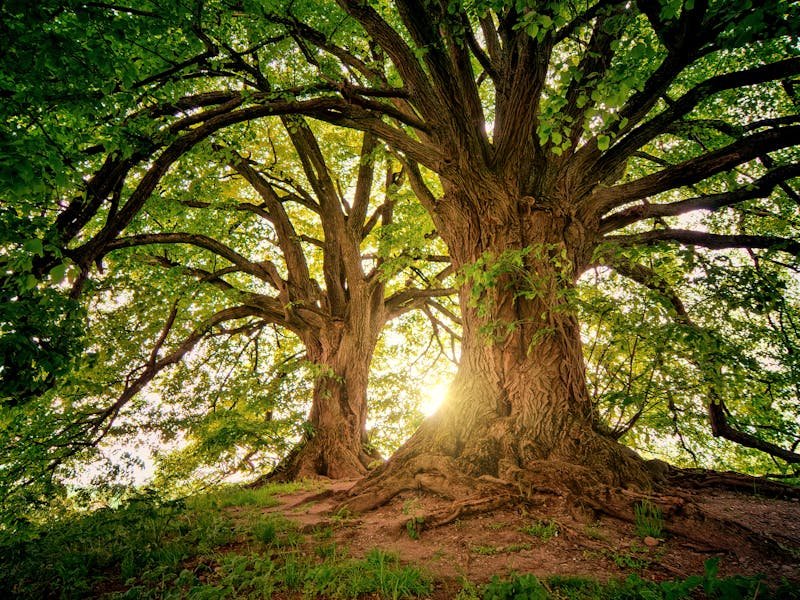
Before you can protect your trees, you need to know what you are protecting. The Critical Root Zone, sometimes called the Tree Protection Zone, is the area of soil around a tree that must remain undisturbed for the tree to survive.
The standard formula used by arborists across the country is simple: one foot of radius for every inch of trunk diameter measured at 4.5 feet above ground (what we call DBH, or diameter at breast height). So if your oak tree has a trunk that measures 24 inches in diameter, the Critical Root Zone extends at least 24 feet from the trunk in every direction. That is a circle 48 feet across.
For particularly sensitive species, and this includes most of the oaks we deal with in Huntsville, a lot of arborists recommend bumping that number up to 1.5 feet per inch of diameter. So that same 24-inch oak would get a 36-foot radius, or a circle 72 feet across. That is a massive area, and it is one reason why protecting trees during construction is so challenging, especially on smaller lots.
Now, we understand that maintaining a pristine buffer that large around every tree on a construction site is not always realistic. But knowing the ideal gives you a starting point for negotiation. The closer you can stay to that ideal, the better your tree's chances of survival. And there are certain minimums below which the tree's odds drop dramatically. Going inside 50 percent of the Critical Root Zone is extremely risky. Going inside one-third is usually a death sentence.
Protective Measures That Actually Work
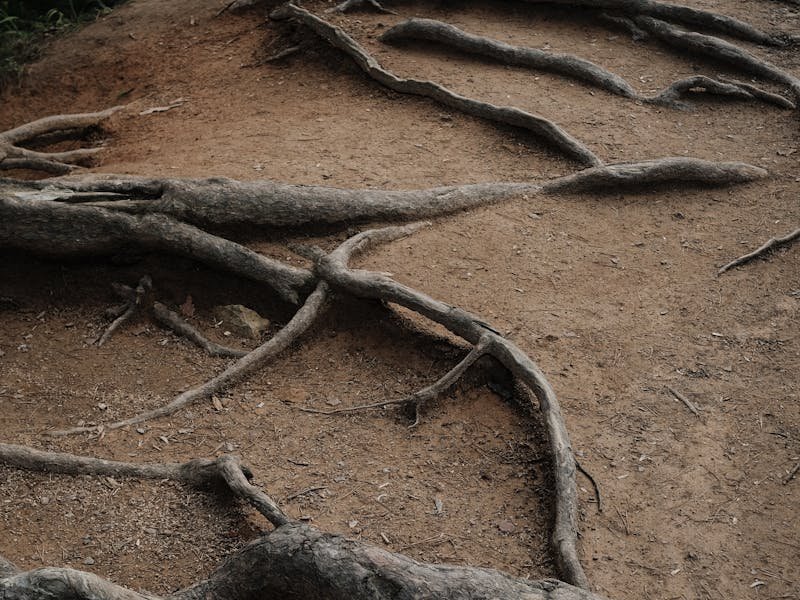
Alright, so you know how construction kills trees and you know what the Critical Root Zone is. Now let's talk about the specific steps you can take to protect your trees during a building project. These are not theoretical suggestions. These are practices we recommend to homeowners across Madison, Huntsville, and the surrounding area, and they work when they are actually implemented and enforced.
Install Physical Fencing Before Any Work Begins
This is the single most important step, and it needs to happen before the first piece of equipment rolls onto the site. Install sturdy fencing around the Critical Root Zone of every tree you want to save. Chain-link fencing is ideal because it cannot be easily pushed aside. At a minimum, use heavy-duty orange construction fencing on metal T-posts driven into the ground.
The fencing needs to be in place before demolition, before grading, before anything. Once equipment starts moving around, the mentality on a job site shifts to "get the work done," and tree protection becomes an afterthought. We have seen this time and again: the homeowner planned to put up fencing but wanted to wait until the demo crew was done. By the time the fencing went up, a loaded dump truck had already made 30 passes over the root zone of their prized white oak.
Post clear signs on the fence that say "TREE PROTECTION ZONE - NO ENTRY" and make sure every subcontractor who sets foot on your property understands that the fenced area is off-limits for equipment, foot traffic, and material storage. This needs to be in writing in your construction contract.
Specify Tree Protection in Your Construction Contract
Verbal agreements with your builder about protecting trees are worth the paper they are not printed on. Get tree protection requirements in the written contract. Specify which trees are to be preserved, the dimensions of the protection zones, penalties for violations, and who is responsible for monitoring compliance.
Include language requiring that no soil disturbance, equipment operation, or material storage occur within the fenced protection zones. Require that concrete washout be conducted in a designated area well away from any trees. Specify that any root encountered during excavation over a certain diameter (usually 2 inches) must be clean-cut rather than ripped or torn by equipment.
We know this might feel like overkill, especially if you have a great relationship with your builder. But we have seen too many cases where a well-meaning builder's subcontractor parked a concrete pump right on top of a tree's root zone because nobody told him not to, and there was nothing in writing to back up the homeowner's complaint. In the fast-paced world of Huntsville construction, especially in hot markets like Town Madison and Clift Farm, things move fast, crews rotate, and without written rules, tree protection falls through the cracks.
Manage Drainage and Grade Changes Carefully
If your project involves any changes to the grade around existing trees, work with your builder and an arborist to minimize the impact. Where fill must be added near a tree, consider using a tree well, a retaining wall built around the trunk at the original grade, with a gravel layer and drainage system to maintain oxygen flow to the roots.
Where soil must be removed, do it by hand or with an air spade (a tool that uses compressed air to excavate soil without cutting roots) rather than a backhoe. This preserves roots while exposing them so you can see what you are working with. If roots are exposed by excavation, cover them with burlap and keep them moist until they can be permanently covered. Exposed roots dry out and die quickly, especially during a Huntsville summer.
Pay careful attention to drainage changes. A new driveway, patio, or building addition can redirect surface water in ways that either flood the root zone or divert water away from it. Both can be fatal. Trees that have been growing with a consistent moisture pattern for decades cannot quickly adapt to suddenly having twice as much water or half as much. Work with your builder to ensure that runoff from new impervious surfaces is directed away from existing trees, but that the trees still receive adequate moisture.
Protect the Trunk and Lower Branches
While root protection is the priority, do not forget about physical damage to the trunk and lower branches. Equipment bumping into a tree trunk can create wounds that expose the sapwood to decay organisms. Even a scrape that removes a hand-sized area of bark is a significant injury that will take years to heal, if it heals at all.
If equipment must operate close to a tree, wrap the lower trunk with lumber or rubber padding secured with straps, not nails. Prune any low-hanging branches that might be struck by equipment, and have the pruning done by a qualified arborist using proper cuts. Bad pruning is just another form of construction damage.
Huntsville's Building Boom and Why Tree Protection Matters Now
Let's put this in local context, because what is happening in Huntsville right now makes this topic incredibly urgent. The Tennessee Valley is in the middle of one of the most significant building booms in its history. The FBI headquarters relocation, the continued growth of Redstone Arsenal, Toyota-Mazda, and the broader tech sector have driven a wave of residential and commercial development that shows no signs of slowing down.
Town Madison, the massive mixed-use development off I-565, has added thousands of new homes and continues to expand. Clift Farm in Madison is building out rapidly. New subdivisions are going up along Jeff Road, out in Meridianville and Harvest, and up the mountain toward Gurley and Owens Cross Roads. Existing homeowners across South Huntsville, Bailey Cove, and Jones Valley are adding additions, pools, and outbuildings to their properties.
All of this construction activity is happening in an area that is heavily wooded. Huntsville's tree canopy is one of our greatest assets. The mature oaks, hickories, and pines throughout neighborhoods like Blossomwood, Monte Sano, and Five Points are irreplaceable, at least within any human lifetime. A 60-year-old white oak that gets killed by construction damage cannot be replaced by planting a new tree. That replacement tree will take half a century to provide the same shade, beauty, and ecological value.
This is why tree protection during construction is not just a nice-to-have. It is an economic and environmental imperative. Studies consistently show that mature trees add 10 to 20 percent to property values. In Huntsville's competitive real estate market, a lot with mature trees commands a significant premium over a cleared lot. Killing those trees through preventable construction damage is literally burning money.
Tree Protection Ordinances and Regulations in Huntsville
Let's talk about the regulatory side, because homeowners and builders in the Huntsville area need to be aware of the rules that may apply to tree removal and protection during construction.
The City of Huntsville has a tree preservation ordinance that applies to commercial development and subdivision projects. Under these regulations, developers may be required to preserve a certain percentage of existing tree canopy, replace trees that are removed, or pay into a tree replacement fund. The specifics vary depending on the zoning district and the type of development.
For individual homeowners on private property, the regulations are less stringent, but that does not mean there are no rules. Many HOAs in Madison County have covenants that restrict tree removal and require approval before taking down trees over a certain size. Neighborhoods in The Ledges, McMullen Cove, and many of the newer planned developments in Madison have particularly strict tree protection rules. Before you start any construction project that might affect trees, check your HOA covenants and reach out to your architectural review committee.
Properties in designated historic districts, like parts of Twickenham and Old Town Huntsville, may have additional requirements related to maintaining the historic character of the neighborhood, which can include protecting significant trees.
Alabama state law does not have a comprehensive tree protection statute that applies statewide, but local municipalities can and do enact their own ordinances. It is always worth checking with the City of Huntsville's planning department or your local municipality before beginning a project that will impact trees.
Beyond legal requirements, there is a practical consideration: if you damage or kill your neighbor's tree during construction on your property, you can be held liable for the value of that tree. And mature tree valuations can be surprisingly high. A certified arborist can appraise a mature tree at $10,000, $20,000, or even more based on its species, size, condition, and location. That is a liability you do not want to take on because a backhoe operator swung too wide.
Working with Your Builder: A Practical Guide
The relationship between the homeowner, the builder, and the arborist is critical to successful tree preservation during construction. Here is how to make it work.
Bring in an Arborist Before the Project Starts
Before you finalize plans, before you break ground, and ideally before you even finalize your site plan, have a certified arborist evaluate the trees on your property. This assessment will tell you which trees are worth saving (healthy, structurally sound, long-lived species), which trees are already compromised and may not survive regardless, and how the proposed construction will impact each tree.
This early assessment allows you to make informed decisions. Maybe the site plan can be shifted slightly to avoid the root zone of your best oak tree. Maybe the driveway can curve a few feet to miss a major root. These adjustments are easy and cheap at the planning stage. They are impossible once the foundation is poured.
We do pre-construction tree assessments throughout Huntsville, Madison, Decatur, and the surrounding areas, and we cannot stress enough how much easier it is to protect trees when we are involved from the beginning rather than called in after the damage is done.
Communicate Clearly with Every Crew on Site
Your general contractor may understand the tree protection plan, but what about the plumber who shows up for half a day? The HVAC crew? The concrete finisher? Every subcontractor who steps onto your property needs to understand the tree protection zones and the rules around them.
Make sure your general contractor includes tree protection requirements in every subcontractor agreement. Post the tree protection plan prominently on site. Walk new crews through the rules before they start work. Yes, this takes time and effort. No, it is not optional if you are serious about saving your trees.
Monitor the Site Regularly
Do not assume that because the rules exist, they will be followed. Visit the site regularly and check that the fencing is intact, that no materials have been stored within the protection zones, and that drainage is functioning as planned. If you see violations, address them immediately with your builder. The longer a problem persists, the more damage accumulates.
Consider having your arborist do periodic site visits during construction to check on tree health and flag any issues early. This is especially important during extended projects that span multiple months or seasons.
Post-Construction Tree Care: Helping Your Trees Recover
Even with the best protection measures in place, trees on a construction site are going to experience some stress. Here is how to give them the best chance of recovery once the building work is done.
Mulch the root zone. Apply a 3 to 4 inch layer of organic mulch, wood chips are ideal, over the entire root zone, keeping the mulch a few inches away from the trunk. Mulch helps restore soil biology, retains moisture, moderates soil temperature, and slowly improves soil structure as it decomposes. For trees in our heavy clay soil, this is one of the single best things you can do.
Water deeply and consistently. Construction-stressed trees often have compromised root systems that cannot take up water as efficiently. During dry periods, and we get plenty of those in Huntsville from July through October, provide deep, slow watering to the root zone. A soaker hose or drip system set to run for several hours once or twice a week is far more effective than frequent light watering.
Avoid additional stress. For at least two to three years after construction, do not do anything else that stresses the tree. No heavy pruning, no fertilization (which can actually stress a tree with compromised roots), no additional soil disturbance in the root zone. Let the tree recover before asking more of it.
Watch for decline symptoms. Keep an eye on leaf size, canopy density, branch dieback, and overall vigor. If you notice the tree looking worse over time, rather than better, call an arborist for an assessment. Early intervention with targeted pruning of dead wood and soil improvement can sometimes turn things around. But the sooner problems are identified, the better the prognosis.
When It Is Too Late: Recognizing Construction-Damaged Trees That Cannot Be Saved
Despite everyone's best efforts, sometimes a tree sustains too much construction damage to survive. Recognizing when a tree has crossed the point of no return is important, because a dead or dying tree near your home is a safety hazard that needs to be addressed.
Here are the signs that a construction-damaged tree is beyond saving:
Progressive canopy thinning over multiple years. A tree that is getting thinner each year, losing more branches and producing fewer leaves, is on a downward trajectory. If the canopy loss exceeds 50 percent and continues to worsen, the tree is unlikely to recover.
Major dieback from the top down. When the upper crown dies first and the dieback progresses downward over time, it indicates the root system is failing and cannot supply water and nutrients to the full canopy. This is classic construction damage presentation.
Mushrooms or fungal growth at the base. If you start seeing fungal fruiting bodies at the base of a construction-stressed tree, decay has set in and the structural roots are being compromised. This tree is not just declining; it is becoming dangerous.
Bark splitting and oozing. Vertical cracks in the bark with fluid seeping out suggest that the cambium layer is dying. This can happen when root damage prevents adequate water uptake, and it is a sign of severe, systemic decline.
New lean or root plate movement. If the tree starts leaning or you notice soil cracking around the base, the anchoring roots have failed. This is an emergency situation that requires immediate professional removal.
We have dealt with many construction-damaged trees across the Huntsville metro. One case that sticks with us was a row of mature pecans on a property in South Huntsville where the neighbor had done a major addition. The construction company trenched right through the property line and severed roots on three of the five pecans. Within four years, all three trees with severed roots were dead. The two trees that were outside the construction zone were fine. It was as clear-cut a case of construction damage as you will ever see.
When a construction-damaged tree cannot be saved, the best course of action is to have it removed professionally, grind the stump, and plant an appropriate replacement species. Losing a mature tree is always painful, but planting a new one starts the clock on the next generation. Choose a species well-suited to the site, give it proper care, and in time it will provide many of the same benefits as the tree that was lost.
Frequently Asked Questions
How does construction damage trees?
Construction damages trees primarily through soil compaction over the root zone from heavy equipment, severing roots during excavation or trenching, changing the soil grade (adding or removing soil), and chemical exposure from concrete washout, fuel spills, or herbicides. The most insidious part is that the damage often does not become visible for two to five years after construction is complete, long after the builder is gone. By then, the root system has deteriorated beyond the tree's ability to recover.
How far from a tree should construction equipment stay?
The general rule of thumb is to keep all construction activity outside the tree's Critical Root Zone, which extends at least 1 foot from the trunk for every inch of trunk diameter measured at chest height. A tree with a 20-inch diameter trunk needs at least 20 feet of protected space in every direction. For sensitive species like oaks, many arborists recommend extending this to 1.5 feet per inch. So that 20-inch oak would ideally have a 30-foot radius of protection.
Can a tree survive having its roots cut during construction?
It depends on how many roots are cut and how close to the trunk the cuts occur. A healthy tree can typically survive losing roots on one side if no more than about 25 percent of the total root system is affected. However, cutting roots within 3 to 5 feet of the trunk on a large tree is often fatal, as this is where the major structural and transport roots are located. Root cuts also create entry points for decay fungi like Armillaria, which is very common in North Alabama soil and can spread from cut root surfaces into the rest of the root system.
Does Huntsville have a tree protection ordinance for construction?
The City of Huntsville has tree preservation guidelines that apply primarily to commercial developments and subdivision projects. Requirements vary by zoning district, and some planned developments have specific tree preservation covenants. Many HOAs in Madison County also include tree protection requirements in their covenants. If your property is in a historic district like Twickenham or Old Town, additional restrictions may apply. Check with the city planning department and your HOA before starting any project that could impact trees.
How long after construction will I know if my tree survived?
This is the frustrating part: construction damage to trees is often delayed in its visible effects. You may not see obvious symptoms for two to five years after the work is completed. Early signs to watch for include leaves that are smaller than normal, premature fall color, thinning of the canopy starting at the branch tips, and reduced annual growth. A post-construction arborist assessment can identify problems through root zone evaluation and canopy analysis before obvious decline sets in, giving you the best chance of intervening early.
What is the best way to protect a tree during construction?
The single most effective measure is installing sturdy physical fencing around the tree's Critical Root Zone before any equipment arrives on site. Use chain-link or heavy-duty orange construction fencing on metal posts, set at the drip line or beyond. Post clear signage, include tree protection requirements in your written construction contract with specific penalties for violations, and have a certified arborist monitor the site periodically. Never allow equipment parking, material storage, soil dumping, or concrete washout within the fenced protection area.