
You have gotten your estimates, chosen a tree service, and scheduled the removal date. Now what? For a lot of Huntsville homeowners, this is the first time they have had a tree professionally removed, and they are not sure what to do to get ready. Some people assume the crew just shows up and handles everything. Others worry about every detail and are not sure which preparations actually matter.
The truth is somewhere in the middle. A good tree crew will manage the heavy lifting, the cutting, the rigging, and the cleanup. That is what you are paying them for. But there are a number of things you can do ahead of time that will make the job go faster, smoother, and safer for everyone. And a few of them can actually save you money.
We have been doing tree removal across Huntsville, Madison, Decatur, and the surrounding areas for years, and the jobs that go the smoothest are always the ones where the homeowner did a little preparation beforehand. This guide covers everything you need to do from the day you schedule the job until the crew drives away. Think of it as your tree removal day playbook.
One to Two Weeks Before: Planning and Notifications
The preparation starts well before tree removal day. There are several things to take care of one to two weeks in advance that will prevent headaches on the day of the job.
Call 811 to Mark Utilities
This is one of the most important pre-removal steps, and it is free. Call 811 or visit the Alabama One Call website to request utility marking on your property. This is especially critical if stump grinding is included in your job, since the grinding equipment works several inches below the soil surface. But even for tree removal alone, knowing where underground lines are located helps the crew plan their work and equipment placement safely.
When you call 811, utility companies will come out within a few business days and mark the approximate locations of underground gas, electric, water, sewer, cable, and phone lines with spray paint or flags. In Huntsville, this typically involves Huntsville Utilities for electric and gas, the City water department, and various telecom providers. Call at least 3 to 5 business days before your scheduled tree removal to make sure markings are in place on time.
Notify Your Neighbors
This is both a courtesy and a practical step. Tree removal is noisy. Chainsaws, chippers, and heavy equipment generate a lot of noise that will be clearly audible to adjacent properties. Giving your immediate neighbors a heads-up 2 to 3 days before the work allows them to plan accordingly, whether that means keeping windows closed, keeping pets calm, adjusting work-from-home schedules, or moving their own vehicles if your shared driveway or street will be partly blocked.
If the tree is near the property line, extends over a neighbor's fence, or could potentially affect their yard during removal, notification is even more important. In tight neighborhoods in Five Points, Blossomwood, and Twickenham, where homes are close together and lots are small, the neighbors are essentially part of the work zone even if the tree is entirely on your property. A quick conversation or a knock on the door goes a long way toward maintaining good relations.
Check Your HOA Requirements
If you live in a neighborhood with a homeowners association, check whether your HOA requires notification or approval before tree removal. Some Huntsville-area HOAs, particularly in newer planned communities in Madison, Hampton Cove, and The Ledges, have tree preservation clauses in their covenants. You might need to submit a request, get written approval, or even commit to planting a replacement tree. Failing to follow HOA procedures can result in fines, so check first.
Confirm the Details with Your Tree Service
A day or two before the scheduled work, touch base with your tree service company to confirm the date, expected arrival time, scope of work, and any special instructions. This is also the time to ask any final questions. Will they be bringing a chipper? Do they need gate access to the backyard? Will the street need to be partially blocked? Are you keeping any firewood? A quick phone call eliminates surprises on both sides.

The Day Before: Clearing the Work Zone
The day before tree removal is when you do the physical preparation work. This is all about giving the crew a clear, safe workspace so they can focus on the tree and not on navigating around your stuff.
Move Vehicles
This is the most common issue we run into on job day. The tree crew needs to park their trucks and position equipment. Depending on the size of the job, that might include a bucket truck, a log truck, a chipper, and a crew vehicle. That takes a lot of driveway and street space. Move all personal vehicles out of the driveway and away from the immediate work area.
If the tree is in the front yard, move your cars down the street or to a neighbor's driveway. If the tree is in the backyard and the crew needs to come through a side gate or across the lawn, make sure that access route is completely clear. On narrow streets in older Huntsville neighborhoods, you might need to ask a neighbor to move their street-parked car as well.
Clear Outdoor Furniture and Items
Move everything within at least 50 feet of the tree if possible. That includes:
- Patio furniture, tables, chairs, and umbrellas
- Grills and smokers
- Planters, potted plants, and garden decorations
- Kids' toys, playsets, trampolines, and swing sets (if they can be moved)
- Bird baths, feeders, and garden statues
- Hoses, sprinklers, and irrigation equipment
- Firewood stacks (unless they are far from the work area)
- Garbage cans and recycling bins
- Any fragile or valuable outdoor items
Even if you think something is far enough away, move it further if you can. Tree sections can bounce, wood chips fly in unexpected directions, and heavy equipment vibrations can knock things over. It takes a few minutes to move a chair. It takes a lot longer to deal with a broken bird bath or a dented grill.
Open Gates and Clear Access Paths
If the tree is in the backyard, make sure all gates along the access route are open and that the path is clear. Remove anything that could be an obstacle or a tripping hazard. If the gate is too narrow for equipment, discuss this with your tree service ahead of time so they can plan alternative access. Some backyard jobs in neighborhoods with privacy fences require removing a fence section temporarily, and your tree service can coordinate that with you.
Protect Your Landscaping
If you have flowerbeds, garden areas, or delicate landscaping near the tree, talk to the crew about it. They will do their best to minimize damage, but some ground disturbance is inevitable, especially along the equipment access path. Laying plywood sheets over sensitive areas can help distribute weight and prevent ruts. If you have an irrigation system with heads or lines near the tree, mark them with flags so the crew can see them.
Prepare for Stump Grinding
If stump grinding is part of the job, make sure the area immediately around the stump is clear of rocks, concrete, or debris. Stump grinders can be damaged by hitting metal, concrete, or large rocks hidden at the base of the tree. If you know the stump has metal embedded in it, old nails, screws, clothesline hardware, or anything like that, let the crew know in advance.
Tree Removal Morning: Final Checklist
The morning of tree removal, run through this quick checklist before the crew arrives. Most crews start early, often 7:00 or 7:30 AM, to take advantage of the cooler morning hours, especially during Huntsville's hot summer months.
Secure Pets
This is critical. The noise from chainsaws and chippers will stress most dogs and cats. More importantly, a loose pet in the work zone is a serious safety hazard for the animal and a distraction for the crew. Keep all pets inside the house or in a secure, enclosed area well away from the work. If your dog has a run or kennel in the backyard near the work area, relocate the dog for the duration of the job.
If you have neighbors with dogs that are typically in their yards, give them a heads-up too. We have had situations where a neighbor's dog was in their yard during removal and got panicked by the noise. A quick text to the neighbor can prevent that.
Brief the Crew
When the crew arrives, take a few minutes to walk through the job with the crew leader. Point out anything they need to know about:
- The specific tree or trees being removed
- Any areas of concern (underground utilities, irrigation lines, delicate landscaping)
- Where you want firewood stacked if you are keeping it
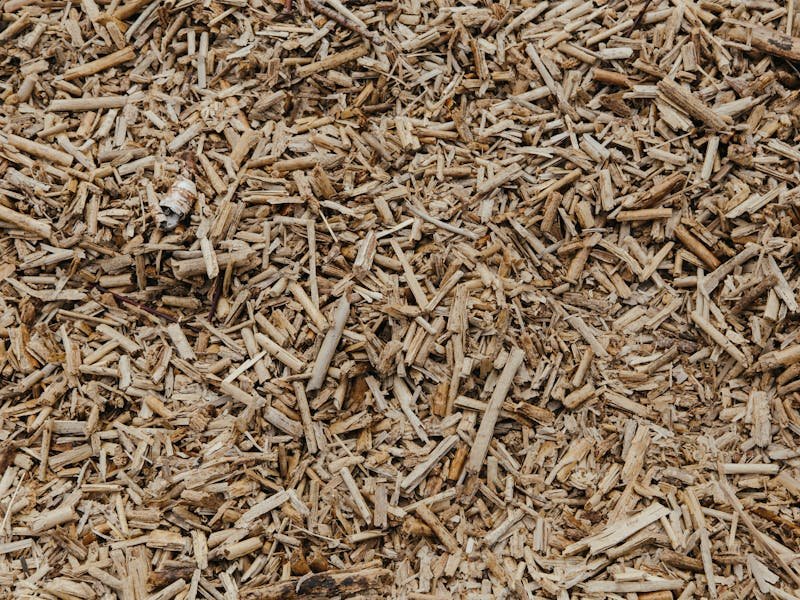
- Whether you want the wood chips (many homeowners use them for mulch)
- Gate codes or access instructions if there are locked areas
- Your contact number in case they need to reach you
Also ask the crew leader for their estimated timeline. Knowing whether the job will take two hours or six hours helps you plan your day.
Keep Children Away
Tree removal sites are active construction zones with serious hazards including falling wood, swinging rigging, sharp equipment, and loud noise. Children should be kept inside or taken to another location for the duration of the work. This is non-negotiable. Even older teenagers should stay well away from the work area unless they are helping with post-job cleanup at a safe distance.

What to Expect During the Tree Removal Process
If this is your first tree removal, it helps to know what the process looks like. Tree removal is not just "cut the tree and let it fall." Professional tree removal is a systematic, planned operation, especially for large trees or trees near structures.
Equipment Setup
The crew will start by positioning their vehicles and equipment. Depending on the job, this might include a bucket truck (also called a cherry picker), a chipper for processing branches, a log truck or trailer for hauling wood, and various ground equipment like stump grinders and skid steers. Setup typically takes 15 to 30 minutes.
The Removal Process
For trees in open areas with a clear drop zone, the crew may be able to fell the entire tree in one cut by notching the trunk and making a back cut. This is the fastest method and is common on larger lots in Harvest, Meridianville, and rural areas around New Market and Toney.
For trees near houses, fences, power lines, or other structures, the crew uses a sectional removal process. This means they work from the top down, cutting the tree apart piece by piece. A climber goes up into the tree (or a bucket truck is used) and removes limbs and trunk sections one at a time. Each piece is either roped and lowered with control or dropped into a designated landing zone. This is how most residential tree removals in established Huntsville neighborhoods are done, and it requires significant skill and experience.
Processing and Cleanup
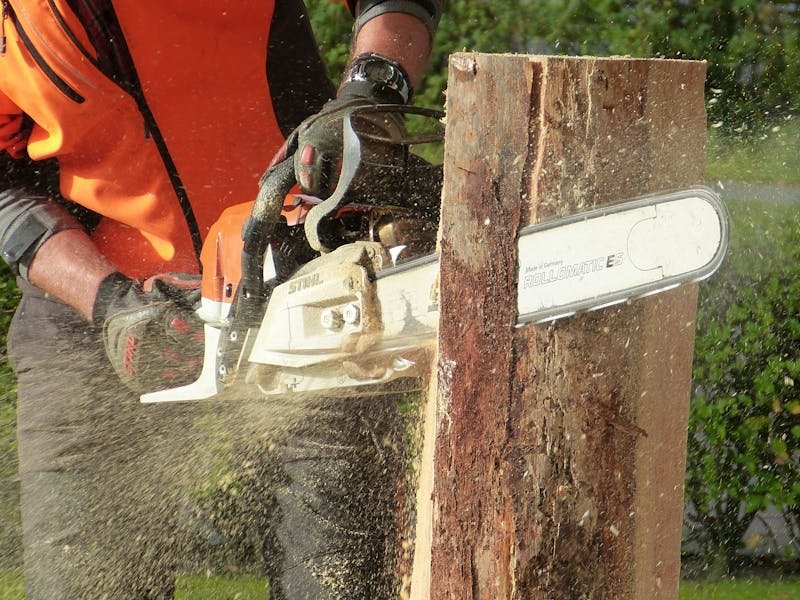
As sections come down, the ground crew processes them immediately. Branches are fed through the chipper, which reduces them to wood chips that are blown into the chip truck. Larger trunk sections are cut into manageable lengths and loaded onto the log truck. This happens continuously throughout the job, so the yard does not become an impassable pile of debris.
After the tree is fully removed, the crew does a thorough cleanup. They rake the area, remove any remaining debris, and clean up the access path. If stump grinding is included, that is typically done after the tree is removed and the area is clear.
Timeline Expectations
Here are rough time estimates for tree removal in the Huntsville area. These assume a professional crew with proper equipment.
- Small tree (under 30 feet): 1 to 2 hours
- Medium tree (30 to 60 feet) in open area: 2 to 4 hours
- Medium tree near structures: 3 to 5 hours
- Large tree (60 to 80+ feet) in open area: 3 to 5 hours
- Large tree near structures: 4 to 8 hours (potentially full day)
- Stump grinding (add-on): 30 minutes to 2 hours per stump
Weather can affect the timeline. If the crew arrives and conditions are unsafe, such as high winds or lightning in the area, they may delay the start. Here in Huntsville, afternoon thunderstorms are common from April through September. Morning starts help get the bulk of the work done before afternoon weather moves in.
Special Considerations for Huntsville Properties
Different types of Huntsville properties come with different preparation needs. Here are some neighborhood-specific considerations.
Historic Districts
If your property is in the Twickenham Historic District or the Old Town Historic District, you may need approval from the Huntsville Historic Preservation Commission before removing certain trees. Check with the city's Planning Department well in advance of your removal date. Your tree service should be familiar with these requirements and can advise you.
Mountain Properties
Homes on Monte Sano, Green Mountain, and Wade Mountain often have steep driveways, rocky terrain, and limited equipment access. If your driveway is steep or narrow, make sure the tree service knows this when they do the estimate so they can plan the right equipment. Steep properties may require additional setup time and specialized rigging that you should factor into your time expectations.
Properties with Fences
Many Huntsville homes have privacy fences that limit backyard access. If the tree is in the backyard and the fence gate is too narrow for equipment, you have a few options. The crew can do the work entirely by hand with climbing, which takes longer and costs more. Or a fence section can be temporarily removed to allow equipment access. Discuss this with your tree service during the estimate to determine the best approach for your specific situation.
Properties Near Huntsville Utilities Lines
If the tree is near or under power lines, the tree service may need to coordinate with Huntsville Utilities for a temporary disconnect or a utility crew to be on standby. This coordination should be arranged by the tree service before the work date, not the morning of. If your tree is entangled in or directly touching power lines, do not attempt any preparation work near the tree yourself. That is strictly a job for professionals with utility coordination.
After the Crew Leaves: Post-Removal Checklist
Once the crew finishes and drives away, your work is not quite done. Here are the things to take care of after tree removal.
Inspect the Work Area
Walk the entire area where work was done. Look for any remaining debris, equipment marks, or damage. Check your fence, landscaping, driveway, and any structures that were near the work zone. If something was damaged, take photos immediately and contact the tree service the same day. Reputable companies carry full insurance and will address any legitimate damage claim promptly.
Check the Stump
If you opted for stump grinding, check the result. The stump should be ground down 6 to 12 inches below grade, and the area should be filled with a mix of ground-up wood chips and dirt. Over the next few weeks, this material will settle, and you may need to add topsoil and reseed with grass. If you skipped stump grinding, you will have a stump at or near ground level. Consider getting it ground later, as old stumps attract termites and can be a tripping hazard. Our guide on stump grinding versus stump removal covers your options.
Address the Void in Your Landscape
Removing a large tree changes the character of your yard. Where there was shade, there is now full sun. Where there was a visual screen, there is now an open view. Some homeowners love the change. Others need time to adjust. If the newly exposed area needs attention, consider planting a replacement tree. Our article on the best shade trees for Huntsville can help you choose a good replacement species.
The area where the tree stood will need some care. If the ground was disturbed by equipment, loosen the compacted soil, add compost, and overseed with grass. In Huntsville, Bermuda and Zoysia grass work well in full-sun areas, while Fescue is better for partial shade. The newly sun-exposed area may need more frequent watering initially as the grass establishes.
Watch for Regrowth
Some tree species are persistent resprouters. If the stump was not ground out, you will likely see new shoots growing from the stump and root system within a few weeks. Sweetgum, Bradford Pear, Chinese Tallow, and some oaks are notorious for this. Cut or pull these sprouts as they appear. If the stump was ground, regrowth is much less likely but can still occur from remaining root tissue. Persistent sprouts from roots may need targeted herbicide application.
Common Mistakes Homeowners Make on Tree Removal Day
Over the years, we have seen homeowners make a number of well-intentioned mistakes that create problems on removal day. Here are the most common ones and how to avoid them.
Not moving vehicles. This is the number one issue. If the driveway is blocked by personal cars, the crew cannot position their trucks and equipment. This delays the entire job and can result in a less efficient removal because equipment cannot be placed in the optimal position. Always move all vehicles before the crew arrives.
Leaving pets loose. A dog running around the work zone is dangerous for everyone. The dog can get hit by falling debris. The crew cannot focus on the dangerous work if they are watching out for a pet. And a panicked dog can bite. Always secure pets indoors before work begins.
Not clearing the work area. Leaving patio furniture, toys, or garden items in the work zone slows the crew down because they have to work around it. It also puts those items at risk of damage. Clearing the area in advance is faster and cheaper than replacing a broken grill or cracked planter.
Micromanaging the crew. It is natural to be curious and concerned about the work, but hovering over the crew, constantly asking questions during active cutting, or standing too close to the work zone is distracting and dangerous. Give the crew the information they need at the start, then let them work. Stay at a safe distance and watch from inside the house if you want to observe.
Forgetting to communicate about what to keep. If you want firewood kept, tell the crew before they start. If you want the wood chips, say so. If there is a specific spot you want the firewood stacked, point it out during the initial walkthrough. It is much harder to sort and recover wood after it has been loaded onto a truck or fed through a chipper.
Skipping the utility marking. Underground utility lines are invisible until someone hits one. A severed gas line is a serious emergency. A cut fiber optic cable means no internet for weeks while the utility company repairs it. Calling 811 is free, fast, and prevents potentially dangerous and expensive mistakes.
Frequently Asked Questions About Tree Removal Day

Ready to Schedule Your Tree Removal?
Getting a tree removed does not have to be stressful. With a little advance preparation, the process is smooth, efficient, and over faster than most homeowners expect. The crew handles the dangerous work and the heavy lifting. Your job is to give them a clear, safe workspace and communicate any special needs or concerns before they start.
If you have a tree that needs to come down in Huntsville, Madison, Decatur, Athens, or anywhere in the Tennessee Valley, we would love to give you a free estimate. We will walk through the job plan with you, answer all your questions, and give you a clear, written price with no surprises. We handle every detail from start to finish so you can relax and let the pros take care of it.
Call us at (256) 555-0123 or request your free estimate online. We will get back to you promptly and work around your schedule. And now that you have this preparation guide, you will be ready for tree removal day like a pro.