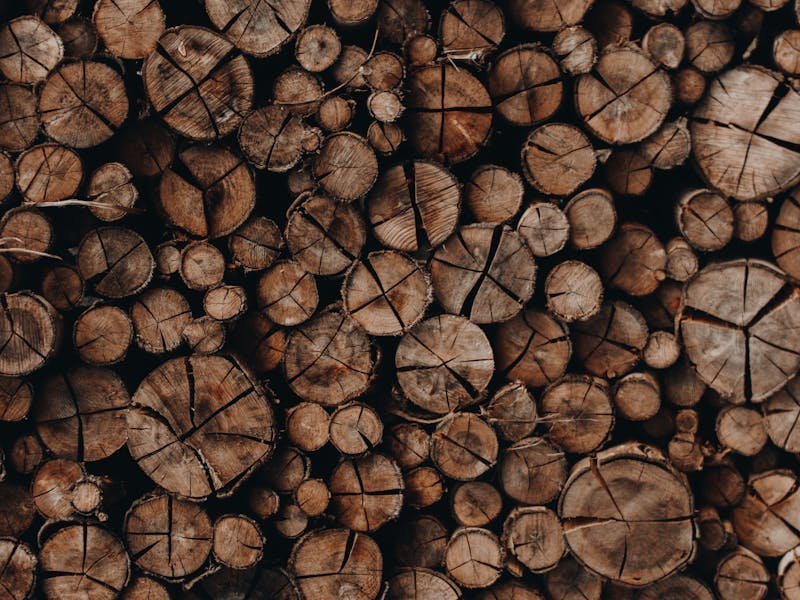
If you have had a tree removed from your Huntsville property—or you are planning to—you are sitting on a potential goldmine of free firewood. Every year, thousands of trees are removed across the Huntsville metro area, and the wood from those removals makes excellent fuel for fireplaces, wood stoves, fire pits, and outdoor cooking. Instead of paying to have all that wood hauled away, many homeowners choose to keep it, season it, and enjoy it through the cooler months.
But not all firewood is created equal. The species of tree, how you process and store the wood, and how long you let it season all dramatically affect how well it burns, how much heat it produces, and how safely you can use it in your home. North Alabama's humid climate also creates specific challenges for drying and storing firewood that you will not find in drier regions.
At Huntsville Tree Pros, we remove hundreds of trees each year across Huntsville, Madison, Decatur, and surrounding communities. We are happy to leave the wood on your property for firewood use—and in this guide, we will share everything you need to know to turn that removal wood into a winter's worth of excellent fuel. For more ways to use wood from removed trees, see our guide on what to do with wood after tree removal.
Best Firewood Species from Huntsville Tree Removals
The trees most commonly removed in the Huntsville area happen to include some of the best firewood species in North America. Here is how the most common local species rank as firewood, from best to acceptable:
Premium Firewood (Highest Heat Output)
- White Oak (Quercus alba) — The gold standard of firewood. White oak produces approximately 29.1 million BTUs per cord, burns slowly and steadily with long-lasting coals, splits easily, and produces minimal sparking. It is one of the most common trees removed in the Huntsville area. If you are having a white oak removed, keep every piece of wood you can
- Red Oak (Quercus rubra and Quercus falcata) — Nearly as good as white oak with approximately 27.3 million BTUs per cord. Red oak is abundant throughout North Alabama and is frequently removed from residential properties. It splits well and produces good, lasting coals. Red oak has a slightly stronger smell when burning than white oak
- Hickory (Carya species) — The highest BTU producer among common North Alabama trees at approximately 30.6 million BTUs per cord. Hickory burns hot and long, and its distinctive aroma makes it prized for smoking meat. The downside is that hickory is notoriously difficult to split, especially when dried. If you have access to a hydraulic log splitter, hickory is spectacular firewood
- Black Locust (Robinia pseudoacacia) — Often overlooked but one of the best firewoods available. Black locust produces approximately 29.3 million BTUs per cord, burns slowly with excellent coals, and is naturally rot-resistant so it stores well. It is extremely dense and hard to split by hand. Common in fence rows and disturbed areas throughout Madison County
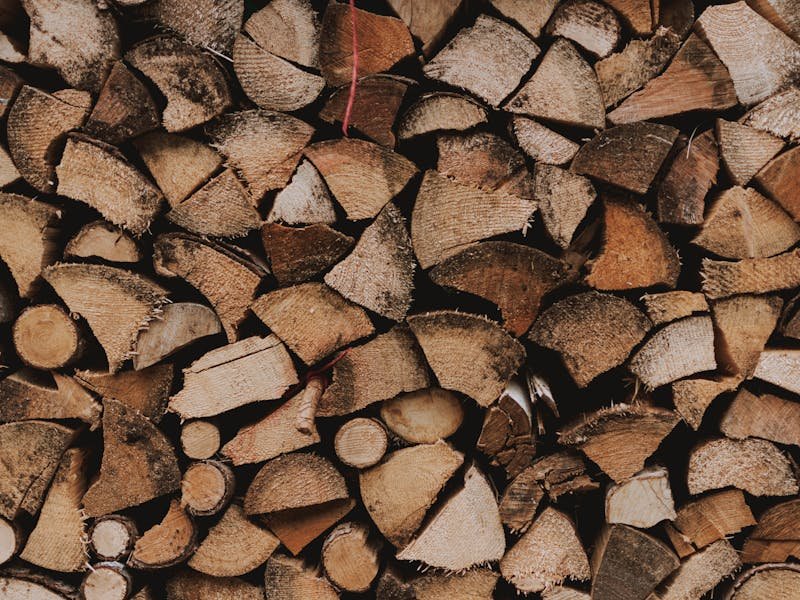
Good Firewood
- Ash (Fraxinus species) — Ash produces approximately 24.2 million BTUs per cord and has one major advantage: it can be burned with a shorter seasoning time than most hardwoods because of its lower initial moisture content. Ash splits beautifully and burns clean with minimal smoke. With emerald ash borer spreading through Alabama, more ash trees are being removed, making ash firewood increasingly available
- Sugar Maple (Acer saccharum) — Good heat output at approximately 29 million BTUs per cord, splits reasonably well, and burns with a pleasant, mild aroma. Not as common in Huntsville as oak but encountered regularly
- Beech (Fagus grandifolia) — Excellent firewood at approximately 27.5 million BTUs per cord with a steady, even burn. Beech is difficult to split and very slow to season, but the end result is outstanding firewood. Found primarily on Monte Sano and the surrounding ridges
- Pecan (Carya illinoinensis) — A member of the hickory family, pecan burns well and produces a wonderful aroma prized for outdoor cooking and smoking. Approximately 28.3 million BTUs per cord. Common in older Huntsville neighborhoods where pecan trees were planted for nut production
Acceptable Firewood (Use With Caution)
- Sweetgum (Liquidambar styraciflua) — Sweetgum is extremely common in Huntsville tree removals. It produces moderate heat (approximately 21.3 million BTUs per cord) and burns reasonably well when fully seasoned. The main drawback is that sweetgum is very difficult to split because of its interlocked grain. It tends to twist and grab the splitting maul. Use a hydraulic splitter if you have access to one
- Tulip Poplar (Liriodendron tulipifera) — Alabama's state tree produces relatively low heat (approximately 17.7 million BTUs per cord) and burns quickly. It is acceptable as kindling or mixed with denser hardwoods, but it burns too fast to be your primary firewood. Seasons quickly and splits easily
- Pine (Pinus species) — Pine is abundant from Huntsville tree removals but should be used cautiously. It ignites easily and burns hot, making it good for kindling and outdoor fires. However, pine produces significant creosote buildup in chimneys and can cause dangerous chimney fires if used heavily in indoor fireplaces. Use pine sparingly indoors, never as your primary indoor firewood, and have your chimney cleaned annually if you burn any pine at all
Seasoning Firewood in Alabama's Humid Climate
Freshly cut "green" wood contains 40 to 60 percent moisture by weight. Burning green wood is inefficient (much of the fire's energy goes to evaporating water rather than heating your home), produces excessive smoke and creosote, and can be difficult to keep burning. Properly seasoned firewood should have a moisture content of 20 percent or less.
In Alabama's humid climate, seasoning firewood takes longer than in drier regions because the ambient humidity slows evaporation. Here is what you need to know:
Seasoning Times by Species
- Pine: 6 months
- Ash, tulip poplar: 6 to 8 months
- Red oak, sweetgum: 9 to 12 months
- White oak, hickory, beech: 12 months or more
These times assume the wood is split (not left in rounds), stacked properly with good airflow, and stored in a location with sun exposure. Wood left in unsplit rounds will take significantly longer—often 18 months or more for dense hardwoods.
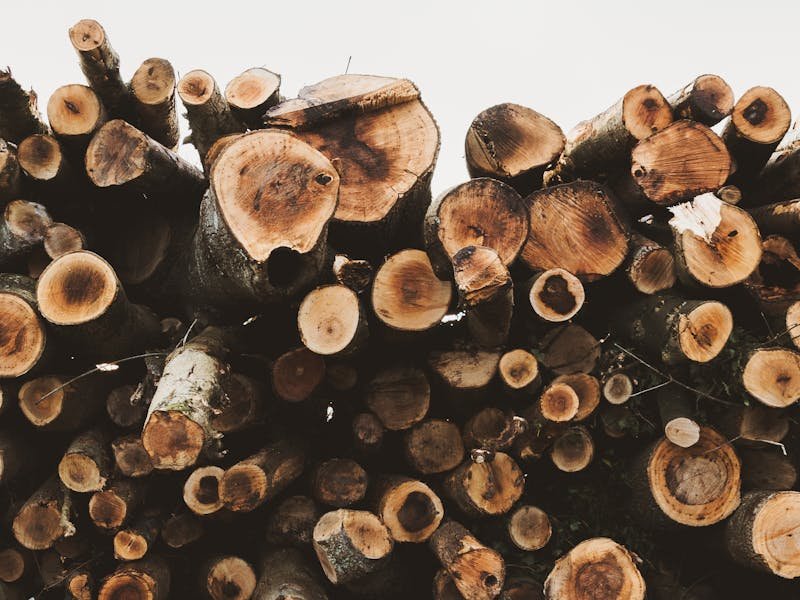
Keys to Faster Seasoning in Alabama
- Split immediately — Split the wood into fireplace-sized pieces as soon as possible after the tree is cut. Splitting exposes the interior wood to air and dramatically accelerates drying. Round logs dry from the outside in, which is painfully slow in humid conditions
- Stack with gaps — Leave small air gaps between pieces when stacking. Do not pack the wood tightly. Airflow through and around the stack is the most important factor in drying speed
- Position for sun and wind — Stack your firewood in a location that receives direct sunlight for at least part of the day and is exposed to prevailing breezes. Avoid stacking in deep shade or against walls that block air movement
- Elevate off the ground — Stack wood on a rack, pallets, or treated lumber runners at least 4 inches above the ground. Ground contact promotes moisture absorption, fungal decay, and insect infestation—all of which are accelerated by Alabama's humidity
- Cover the top, not the sides — Cover the top of the stack with a tarp or metal roofing to keep rain off, but leave the sides completely open for air circulation. Fully wrapping a firewood stack in a tarp traps moisture and promotes mold growth
How to Tell When Firewood Is Seasoned
- Color — Seasoned wood is grayish rather than the creamy white or yellow of freshly cut wood
- Weight — Seasoned wood is noticeably lighter than green wood of the same size
- Sound — When you knock two pieces together, seasoned wood produces a hollow, ringing sound. Green wood produces a dull thud
- End grain — The end grain of seasoned wood shows radial cracks (checking). Green wood has smooth, uncracked end grain
- Moisture meter — The most reliable method. Inexpensive moisture meters ($15 to $30 at hardware stores) measure the actual moisture content. Look for 20 percent or below
Storing Firewood in North Alabama: Pest and Safety Considerations
Proper firewood storage in the Huntsville area requires attention to pest prevention, moisture management, and fire safety. Our warm, humid climate creates conditions that favor insects, particularly termites, which are prevalent throughout Madison County. Here is how to store firewood safely:
Distance from Structures
Store firewood at least 20 to 30 feet from your house, garage, shed, and any wooden structures. This distance reduces the risk of termites migrating from the woodpile to your home, minimizes fire risk if the woodpile ignites, and keeps bark beetles, carpenter ants, and other wood-boring insects away from your structures. For more on the termite risk, read our article on termites and dead trees in Huntsville.
Elevation and Ground Contact
Never stack firewood directly on soil. Ground contact accelerates decay, invites subterranean termites, and promotes moisture absorption from below. Use a firewood rack, concrete blocks with runners, or wooden pallets to keep the bottom of the stack at least 4 inches above the ground. Metal firewood racks are preferable to wooden ones in our termite-heavy environment.
Bring Inside Only What You Need
Only bring a day or two's worth of firewood inside at a time. Firewood stored indoors for extended periods can introduce insects into your home, and any moisture still in the wood will be released into your living space as the wood warms up. Grab what you need for tonight's fire and leave the rest outside.
Inspect Before Burning
Before bringing firewood inside, give each piece a quick inspection. Tap it against a hard surface to dislodge spiders, centipedes, and other hitchhikers. Check for signs of termite damage (mud tubes, hollowed wood) or carpenter ant activity (sawdust piles). While burning infested wood in a fireplace is fine—the fire destroys the pests—you do not want live termites or carpenter ants loose inside your house.
Safety Tips for Burning Firewood
- Annual chimney inspection and cleaning — Creosote buildup causes chimney fires. Have your chimney inspected and cleaned by a CSIA-certified chimney sweep at least once per year if you burn regularly
- Use a fireplace screen or glass doors — Hardwoods like oak and hickory generally do not spark excessively, but pine, cedar, and poplar can pop and throw sparks. Always use a screen
- Never burn treated, painted, or stained wood — Pressure-treated lumber, painted trim, plywood, particle board, and stained wood release toxic chemicals when burned. Only burn natural, untreated wood
- Never burn green wood in a wood stove — Green wood in a wood stove creates excessive creosote and can cause a dangerous over-fire if the stove suddenly catches after smoldering
- Dispose of ashes safely — Place ashes in a metal container with a tight lid. Set the container on a non-combustible surface away from the house. Ashes can contain live coals for 48 hours or more
- Working smoke and carbon monoxide detectors — Test monthly and replace batteries annually. Any home with a fireplace or wood stove must have working CO detectors on every level
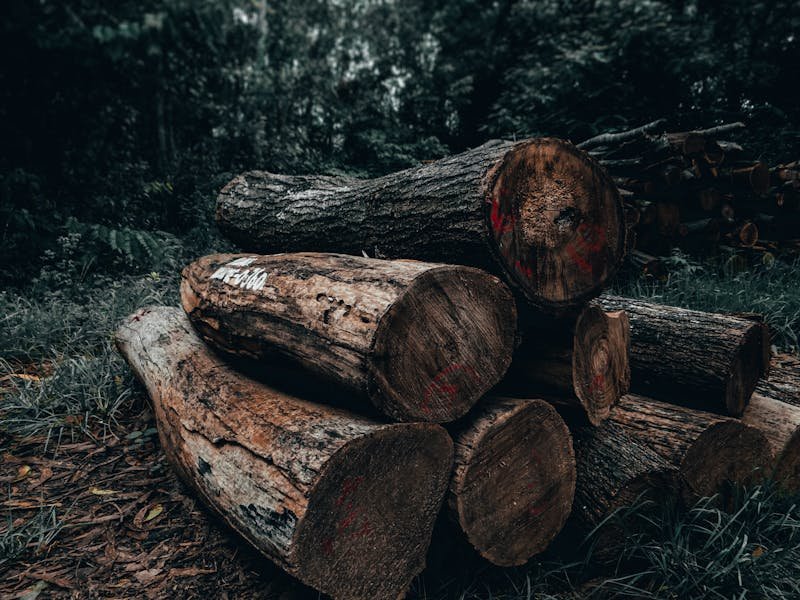
Getting Firewood from Your Tree Removal
When you schedule a tree removal with Huntsville Tree Pros, just let us know that you want to keep the wood for firewood. We can:
- Leave the trunk and large branches in the location of your choice on your property. You handle splitting and stacking at your own pace
- Cut rounds to firewood length (typically 16 to 18 inches) so they are ready for you to split. This is the most popular option
- Advise on species quality — We will tell you which pieces are the best firewood and which are better used as mulch or disposed of
Be sure to discuss your firewood preferences before the crew arrives so they can plan accordingly. It does not cost extra to leave wood on site—in fact, it can sometimes reduce the total project cost because there is less hauling involved. For current removal pricing, see our tree removal cost guide for Huntsville.
Other Ways to Get Firewood in Huntsville
Even if you do not have a tree to remove, there are several ways to source firewood in the Huntsville area:
- Tree service companies — Many tree services, including ours, have excess wood from removals that can be made available to customers
- Facebook Marketplace and Craigslist — Local sellers frequently list seasoned and unseasoned firewood. Prices in the Huntsville area typically range from $150 to $250 per cord for seasoned hardwood, delivered and stacked
- After storm events — After major storms, homeowners often have downed trees they want cleared. Offering to remove and haul away storm-damaged trees in exchange for keeping the wood is a time-honored arrangement
- Land clearing operations — If you know someone having a lot cleared for construction, they may welcome someone willing to haul away the wood
- National Forest permit cutting — The Bankhead National Forest (about 90 minutes from Huntsville) and William B. Bankhead National Forest offer firewood cutting permits. Contact the local ranger district for current permit information and regulations
Frequently Asked Questions About Firewood in Huntsville
What is the best firewood from trees commonly removed in Huntsville?
Oak species (white oak, red oak) and hickory are the best firewood from local tree removals. White oak produces approximately 29.1 million BTUs per cord with long, steady burns. Hickory produces the highest BTUs at 30.6 million per cord and is prized for its aroma. Ash and black locust are also excellent. These species are commonly removed from Huntsville properties.
How long does firewood need to season in Alabama?
In Alabama's humid climate, firewood needs 6 to 12 months to season. Pine and ash may be ready in 6 months. Oak and hickory need 9 to 12 months or more. The target moisture content is 20 percent or less. Proper splitting, stacking with airflow, and covering the top of the stack are essential for efficient seasoning in our humidity.
Can I keep the wood from my tree removal?
Yes. Most tree service companies, including Huntsville Tree Pros, will leave wood on site at your request. We can cut the trunk and large branches into firewood-length rounds for easy splitting. Discuss your preference before the crew arrives so they can plan accordingly.
Is it safe to burn wood from a diseased tree?
Generally yes. Fire destroys fungi, bacteria, and most pests. However, avoid storing wood from diseased trees near healthy trees of the same species during seasoning. Do not burn wood treated with pesticides or herbicides, and avoid wood with extensive fungal decay as it burns poorly.
How should I store firewood to prevent termites near my house?
Store firewood at least 20 to 30 feet from your house on a raised rack at least 4 inches off the ground. Never stack against exterior walls. Cover the top but leave sides open for airflow. Only bring small amounts inside right before burning. Use metal racks instead of wooden ones in our termite-heavy environment.
Can I burn pine in my fireplace?
Pine can be used as kindling and in outdoor fires, but use it sparingly indoors. Pine produces excessive creosote buildup that can cause chimney fires. For indoor fireplaces, stick primarily to seasoned hardwoods like oak, hickory, and ash. Have your chimney cleaned annually if you burn any pine.