
If you are getting quotes for tree removal in Huntsville, Alabama in 2026, you want to know what a fair price looks like before the estimates start coming in. Tree removal is one of those services where pricing varies significantly—the same tree can generate quotes ranging from $800 to $3,000 depending on the company, the time of year, and how they approach the job.
This is our updated 2026 price guide for tree removal in the Huntsville metro area. It reflects current market conditions, including the cost increases that have affected the tree service industry over the past year, and provides real pricing data based on the types of jobs we see most frequently in Huntsville, Madison, Decatur, and surrounding communities. For our comprehensive original pricing guide with detailed cost breakdowns, see Tree Removal Cost in Huntsville.
2026 Average Tree Removal Costs by Size
The single biggest factor in tree removal cost is the tree's size. Here are the current 2026 price ranges for the Huntsville area, organized by tree height:
Small Trees (Under 30 Feet)
- 2026 price range: $300 – $600
- Average cost: $450
- Common species: Ornamental pears, dogwood, redbud, crape myrtle, small maples
- Typical job duration: 1 to 2 hours
Small tree removals are the most straightforward and affordable category. These trees can usually be felled in one piece if there is adequate clearance, or sectioned quickly with minimal rigging. Most small tree removals are completed within a couple of hours including cleanup.
Medium Trees (30 to 60 Feet)
- 2026 price range: $600 – $1,800
- Average cost: $1,200
- Common species: Pine, sweetgum, maple, smaller oaks, Bradford pear, tulip poplar
- Typical job duration: 2 to 5 hours
This is the most common size category for residential tree removal in the Huntsville area. Medium trees typically require a climber and some rigging to lower sections safely, especially in backyards with structures, fences, or other trees nearby. The wide price range within this category reflects the significant variation in difficulty—a 40-foot pine in an open area is a much simpler job than a 55-foot oak wedged between a house and a fence.
Large Trees (60 to 80 Feet)
- 2026 price range: $1,800 – $3,500
- Average cost: $2,500
- Common species: Large oaks, hickory, tulip poplar, large pines, pecan
- Typical job duration: 4 to 8 hours
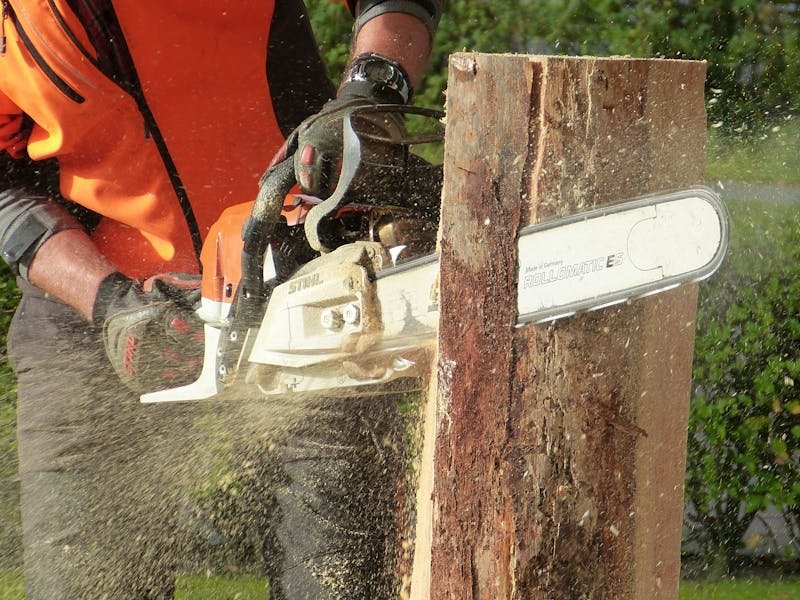
Large trees require experienced climbing crews, heavier rigging equipment, and significantly more time to remove safely. These jobs often involve a full crew of 4 to 5 people working a full day. The volume of wood and debris generated by a large tree also increases disposal costs.
Very Large Trees (80+ Feet)
- 2026 price range: $3,500 – $8,000+
- Average cost: $5,000
- Common species: Mature white oaks, water oaks, tulip poplars, large pines
- Typical job duration: Full day or multi-day
Very large trees are the most complex and expensive to remove. They may require crane-assisted removal, which adds the crane rental cost to the job. The sheer volume of wood, the weight of individual sections, and the difficulty of working at extreme heights all contribute to the higher cost. These are the trees that produce the most dramatic variation in quotes between companies, so getting multiple estimates is especially important.
Additional Service Costs (2026 Pricing)
Tree removal often involves additional services beyond cutting down the tree itself. Here are the current 2026 prices for the most common add-on services:
Stump Grinding
- Bundled with tree removal: $75 – $300 per stump
- Standalone service: $100 – $400 per stump
- Multiple stumps (each additional): $50 – $150
Stump grinding is almost always cheaper when bundled with tree removal because the equipment and crew are already on site. For a comprehensive breakdown, see our stump grinding cost guide.

Crane-Assisted Removal
- Crane rental (per day): $500 – $2,000
- Total crane removal job: $2,500 – $15,000+
A crane is typically needed for trees that are too close to structures for conventional felling, dead trees that are unsafe to climb, trees in confined spaces, or trees on steep terrain. While the equipment cost is significant, crane removal is often faster than conventional methods for the same tree, partially offsetting the added expense. See our full guide on crane-assisted tree removal for details.
Permits
- Residential tree removal permit: $25 – $75 per tree
- Arborist report (if required): $150 – $500
Not all tree removals require permits. Whether you need one depends on the tree's size, location, and your property's zoning. For a step-by-step guide to the permit process, see our tree removal permit guide.
Limb and Debris Hauling
- Standard cleanup and hauling: Usually included in the tree removal price
- Extra hauling (if you want all wood removed): $150 – $400 per load
Log Splitting
- Cut to firewood lengths and stacked: $75 – $200
Cost Comparison Table: 2026 vs. Previous Years
Tree removal costs in Huntsville have increased moderately over the past several years. Here is how 2026 pricing compares to recent years:
| Tree Size | 2024 Average | 2025 Average | 2026 Average |
|---|---|---|---|
| Small (under 30 ft) | $400 | $425 | $450 |
| Medium (30-60 ft) | $1,050 | $1,125 | $1,200 |
| Large (60-80 ft) | $2,200 | $2,350 | $2,500 |
| Very large (80+ ft) | $4,500 | $4,750 | $5,000 |
The approximate 5% to 10% year-over-year increase reflects rising fuel costs, equipment maintenance and replacement expenses, insurance premium increases, and labor market pressures in the Huntsville area. Despite these increases, tree removal in Huntsville remains competitively priced compared to national averages, thanks to strong competition among local tree service companies.
Factors That Affect Your Specific Cost
The price ranges above are averages. Your specific tree removal cost can be higher or lower depending on several factors:
Tree Species
Hardwood trees (oaks, hickories, maples, pecans) are denser and heavier than softwoods (pines, cedars, sweetgums), making them more labor-intensive and expensive to remove. A 60-foot red oak typically costs 20% to 40% more to remove than a 60-foot loblolly pine because the oak is heavier, harder to cut, produces more debris, and takes longer to section and lower.
Location and Access
A tree in an open front yard with easy truck access is less expensive to remove than the same tree in a fenced backyard that requires carrying equipment through a gate and dragging debris 100 feet to the chipper. If equipment cannot reach the tree, everything must be done by hand and rigging, which adds significant labor time and cost.
Proximity to Structures
Trees growing next to houses, garages, pools, fences, power lines, or other structures require more careful rigging, slower work, and sometimes crane assistance. Every section must be precisely controlled to avoid damage, which takes more time and skill than dropping pieces in an open area.
Tree Condition
Dead trees can be either cheaper or more expensive than live trees depending on the situation. A dead tree that can be felled in one piece is often faster and cheaper to remove. But a dead tree that must be climbed and sectioned is more expensive because of the increased danger—dead wood is unpredictable, and the climber must work more cautiously. Severely rotted trees may require crane assistance.
Number of Trees
Removing multiple trees in the same visit is cheaper per tree than removing each one as a separate job. The mobilization cost (driving to your property, setting up equipment) is the same whether the crew removes one tree or five. Ask about multi-tree discounts when getting estimates.
When to Expect Higher Prices
Several situations consistently result in higher-than-average tree removal costs:
- Emergency removal (after storms, fallen trees): 30% to 50% premium over planned removal. Emergency work involves overtime labor, urgent scheduling, and often more hazardous conditions. Read our guide on what to expect during emergency tree removal
- Spring storm season (March to May): High demand during and after severe weather can drive up prices and extend wait times. Companies are busy responding to storm damage and may not offer the competitive pricing available during slower months
- Trees on steep terrain: Properties on Monte Sano, Green Mountain, Wade Mountain, and other elevated areas often involve difficult access, steep slopes, and the need for specialized equipment, all of which add cost
- Trees near power lines: Work near utility lines requires additional safety measures, may require utility company coordination, and limits the methods available for removal
- Weekend or after-hours scheduling: Some companies charge premium rates for Saturday, Sunday, or after-hours work
When to Expect Lower Prices
Conversely, these situations can result in lower costs:
- Winter scheduling (November to February): The slower season means companies are more eager for work and more willing to offer competitive pricing
- Trees in open areas with easy access: Less rigging, less caution, faster work, lower cost
- Pine trees: Softer wood, lighter weight, and typically simpler branching structure make pines faster and cheaper to remove than hardwoods of similar size
- Multiple tree discounts: Bundling several trees into one job reduces the per-tree cost
- Keeping the wood: If you want to keep the firewood, the company saves hauling time and dump fees, which can reduce the price by $100 to $300
- Doing your own cleanup: Some companies offer a lower price if you handle ground-level cleanup (raking, moving wood, cleaning up debris) yourself
How to Get the Best Price
Getting a fair price on tree removal is not about finding the cheapest company—it is about finding a competent, insured company that charges a reasonable rate for quality work. Here are our recommendations:
- Get at least three written estimates. This is the single most effective way to understand the market rate for your specific tree. Quotes for the same tree can vary by 30% to 50%, so comparison shopping is essential
- Verify insurance before hiring. Ask for a certificate of insurance showing general liability and workers' compensation coverage. A company without insurance may offer lower prices, but the risk to you is enormous if something goes wrong
- Schedule during the off-season. If your tree is not an emergency, scheduling during the winter months (November to February) typically results in lower prices and faster scheduling
- Bundle services. If you need stump grinding, additional trimming, or removal of multiple trees, bundling everything into one job is almost always cheaper than scheduling each service separately
- Avoid storm-chaser companies. After major storms, out-of-town tree companies flood into the Huntsville area. These companies often charge inflated prices, may not be properly insured, and will not be around if you have issues after the work is done
- Ask about payment options. If cost is a concern, ask about payment plans or financing options. Many reputable tree service companies offer payment flexibility for larger jobs
Get Your 2026 Tree Removal Estimate
At Huntsville Tree Pros, we provide free, detailed written estimates for all tree removal projects. Our pricing is transparent—we tell you exactly what the job involves, what it costs, and why. No surprise charges, no pressure tactics, and no bait-and-switch pricing.
We serve Huntsville, Madison, Decatur, Athens, Hampton Cove, Meridianville, and all communities throughout Madison and Limestone Counties. Call us today or request your estimate online.